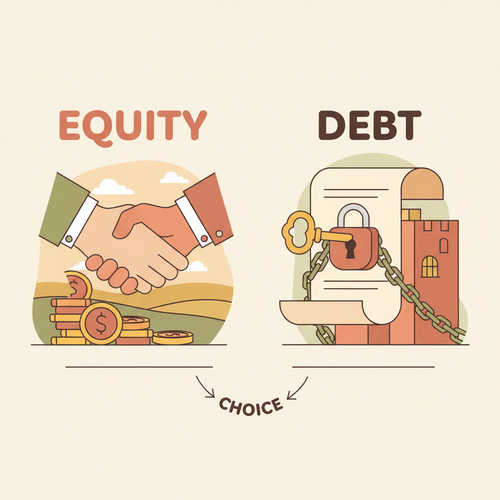
Understanding the intricacies of Debt vs. Equity Financing is undeniably a cornerstone for any aspiring or established entrepreneur. Securing capital is often the first significant hurdle businesses face, and the method chosen can profoundly impact a company’s trajectory, control, and long-term financial health. Entrepreneurs must navigate a complex landscape of funding options, each with distinct advantages and disadvantages. This comprehensive guide aims to demystify these core concepts, empowering you to make informed decisions for your venture’s growth and stability.
Understanding Debt Financing
Debt financing, in essence, involves borrowing money from a lender with a contractual obligation to repay the principal amount along with accrued interest over a specified period. This is a traditional and widely utilized method for businesses seeking capital without relinquishing ownership. Lenders typically assess a company’s creditworthiness, financial projections, and collateral before extending credit. Consequently, this approach is often favored by businesses with a predictable cash flow and established operational history.
What is Debt Financing?
Simply put, debt financing is akin to taking out a loan. Financial institutions such as banks, credit unions, and even individual investors provide funds, expecting a return in the form of interest. Common instruments include term loans, lines of credit, and mortgages. For larger corporations, issuing bonds is another form of debt financing. The key characteristic is the debtor-creditor relationship; the financier does not become an owner but rather a creditor owed a fixed sum.
Advantages of Debt Financing
- Retain Ownership and Control: A significant benefit of debt financing is that entrepreneurs maintain full ownership and decision-making authority over their company. There is no dilution of equity, meaning founders do not surrender a portion of their business.
- Predictable Repayment Schedule: Debt typically comes with a clear repayment schedule, allowing businesses to forecast their financial obligations accurately. This predictability aids in budgeting and long-term financial planning.
- Tax-Deductible Interest: Interest payments on business debt are often tax-deductible, effectively reducing the overall cost of borrowing. This can be a substantial advantage, especially for profitable businesses.
- Lower Cost of Capital: In many cases, especially for established businesses with good credit, the cost of debt (interest rates) can be lower than the long-term cost of equity (dilution and potential returns to investors).
- No Profit Sharing: Unlike equity investors, lenders do not share in the company’s profits. Once the debt is repaid, the financial obligation to the lender ceases entirely.
Disadvantages of Debt Financing
- Repayment Obligation: The most crucial drawback is the mandatory repayment obligation. Businesses must make scheduled payments regardless of their financial performance, potentially straining cash flow during lean periods.
- Collateral Requirements: Lenders often require assets as collateral to secure the loan, which can put business or personal assets at risk if the company defaults.
- Restrictive Covenants: Loan agreements frequently include covenants that place limitations on a company’s operations. These might include restrictions on additional borrowing, dividend payments, or asset sales.
- Impact on Credit Score: Failure to meet repayment obligations can severely damage a company’s credit rating, making future borrowing more difficult and expensive.
- Fixed Payments: While predictable, fixed payments can be inflexible. They do not adjust based on the company’s ability to pay, which can be challenging during economic downturns.
Exploring Equity Financing
Equity financing involves selling a portion of ownership in a company in exchange for capital. Instead of borrowing money, businesses invite investors to become partial owners, sharing in the company’s successes and risks. This method is particularly popular among startups and high-growth companies that may not yet have the collateral or consistent cash flow required for traditional debt financing. Consequently, it also brings strategic partners into the business.
What is Equity Financing?
When a company opts for equity financing, it issues shares (or ownership stakes) to investors. These investors, now shareholders, typically gain certain rights, which can include voting rights on company decisions and a share of future profits. Prominent sources of equity financing include angel investors, venture capitalists (VCs), and, for mature companies, public stock offerings (IPOs). The capital raised is not a loan and does not require periodic interest payments.
Advantages of Equity Financing
- No Repayment Obligation: A significant relief for entrepreneurs is the absence of mandatory repayments. Investors are compensated through a return on their investment when the company performs well or is eventually sold.
- Access to Expertise and Networks: Equity investors, particularly VCs and angel investors, often bring invaluable industry expertise, mentorship, and extensive professional networks. This can accelerate growth and open new opportunities.
- Boosts Company Credibility: Securing equity investment from reputable firms can signal strong potential to other investors, customers, and partners, enhancing the company’s standing in the market.
- Ideal for High-Growth Ventures: Companies with high growth potential but uncertain immediate profitability often find equity financing more suitable. It provides capital without the burden of early debt payments.
- Improved Cash Flow: Without the burden of regular debt payments, a company’s cash flow can be significantly healthier, allowing more capital to be reinvested into growth initiatives.
Disadvantages of Equity Financing
- Dilution of Ownership and Control: The most notable drawback is the dilution of ownership. Entrepreneurs give up a percentage of their company, potentially losing some control over strategic decisions.
- Sharing Profits: Equity investors expect a return on their investment, meaning future profits (or capital gains from an exit) must be shared among all shareholders.
- Loss of Autonomy: Investors often demand a say in the company’s direction, sometimes requiring board seats or veto power over key decisions. This can lead to conflicts and slow down decision-making.
- Potentially More Expensive in the Long Run: While there are no interest payments, the long-term cost of equity can be higher if the company becomes highly successful. Investors expect a significant multiple on their original investment.
- Complex and Lengthy Process: Raising equity, especially from VCs, can be a time-consuming and arduous process involving extensive due diligence and negotiations.
Key Factors to Consider When Choosing
The decision between debt and equity financing is rarely straightforward; it involves a careful assessment of various factors unique to each business. Entrepreneurs must weigh their immediate needs against their long-term vision. Therefore, a strategic analysis is paramount.
Business Stage and Growth Potential
The maturity of your business plays a critical role. Early-stage startups, particularly those with high growth potential but little revenue, often find equity financing more accessible. Investors are willing to take on higher risk for a larger potential return. Conversely, established businesses with stable cash flows might prefer debt financing to retain ownership and leverage their assets. Understanding your growth trajectory is essential for this evaluation. For instance, a rapidly scaling tech company might lean towards equity, while a stable manufacturing firm might favor debt.
Control and Ownership
Entrepreneurs must honestly assess their willingness to dilute ownership and share control. If maintaining complete autonomy is a top priority, debt financing is the preferable route. However, if the strategic guidance, network, and validation that come with equity investors are deemed more valuable than maintaining full control, then equity becomes more appealing. This personal preference often dictates the initial leaning towards one option.
Risk Tolerance and Financial Health
Your company’s current financial health and your personal risk tolerance are crucial. Can your business reliably service debt payments, even during economic downturns? If cash flow is inconsistent, fixed debt payments could lead to default. Equity financing removes this immediate repayment pressure. Moreover, assess the level of collateral you are willing to pledge. Debt typically entails higher personal and business risk if the venture falters. For more information on assessing financial health, resources like Investopedia’s guide to financial health can be very helpful.
Cost of Capital and Exit Strategy
Evaluate the true cost of each option. While debt has clear interest rates, the cost of equity is more subtle, representing the portion of future value surrendered. Consider your long-term exit strategy. If an IPO or acquisition is the goal, equity investors can be strategic partners in achieving that. However, if you plan to keep the business private indefinitely, the ongoing dilution from equity might become less desirable. Weighing the immediate financial burden against long-term value creation is key. Additionally, exploring government financial regulations can be beneficial for understanding capital raising. For example, the latest financial news from Reuters often highlights trends in capital markets.
Hybrid Approaches and Other Considerations
The financing landscape is not always black and white; hybrid solutions often bridge the gap between pure debt and pure equity. Instruments like convertible notes and SAFEs (Simple Agreement for Future Equity) are common in startup ecosystems. These initially function like debt but convert into equity at a later funding round, offering flexibility to both founders and early investors. Furthermore, entrepreneurs should consider other avenues such as government grants, crowdfunding platforms, and even bootstrapping, which involve self-funding the business.
Seeking expert advice is universally recommended. Engaging with financial advisors, corporate lawyers, and experienced mentors can provide invaluable insights tailored to your specific situation. They can help structure deals that protect your interests while attracting necessary capital. Understanding the legal implications of each financing type is also paramount to avoid future complications. Resources like the U.S. Small Business Administration (SBA) offer extensive guidance on various funding programs and considerations for small businesses.
Conclusion
The choice between Debt vs. Equity Financing is a pivotal strategic decision for any entrepreneur. Each path presents a unique set of advantages and disadvantages that must be meticulously evaluated against a company’s stage, financial health, growth objectives, and the founder’s willingness to share control. While debt allows for full ownership retention and tax benefits, it comes with rigid repayment obligations. Conversely, equity provides access to strategic partners and no immediate repayment pressure, but at the cost of ownership dilution. Ultimately, there is no one-size-fits-all answer. Successful entrepreneurs carefully analyze their specific circumstances, seek professional guidance, and sometimes even combine approaches to build a robust and sustainable financial foundation for their ventures. Making an informed decision now can define your company’s future trajectory.