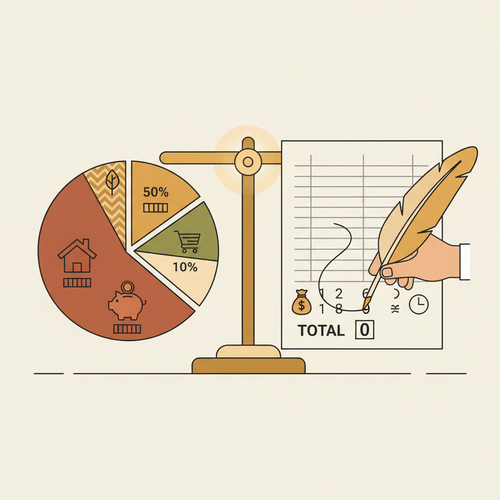
Understanding the differences between the 50/30/20 Rule Zero-Based Budgeting methods is crucial for mastering your personal finances. Many individuals actively seek effective ways to manage their money. Therefore, choosing the right budgeting strategy can significantly impact your financial future. This comprehensive article explores both popular approaches in meticulous detail. Furthermore, it aims to help you precisely determine which method best suits your unique financial situation and long-term goals.
What is the 50/30/20 Rule?
The 50/30/20 Rule stands as a remarkably straightforward budgeting guideline. It precisely suggests dividing your after-tax income into three distinct main categories. These categories meticulously represent your needs, wants, and dedicated savings along with debt repayment. Senator Elizabeth Warren, a prominent figure, popularized this accessible concept. Indeed, it inherently offers a simple yet robust framework for achieving financial control. Moreover, its inherent ease makes it particularly appealing for those embarking on their budgeting journey for the very first time.
How the 50/30/20 Rule Works
Firstly, a significant 50% of your income should purposefully cover your “needs.” These expenses are undeniably essential for daily living. For instance, recurring rent or monthly mortgage payments definitively fall into this critical category. Also, consistent utilities, vital groceries, necessary transportation, and crucial health insurance premiums are categorized as needs. These represent non-negotiable costs. Consequently, they are absolutely critical for maintaining your basic living standards and ensuring fundamental well-being.
Secondly, a deliberate 30% of your income is judiciously allocated to “wants.” Wants are typically discretionary expenses. They undeniably enhance your quality of life but are not strictly necessary for survival. Examples include enjoying dining out experiences, various forms of entertainment, digital subscriptions, and purchasing new clothes. Holidays and engaging hobbies also perfectly fit into this category. Therefore, this segment inherently offers considerable flexibility. It thoughtfully allows for enjoyment and personal fulfillment without generating undue financial guilt.
Finally, a dedicated 20% of your income consistently goes towards “savings and debt repayment.” This particular portion is absolutely vital for diligently building long-term wealth. It also significantly helps in reducing outstanding financial debts. Contributions directed towards an essential emergency fund are certainly included here. Retirement accounts, such as 401(k)s or IRAs, also firmly apply. Furthermore, making extra payments on high-interest debt, like credit card balances, robustly belongs within this category. This crucial allocation diligently ensures long-term financial stability. It actively fosters significant and tangible progress towards your most important financial goals.
Pros of the 50/30/20 Rule
- Remarkable Simplicity: This rule is incredibly easy to both understand and effectively implement. New budgeters, in particular, find it exceptionally accessible and user-friendly.
- Considerable Flexibility: The designated “wants” category inherently provides significant flexibility in spending. You can readily adjust your expenditure here as the need arises. This adaptability helps prevent individuals from feeling overly restricted or deprived.
- Promotes Balance: It actively promotes a healthy and sustainable financial balance. You effectively cover all essential needs. You also concurrently enjoy aspects of life. Importantly, you diligently save for a secure future.
- Less Detailed Tracking Required: You generally do not need to meticulously track every single penny spent. This reduces the often burdensome task of meticulous record-keeping. Many individuals profoundly appreciate this streamlined approach.
- Excellent Starting Point: It genuinely serves as an outstanding foundation for embarking on a budgeting journey. Individuals can quite easily adapt to its guidelines. Therefore, it is often considered ideal for budgeting beginners seeking an initial structure.
Cons of the 50/30/20 Rule
- Income Dependent Challenges: This rule might present significant challenges. It can be particularly hard for those with lower incomes. Their 50% allocation for needs may tragically exceed their actual income.
- Potentially Broad Categories: The defined categories can sometimes prove to be too general. Accurately distinguishing between a genuine “need” and a mere “want” can become quite difficult. This inherent ambiguity might inadvertently lead to unexpected overspending.
- Less Aggressive Savings Potential: The suggested 20% savings rate might not genuinely be enough. This holds especially true for individuals with highly aggressive financial goals. Examples include pursuing early retirement or aiming for rapid debt payoff.
- Doesn’t Suit Irregular Income: It functions most effectively with a consistent, predictable income stream. People operating with variable incomes may consequently struggle. Their percentages could easily fluctuate significantly each month.
- Risk of Overspending on Wants: The rather generous 30% allocation for wants might potentially lead to unnecessary expenditures. Without stringent self-discipline and conscious effort, this scenario can readily occur.
Who is the 50/30/20 Rule Best For?
This particular budgeting method ideally suits individuals who are actively seeking a simple, yet effective financial framework. It proves especially ideal for those possessing stable, consistent middle-to-high incomes. People who genuinely value a balanced lifestyle, incorporating both saving and enjoying, also significantly benefit. Furthermore, it is unequivocally perfect for beginner budgeters embarking on their financial journey. Those who unequivocally prefer general guidelines over excessively strict allocations will find this rule appealing. It effectively helps maintain financial order without imposing excessive detail or rigid tracking requirements.
For more general financial guidance and in-depth explanations of various economic concepts, you can diligently visit Investopedia. They consistently provide a wealth of accessible information. This includes detailed insights into numerous complex financial concepts. Therefore, it undoubtedly stands as a highly valuable and reliable educational resource for investors of all levels.
What is Zero-Based Budgeting?
Zero-based budgeting represents a distinctly more intensive and proactive approach to financial management. With this meticulous method, every single dollar of your earned income is thoughtfully assigned a specific job. This fundamentally means your total income minus your total expenses should precisely equal zero. Therefore, you are meticulously planning how to spend every single penny you earn. This ensures that absolutely no money is left unaccounted for or undirected. This highly disciplined approach actively fosters complete financial awareness. Indeed, it serves as a powerful and effective tool for achieving highly specific financial objectives with remarkable precision.
How Zero-Based Budgeting Works
At the precise beginning of each month, you conscientiously list all your income sources. Subsequently, you comprehensively list all your anticipated expenses. This crucial enumeration includes both your fixed and variable costs. Every dollar must be explicitly allocated and accounted for. You deliberately assign money to various categories, such as essential housing, necessary food, vital transportation, and discretionary entertainment. Dedicated savings and crucial debt payments are also fundamentally included in this process. Crucially, the grand total of all your allocations must perfectly match your total income for the month. If you discover you have extra money remaining, you immediately assign it to another category. Perhaps it goes towards extra savings goals or accelerated debt reduction. Conversely, if you identify a deficit, you proactively reduce spending in some of your allocated categories. This diligent process repeats consistently each month. It thereby provides an exceptionally clear and accurate snapshot of your ongoing finances.
This particular budgeting style inherently demands active and continuous participation. It requires constant review, vigilant monitoring, and consistent adjustment. Furthermore, it profoundly empowers you to make highly intentional and strategic financial decisions. Therefore, every single dollar you possess ultimately has a clearly defined purpose. This profound intentionality proactively helps prevent impulsive and unwarranted spending. It also vividly highlights specific areas for potential and significant savings. Ultimately, it bestows upon you ultimate and comprehensive control over your hard-earned money.
Pros of Zero-Based Budgeting
- Maximum Financial Control: You gain precise knowledge of where every single dollar of your money goes. This provides unparalleled financial insight and transparency. It significantly reduces common financial anxiety and uncertainty.
- Enhanced Efficiency: It actively eliminates wasteful or unnecessary spending habits. Every single expense is thoroughly justified and accounted for. This ultimately leads to more efficient and optimized money management practices.
- Highly Goal-Oriented: This method proves exceptionally effective for achieving specific and ambitious financial goals. Examples include diligently paying off substantial debt quickly. Saving diligently for a significant down payment is another prime example. You can strategically direct funds with remarkable precision.
- Identifies Unnecessary Spending: The inherently detailed tracking process effectively helps pinpoint specific areas. You can consciously cut back on non-essential or discretionary expenses. This strategic optimization can potentially free up significant financial funds.
- Superior Adaptability: It can be meticulously adjusted each and every month. This unique flexibility makes it exceptionally suitable for individuals with irregular income streams. It also functions remarkably well for rapidly changing financial circumstances or priorities.
Cons of Zero-Based Budgeting
- Significantly Time-Consuming: It fundamentally requires a substantial amount of time and dedicated effort. You must diligently track and categorize every single financial transaction. This demanding level of detail can often feel quite daunting initially.
- Steep Initial Learning Curve: New budgeters might consequently find this method initially overwhelming. The initial setup process demands considerable dedication and patience. It genuinely takes consistent practice to effectively master its intricacies.
- Perceived Less Flexible: Once initial allocations are meticulously made, they are typically quite strict. Any subsequent adjustments require revisiting and potentially re-evaluating the entire budget. This rigorous process can feel inherently restrictive to some individuals.
- Demands High Discipline: It explicitly demands exceptionally high levels of self-discipline and commitment. Consistent tracking, unwavering adherence, and proactive review are absolutely vital. Without these foundational elements, the entire system regrettably fails to deliver its intended benefits.
- Can Feel Restrictive: Some individuals may understandably feel stifled or constrained by this method. The constant perceived need to justify every single expense can become genuinely tiring over time. This pervasive feeling can unfortunately lead to what is commonly known as “budget burnout.”
Who is Zero-Based Budgeting Best For?
Zero-based budgeting is unequivocally ideal for individuals firmly committed to strict and disciplined financial management. It perfectly suits those possessing clear, well-defined, and often aggressive financial goals. People who are currently experiencing significant financial difficulty can also benefit tremendously from its structured approach. For example, those actively striving to get out of debt quickly will find it invaluable. Furthermore, it works exceptionally well for individuals with inherently variable or unpredictable incomes. They can meticulously adjust their budget each month based on actual earnings. If you genuinely enjoy detailed tracking and desire maximum control over your money, this comprehensive method is undoubtedly for you.
To gain a deeper understanding of government financial policies, economic trends, and public spending data, a diligent visit to Gov.uk can prove exceptionally insightful. Such authoritative resources consistently offer broad economic perspectives. They effectively complement and enrich your personal finance knowledge. Therefore, staying thoroughly informed about the wider economy is always profoundly beneficial for making astute personal financial decisions.
50/30/20 Rule vs. Zero-Based Budgeting: A Direct Comparison
When directly comparing the 50/30/20 Rule Zero-Based Budgeting methods, several undeniably key distinctions prominently emerge. Understanding these fundamental differences is absolutely crucial for making a truly informed and effective decision regarding your personal finances. While both approaches ultimately aim for enhanced financial stability, their underlying methodologies and requirements vary quite significantly. Let’s delve deeply into these critical comparative aspects to illuminate their core differences.
Flexibility and Simplicity
The 50/30/20 Rule consistently offers a notably greater degree of flexibility. Its broad, overarching categories contribute to its inherent simplicity and ease of adoption. You are not required to itemize every single purchase or transaction. Consequently, this method is significantly less demanding in terms of daily tracking. Zero-based budgeting, conversely, is inherently less flexible. It rigorously demands precise and detailed allocation of every dollar. Every penny has a precisely defined role and destination. This offers considerably less room for spontaneous or unplanned spending. Therefore, while its simplicity is lower, its precision and accountability are remarkably higher.
Level of Control and Detail
Zero-based budgeting undeniably provides the absolute maximum level of financial control. It rigorously demands meticulous and exhaustive tracking of all financial movements. You gain precise knowledge of exactly where every single penny of your income is allocated and spent. This unparalleled level of detail ensures profound accountability and clarity. The 50/30/20 Rule, in stark contrast, offers a less granular level of control. It primarily provides a general overview of your financial flows. While easier to manage, its broader categories might inadvertently obscure minor instances of overspending or inefficiencies. Therefore, if comprehensive and detailed financial insight is absolutely paramount, zero-based budgeting consistently emerges as the superior choice.
Goal Alignment and Effectiveness
Both budgeting methods undeniably support the achievement of various financial goals. However, their effectiveness and suitability vary based on the nature of those goals. The 50/30/20 Rule effectively builds a solid foundational basis. It proactively promotes consistent and disciplined saving habits. It proves excellent for fostering general financial health and stability. Zero-based budgeting, on the other hand, truly excels with highly aggressive or urgent financial goals. For instance, diligently paying off significant amounts of debt rapidly. Or, strategically saving a large sum of money within a considerably short timeframe. Its inherent precise nature allows for highly targeted and efficient allocation of funds towards these specific objectives. Thus, highly specific and urgent financial goals generally align much better with the rigorous approach of zero-based budgeting.
Time Commitment Required
Implementing the 50/30/20 Rule typically demands minimal time and effort. Its inherent simplicity translates into less initial setup time. Furthermore, ongoing monthly maintenance and review are also generally quick and straightforward. Zero-based budgeting, conversely, unequivocally requires a substantial and consistent time commitment. The initial setup phase is highly detailed and thorough. Regular monthly review and meticulous adjustments are absolutely crucial for its success. Daily tracking of transactions can also significantly add to the overall time investment. Therefore, it is imperative to carefully consider your available time and dedication before making a definitive choice between these two distinct methods.
Suitability for Irregular Income
The 50/30/20 Rule presents significant challenges for individuals with irregular or unpredictable incomes. Its fixed percentage allocations inherently assume a degree of income consistency. Zero-based budgeting, however, remarkably adapts exceptionally well to variable income streams. You are empowered to re-budget meticulously each and every month. This allows for unparalleled flexibility. You can intelligently adjust your allocations based on your actual earnings for that specific period. Consequently, it is very often the preferred method for freelancers, independent contractors, or commission-based earners who experience fluctuating monthly incomes.
Keeping comprehensively updated with global economic news and financial market developments is exceptionally important for making astute personal finance decisions. Reuters consistently offers up-to-the-minute, authoritative financial news and insightful analysis. Their extensive reporting covers global markets, business trends, and critical world affairs. Such information can significantly inform and enhance your personal financial planning strategies. Therefore, maintaining a broad and informed economic perspective is always profoundly beneficial for long-term financial success.
Making Your Choice: Which Method Suits You Best?
Deciding between the distinct 50/30/20 Rule Zero-Based Budgeting strategies depends critically on several highly personal and interconnected factors. It is essential to carefully consider your overarching financial goals with great precision. Also, conduct an honest assessment of your personal budgeting personality and inherent habits. Your current income stability and predictability will also play a crucial determining role. Fundamentally, there is no single, universally “best” budgeting method that applies to everyone. Instead, the most effective and sustainable budget is the one you can genuinely commit to and consistently follow over time.
Carefully Consider Your Financial Goals
If your financial goals are more general in nature, the 50/30/20 Rule might prove perfectly sufficient and highly effective. Do you primarily aim to save consistently for the future? Are you currently focused on diligently building an essential emergency fund? Is gradually reducing consumer debt a comfortable priority? This straightforward rule offers a gentle and accessible start to budgeting. Conversely, if your financial goals are exceptionally aggressive or time-sensitive, you should seriously consider zero-based budgeting. Do you aspire to pay off a mortgage significantly early? Are you diligently saving for a major purchase, like a house or car, within a very short timeframe? Do you urgently need to eliminate substantial amounts of debt as quickly as possible? The inherent precision and detailed allocation of zero-based budgeting can dramatically accelerate these ambitious efforts.
Honestly Assess Your Personality and Habits
Are you naturally a detail-oriented individual? Do you genuinely enjoy the process of meticulously tracking numbers and financial flows? Is comprehensive and precise planning something you inherently appreciate and excel at? If your answer to these questions is yes, then zero-based budgeting could indeed be an excellent fit for your personal style. It specifically caters to those who thrive on absolute control and clear financial visibility. However, if you strongly prefer simplicity and a less granular approach, the 50/30/20 Rule is likely a better alternative. Do you easily get overwhelmed by excessive financial detail? Do you struggle with adhering to overly strict or rigid financial rules? This rule provides a considerably less restrictive and more flexible budgeting framework. It generally appeals to those who require more financial breathing room and less micro-management.
Evaluate Your Income Stability
A consistent, predictable, and stable income stream inherently lends itself exceptionally well to the 50/30/20 Rule. Its fixed percentages are considerably easier to maintain and track when income is steady. This inherent stability makes accurate financial forecasting much simpler. For individuals with variable, fluctuating, or unpredictable incomes, zero-based budgeting offers a distinct and powerful advantage. Each month, you effectively re-budget based on your actual earnings for that period. You intelligently adjust your allocations based on what you truly earn. This crucial flexibility is absolutely essential for effectively managing and navigating fluctuating finances. Therefore, your income pattern and its predictability represent a significant determinant in choosing the optimal budgeting method.
Consider Starting Simple, Then Adjusting
Many seasoned financial experts often suggest beginning your budgeting journey with a simpler, less demanding method. The 50/30/20 Rule can serve as an excellent and accessible entry point. It effectively helps individuals gradually build foundational budgeting habits and gain confidence. Once you become more comfortable and adept at managing your money, you might then consider transitioning. You could thoughtfully move towards the more detailed and precise zero-based budgeting. This transition frequently occurs as your financial goals become more sharply defined and ambitious. Also, as your overall financial discipline and awareness grow, more detailed methods naturally become easier to implement and sustain. Therefore, do not be afraid to continually evolve and adapt your budgeting approach as your financial life progresses. Your unique budgeting journey is inherently personal and dynamic.
Tips for Successful Budgeting, Regardless of Method Chosen
Regardless of whether you ultimately choose the flexible 50/30/20 Rule Zero-Based Budgeting approach, certain universal principles remain consistently vital for success. These timeless tips are designed to significantly enhance your overall budgeting success. They actively foster healthier, more sustainable financial habits. Diligently implementing these foundational elements will undoubtedly improve your money management skills to a profound degree. Therefore, pay close and careful attention to these overarching and critical elements for enduring financial well-being.
1. Diligently Track Your Spending
Even when utilizing the broader 50/30/20 Rule, fundamentally understanding exactly where your money goes is undeniably crucial. Utilize modern budgeting apps, detailed spreadsheets, or even simple pen and paper to record expenditures. Regular and consistent tracking vividly highlights your actual spending patterns. It also effectively identifies specific areas for potential improvement or adjustment. Knowledge truly is power in the realm of personal finance. Therefore, consistent and diligent tracking of your spending is absolutely non-negotiable for informed decision-making.
2. Establish Realistic Financial Goals
Setting overly ambitious or unrealistic financial goals often leads directly to frustration and eventual abandonment. Begin with achievable and attainable targets that align with your current financial reality. Gradually increase your ambitions as you gain momentum and confidence. This strategic approach builds sustainable progress. It also proactively prevents common burnout. Therefore, always carefully align your financial goals with your present financial capacity and circumstances.
3. Cultivate Patience and Persistence
Budgeting should always be viewed as an ongoing financial journey, not a singular destination. There will inevitably be occasional setbacks, unexpected expenses, or moments of overspending. Do not allow yourself to become discouraged by these inevitable bumps. Instead, learn valuable lessons from your mistakes. Proactively adjust your approach as needed. Consistent persistence and unwavering dedication are absolutely key to achieving long-term financial success and stability. Therefore, deeply commit to the entire budgeting process with resilience.
4. Regularly Review and Adjust Your Budget
Your personal financial situation is rarely static; it consistently changes over time. Consequently, your budget must also evolve and adapt. Make it a priority to meticulously review your budget monthly or at least quarterly. Implement any necessary adjustments based on your changing circumstances. Significant life events, fluctuations in income, or the emergence of new financial goals all necessitate flexibility. Therefore, always treat your budget as a dynamic, living document that requires periodic refinement.
5. Strategically Automate Your Savings
Make the crucial act of saving money automatic and effortless. Proactively set up direct, recurring transfers. Move a predetermined amount of money from your primary checking account to your dedicated savings or investment accounts. Schedule these transfers to occur automatically on your payday. This effective strategy skillfully removes the inherent temptation to spend those funds. The powerful principle of “Pay yourself first” is truly transformative. Therefore, automate your path to sustained financial success and wealth accumulation.
6. Diligently Build an Emergency Fund
Establishing a robust emergency fund is of paramount importance for financial security. Aim to accumulate enough savings to cover at least 3-6 months of your essential living expenses. This dedicated fund provides an indispensable safety net. It effectively protects you from the adverse impacts of unexpected financial shocks. For instance, sudden job loss, unforeseen medical emergencies, or significant home repairs. Therefore, prioritize building this critical fund with utmost urgency and consistency.
7. Genuinely Celebrate Small Wins
Actively acknowledge and appreciate your budgeting progress and achievements, no matter how minor they may seem. Did you successfully stick to your budget for an entire month? Did you manage to pay off a small, bothersome debt? Take a moment to genuinely celebrate these significant milestones. Positive reinforcement is a powerful motivator that helps keep you engaged and committed. Therefore, always recognize and reward your diligent efforts along your financial journey.
Conclusion
Both the structured 50/30/20 Rule Zero-Based Budgeting methods offer viable, effective paths to achieving comprehensive financial mastery. The 50/30/20 Rule consistently provides a simple, highly flexible, and easily digestible framework. It is unequivocally ideal for budgeting beginners who need a clear starting point. It offers a well-balanced approach to managing essential needs, discretionary wants, and crucial savings. Conversely, zero-based budgeting offers unparalleled and meticulous financial control. It is perfectly suited for those individuals with exceptionally aggressive or time-sensitive financial goals. It also admirably suits individuals who inherently thrive on detailed planning and precise allocation. Ultimately, the truly “best” method unequivocally depends on your specific personal circumstances, financial aspirations, and behavioral tendencies. Carefully evaluate your unique goals, inherent habits, and current income stability. Then, consciously choose the budgeting approach that most genuinely resonates with you and your lifestyle. Remember, the ultimate key to enduring financial success lies in unwavering consistency. It demands persistent commitment and a willingness to adapt. Ultimately, an truly effective budget is the one you can diligently stick with over the long term. Therefore, empower yourself by making an informed and strategic choice today. Proactively take decisive control of your financial destiny right now. Your more secure and prosperous future self will undoubtedly express profound gratitude for your thoughtful actions.