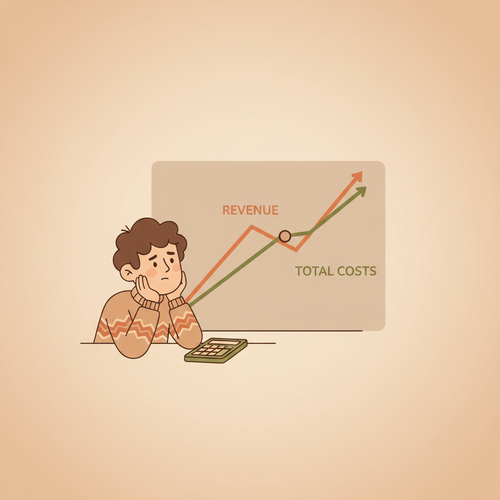
Break-Even Analysis offers a fundamental tool for any aspiring entrepreneur or beginner investor. Specifically, it helps you understand precisely when your business will start making a profit. Therefore, mastering this concept is crucial for making informed financial decisions.
What is Break-Even Analysis?
Break-even analysis, fundamentally, determines the point at which your total costs and total revenues are equal. Consequently, at this “break-even point,” your business generates zero net loss and zero net profit. You simply cover all your expenses. Understanding this threshold is incredibly important.
Why Perform Break-Even Analysis?
Indeed, numerous benefits arise from this calculation. First, it helps set realistic sales targets. Furthermore, it aids in pricing products or services effectively. Ultimately, it provides a clear financial roadmap for your venture. Thus, it’s a cornerstone of sound business planning.
Key Components of Break-Even Analysis
To calculate your break-even point, you must first understand its core components. Specifically, these elements help paint a complete financial picture of your operation. Moreover, grasping each component is vital for accuracy.
Fixed Costs
Fixed costs remain constant regardless of your production or sales volume. For instance, rent is a fixed cost. Other examples include salaries (if not tied to production), insurance premiums, and depreciation on equipment. These expenses do not change monthly, irrespective of how much you sell. Therefore, they are predictable expenses.
Variable Costs
Conversely, variable costs fluctuate directly with your production volume. Specifically, as you produce more units, your total variable costs increase. Examples include raw materials, production wages, and packaging costs. Thus, these costs are directly tied to each item you sell. Understanding this relationship is critical.
Selling Price Per Unit
This is the price at which you sell each individual product or service. Naturally, this price directly impacts your revenue. Furthermore, setting the right price is a strategic decision. Consequently, it significantly affects your path to profitability.
Contribution Margin Per Unit
The contribution margin represents the revenue remaining from each unit sale after covering its variable costs. Therefore, it is the amount available to cover fixed costs and eventually generate profit. You calculate it by subtracting the variable cost per unit from the selling price per unit. Indeed, a healthy contribution margin is essential.
The Break-Even Point Formula
Now, let’s look at the formula itself. Calculating your break-even point involves a straightforward equation. This formula applies whether you are selling physical products or offering services. Thus, its versatility is a major advantage.
Break-Even Point (in Units) = Fixed Costs / (Selling Price Per Unit – Variable Costs Per Unit)
Alternatively, the denominator, (Selling Price Per Unit – Variable Costs Per Unit), is also known as the Contribution Margin Per Unit. Therefore, the formula can be simplified. Consequently, it becomes easier to remember and apply.
Break-Even Point (in Units) = Fixed Costs / Contribution Margin Per Unit
Example Calculation
Let’s consider a small business that sells handmade candles.
- Fixed Costs: $1,000 per month (rent, insurance, etc.)
- Variable Costs Per Unit: $5 per candle (wax, wick, fragrance, packaging)
- Selling Price Per Unit: $15 per candle
First, calculate the Contribution Margin Per Unit:
$15 (Selling Price) – $5 (Variable Cost) = $10 (Contribution Margin Per Unit). Indeed, this $10 goes towards covering fixed costs.
Next, apply the Break-Even Point formula:
$1,000 (Fixed Costs) / $10 (Contribution Margin Per Unit) = 100 candles.
Therefore, this business needs to sell 100 candles each month to cover all its expenses. Selling the 101st candle means the business starts making a profit. Consequently, this simple calculation reveals a critical sales target. Investopedia offers further insights into financial metrics.
Calculating the Break-Even Point: A Step-by-Step Guide
For beginner investors, breaking down the calculation process is beneficial. Therefore, we will outline each step clearly. This methodical approach ensures accuracy and understanding. Thus, you can confidently apply this analysis.
Step 1: Identify Your Fixed Costs
Begin by listing all your fixed expenses for a specific period, typically a month or a year. These include rent, insurance, administrative salaries, loan payments, and depreciation. Remember, these costs do not change with production volume. Consolidating these figures provides your total fixed costs. This is your baseline expenditure.
Step 2: Determine Your Variable Costs Per Unit
Next, identify all costs directly associated with producing one unit of your product or service. This includes raw materials, direct labor, and sales commissions. Divide the total variable costs by the total units produced to get the per-unit cost. For instance, if materials for 100 items cost $500, the variable cost per item is $5. Accuracy here is paramount.
Step 3: Establish Your Selling Price Per Unit
Define the price at which you intend to sell each unit. This price should reflect your market, competition, and desired profit margins. Furthermore, it directly impacts your revenue generation. Therefore, careful consideration is crucial for this step.
Step 4: Calculate the Contribution Margin Per Unit
Subtract the variable cost per unit (from Step 2) from the selling price per unit (from Step 3). The result is your contribution margin per unit. This figure shows how much each sale contributes towards covering your fixed costs. A higher contribution margin allows you to reach the break-even point faster. Indeed, it’s a key profitability indicator.
Step 5: Apply the Break-Even Formula
Finally, divide your total fixed costs (from Step 1) by the contribution margin per unit (from Step 4). The result is the number of units you must sell to break even. This number represents your critical sales volume. Understanding this metric empowers strategic decisions. Bloomberg provides valuable economic data.
Why Break-Even Analysis is Indispensable for Your Business
Beyond simply identifying a number, break-even analysis offers profound strategic advantages. Consequently, it informs various crucial business decisions. Indeed, its utility extends far beyond a mere calculation.
Informs Pricing Strategies
Specifically, knowing your break-even point helps you set competitive yet profitable prices. If your current price makes your break-even point too high, you might consider increasing prices or reducing costs. Therefore, it provides a data-driven approach to pricing. This ensures sustainability.
Supports Investment Decisions
Before launching a new product or expanding operations, break-even analysis can assess the financial viability. For instance, you can project how many new sales are needed to justify additional fixed costs. Thus, it acts as a risk mitigation tool. Consequently, it guides wise capital allocation.
Aids in Risk Assessment
By understanding your break-even point, you can better evaluate financial risks. If sales drop below this point, you know losses will occur. Conversely, it helps identify the sales volume required to withstand market fluctuations. Furthermore, it allows for proactive planning. This foresight is invaluable.
Facilitates Business Planning and Goal Setting
Every business plan should include a break-even analysis. It provides concrete, achievable sales targets. Moreover, it helps in setting realistic goals for growth and expansion. Therefore, it transforms abstract aspirations into measurable objectives. Reuters offers global business news and analysis.
Limitations of Break-Even Analysis
While incredibly useful, break-even analysis does have certain limitations. Recognizing these constraints ensures a more balanced and realistic application. Therefore, it is important to consider these factors.
Assumptions of Constant Prices and Costs
The analysis assumes that selling prices and variable costs per unit remain constant, regardless of sales volume. In reality, bulk discounts might reduce variable costs, or market conditions might necessitate price changes. Consequently, this can impact the accuracy of long-term projections. Thus, continuous review is essential.
Focus on a Single Product
Many businesses sell multiple products or services, each with different prices and variable costs. Simple break-even analysis can become complex for diversified portfolios. However, weighted average contribution margins can address this. Therefore, multi-product businesses require a more sophisticated approach.
Static Nature
Break-even analysis provides a snapshot in time. It does not account for changes in the economic environment, competition, or operational efficiencies. Indeed, market dynamics are constantly shifting. Therefore, regular recalculation is necessary to maintain its relevance. This ensures its continued value.
Using Break-Even Analysis in Your Business Strategically
Leveraging break-even analysis goes beyond a single calculation. It serves as a dynamic tool for ongoing strategic management. Specifically, it empowers proactive decision-making. Therefore, integrating it into your regular review process is beneficial.
Scenario Planning
Utilize the break-even formula to model different business scenarios. For instance, what if your fixed costs increase by 10%? Or, how many more units must you sell if your variable costs rise? Playing “what if” scenarios helps you prepare for various market conditions. Thus, it builds resilience. Consequently, you can react faster to changes.
Target Profit Analysis
You can adapt the break-even formula to determine the sales volume needed to achieve a specific target profit. Simply add your desired profit to your fixed costs in the numerator of the formula. This transforms a break-even calculation into a profit-seeking tool. Indeed, it helps set ambitious yet attainable goals. The Wall Street Journal offers extensive business coverage.
Cost Reduction Strategies
If your break-even point is uncomfortably high, the analysis highlights areas for improvement. You might explore ways to reduce fixed costs (e.g., lower rent, outsourcing) or variable costs (e.g., negotiate with suppliers). Therefore, it serves as a catalyst for efficiency improvements. Identifying these opportunities is key.
Practical Tips for Beginner Investors
For those new to the business world, applying break-even analysis might seem daunting. However, with a few practical tips, you can leverage its power effectively. Indeed, simplicity and consistency are your allies.
- Regular Review: Do not treat break-even analysis as a one-time calculation. Review it quarterly or whenever significant changes occur in your costs or pricing. This maintains its accuracy.
- Focus on Data Accuracy: Garbage in, garbage out. Ensure your fixed and variable cost figures are as precise as possible. Inaccurate data leads to misleading results. Therefore, diligent record-keeping is vital.
- Consider External Factors: While the formula is quantitative, always consider qualitative factors. Market demand, competition, and economic trends will influence your ability to reach your break-even point. Consequently, a holistic view is best.
- Seek Expert Advice: If you find the financial aspects complex, consult with an accountant or business advisor. Their expertise can provide invaluable guidance. Indeed, professional insights are often beneficial.
- Start Simple: If your business is complex, begin with a simplified model. Focus on your core product or service first. Then, gradually incorporate more variables. Therefore, avoid overwhelm.
Mastering break-even analysis provides a clear compass for navigating your business toward profitability. Furthermore, it demystifies financial targets. Consequently, you gain confidence in your strategic planning. This empowerment is invaluable.
Conclusion
In conclusion, Break-Even Analysis is an indispensable tool for every entrepreneur and beginner investor. Specifically, it reveals the critical sales volume required to cover all business expenses. By understanding your fixed costs, variable costs, and contribution margin, you can accurately calculate this pivotal point. Consequently, this knowledge empowers you to make informed decisions regarding pricing, investments, and risk management. While it has limitations, its strategic value is undeniable. Therefore, regularly applying and reviewing your break-even point will significantly enhance your business’s chances of sustained profitability and growth. Forbes offers insights for entrepreneurs.