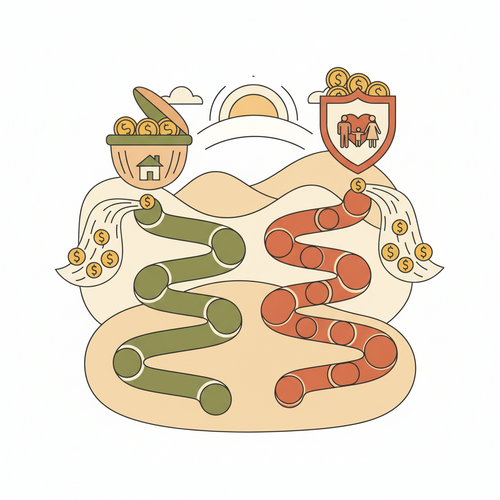
Understanding Whole Life vs. Universal Life Insurance is crucial for beginner investors. Indeed, these two types represent prominent options in the realm of permanent life insurance. Essentially, both policies provide lifelong coverage, offering a death benefit to your beneficiaries. Furthermore, they accumulate cash value over time, which can be accessed during your lifetime. However, their structures and flexibility differ significantly. Therefore, a detailed comparison helps clarify their unique features, ensuring you make an informed decision for your financial future.
What is Whole Life Insurance?
Whole life insurance guarantees coverage for your entire life. Specifically, it features level premiums, meaning the amount you pay remains constant. Consequently, this predictability offers significant peace of mind. Moreover, the policy builds cash value at a guaranteed rate. This cash value grows tax-deferred, therefore acting as a savings component. Indeed, you can borrow against it or even withdraw from it. However, doing so reduces the death benefit. Furthermore, the death benefit itself is guaranteed and will not decrease. This stability makes whole life insurance a straightforward choice for many individuals. It offers a clear, predictable financial product. People often value its simplicity and long-term security.
Advantages of Whole Life Insurance
- Guaranteed Premiums: Your premium payments never change.
- Guaranteed Cash Value Growth: The cash value increases at a fixed rate, ensuring predictable growth.
- Guaranteed Death Benefit: Beneficiaries receive a specific, unchanging amount.
- Simplicity: It is easier to understand and manage compared to other permanent policies.
- Financial Stability: Offers a secure financial asset that can be leveraged later.
Disadvantages of Whole Life Insurance
- Higher Premiums: Initially, whole life policies often cost more than universal life.
- Less Flexibility: Premium payments and death benefits are generally fixed.
- Slower Cash Value Growth: The growth rate is guaranteed, but often conservative.
- Lack of Control: Policyholders have minimal influence over investment aspects.
What is Universal Life Insurance?
Universal life insurance also provides lifelong coverage. Conversely, it offers greater flexibility than whole life insurance. Policyholders can adjust premium payments, for instance, paying more or less within certain limits. Likewise, they can modify the death benefit amount. This adaptability can be particularly appealing for those with fluctuating incomes. The policy’s cash value grows based on an interest rate, which can vary. Specifically, some universal life policies offer a minimum guaranteed interest rate. However, the actual growth may depend on market conditions or specific policy crediting methods. In addition, the policy’s expenses and the cost of insurance are transparently disclosed. This allows policyholders to see exactly where their money goes. Therefore, it provides more control over the policy’s performance. Consequently, it requires more active management from the policyholder.
Advantages of Universal Life Insurance
- Flexible Premiums: You can adjust payment amounts and schedules.
- Flexible Death Benefit: The death benefit can be increased or decreased.
- Potential for Higher Cash Value Growth: Growth can be tied to market rates, potentially offering better returns.
- Transparency: Policy components like costs and interest rates are often clearer.
- Customization: Adapts to changing financial situations more easily.
Disadvantages of Universal Life Insurance
- Variable Premiums: Lower payments in one year might require higher payments later.
- Variable Cash Value Growth: Cash value growth is not always guaranteed, thus introducing some risk.
- Greater Complexity: Understanding policy mechanics requires more effort.
- Risk of Lapse: Insufficient cash value or missed payments can cause the policy to lapse.
- Higher Fees: Some universal life policies may carry higher administrative charges.
Key Differences: Whole Life vs. Universal Life Insurance
Understanding the fundamental distinctions between these policies is vital. Therefore, let’s explore their core differences. Specifically, these categories include premium structure, cash value growth, and flexibility. Indeed, each aspect impacts how the policy functions and aligns with financial goals. Consequently, choosing the right policy depends on individual preferences for predictability versus adaptability.
Premium Flexibility
Whole life insurance features fixed premiums. Indeed, you pay the same amount every month or year. This guarantees your coverage will remain in force, provided you pay on time. Conversely, universal life insurance offers adjustable premiums. You can increase or decrease payments. For instance, you might pay less if your income drops. However, consistent underpayment can erode the cash value. This may even cause the policy to lapse. Therefore, universal life requires more careful management.
Cash Value Growth
The cash value in whole life policies grows at a guaranteed rate. Consequently, its growth is predictable and steady. This provides a reliable savings component. Conversely, universal life cash value growth is variable. It often depends on interest rates or specific investment components. Thus, it carries more risk and potential for higher returns. Indeed, some policies offer an interest rate floor, providing some security. However, it is not always a fixed growth rate.
Death Benefit Flexibility
Whole life policies provide a guaranteed death benefit. Specifically, this amount remains constant throughout the policy’s life. Beneficiaries will receive that exact sum. Universal life policies, however, offer flexible death benefits. You can adjust the death benefit over time. For example, you might increase it if your family grows. Alternatively, you could decrease it to lower premiums. Therefore, universal life adapts to changing family needs.
Risk Profile
Whole life insurance carries less risk for the policyholder. Its guarantees mean you know exactly what to expect. Conversely, universal life insurance involves more risk. Its variable interest rates and flexible premiums introduce uncertainty. Indeed, a policy could lapse if not properly managed. Consequently, universal life demands greater attention and understanding of its mechanics. The policyholder bears more responsibility for its performance.
Complexity
Whole life policies are generally simpler to understand. Their fixed nature means fewer moving parts. Conversely, universal life policies are more complex. Their flexibility requires a deeper understanding of how adjustments impact the policy. For instance, managing cash value to cover costs can be intricate. Therefore, whole life is often recommended for those preferring simplicity. Universal life suits those comfortable with more detailed financial management.
Who is Whole Life Insurance Best For?
Whole life insurance suits individuals prioritizing predictability and stability. Furthermore, it is ideal for those seeking guaranteed returns and a fixed financial commitment. For instance, young families often find its constant premiums appealing. They can budget easily without future surprises. People who prefer not to actively manage their insurance policy also benefit. Indeed, the guaranteed cash value growth provides a secure savings component. This can be a valuable asset for long-term financial planning. Consequently, it appeals to conservative investors. It also serves individuals seeking a simple, straightforward financial product. Parents or grandparents wanting to leave a guaranteed legacy often choose whole life insurance. This ensures a consistent death benefit for their loved ones. Ultimately, it offers peace of mind through its unwavering guarantees.
Who is Universal Life Insurance Best For?
Universal life insurance is best for those desiring flexibility. Specifically, it caters to individuals whose financial situations may change over time. For example, business owners with fluctuating incomes might appreciate its adaptable premiums. Moreover, it suits people comfortable with a bit more financial management. They can leverage its features to optimize their policy. Individuals seeking potentially higher cash value growth also find it attractive. Indeed, its interest-sensitive nature can offer better returns in favorable markets. Conversely, it requires understanding its variable components. Therefore, it is suitable for more financially savvy individuals. Those who anticipate needing to adjust their death benefit in the future also benefit. Furthermore, it offers a customizable solution for evolving life stages. Consequently, it provides a dynamic approach to life insurance planning. People who prefer more control over their policy’s performance will likely favor universal life.
Factors to Consider When Choosing Your Policy
Selecting between whole life and universal life requires careful consideration. Specifically, your financial goals and risk tolerance play significant roles. Therefore, assess your current budget and future income projections. Your need for flexibility is also paramount. Do you prefer fixed payments, or do you need the ability to adjust them? Consider your comfort level with investment risk. Indeed, whole life offers guarantees, while universal life presents more variability. Furthermore, think about how actively you want to manage your policy. Whole life is set-and-forget, whereas universal life demands attention. Your long-term financial objectives, such as wealth transfer or retirement planning, also matter. Consulting a financial advisor can provide personalized guidance. They can help navigate these complex decisions effectively. Ultimately, the best choice aligns with your individual circumstances and preferences.
- Budget and Income Stability: Can you commit to fixed, higher premiums, or do you need flexibility?
- Risk Tolerance: Do you prefer guaranteed returns, or are you comfortable with potential variability?
- Long-Term Goals: What role will this policy play in your overall financial plan?
- Desire for Control: Do you want to actively manage your policy, or prefer a hands-off approach?
- Age and Health: These factors influence premium rates for both policy types.
Reuters
Bloomberg
Investopedia
The Wall Street Journal
Forbes
Conclusion
Choosing between Whole Life vs. Universal Life Insurance involves understanding your personal financial landscape. Both policies offer distinct advantages as permanent life insurance options. Whole life provides unwavering predictability with guaranteed premiums, cash value growth, and death benefits. Therefore, it suits those seeking security and simplicity. Conversely, universal life offers unparalleled flexibility, adapting to changing financial needs and offering potential for higher cash value growth. However, this flexibility comes with increased complexity and some variability. Ultimately, the “better” choice depends entirely on your individual preferences. Consider your budget, risk tolerance, and the level of management you desire. Discussing your options with a trusted financial advisor is always recommended. This ensures your chosen policy perfectly aligns with your unique financial goals and provides lasting peace of mind.