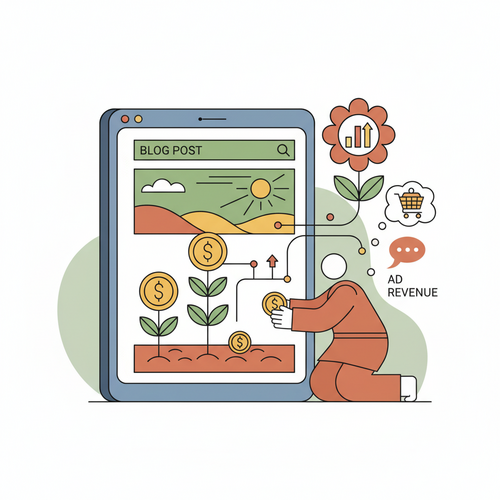
Blogging for Profit offers a compelling path to financial independence. Many beginner investors seek to monetize their online presence. Consequently, understanding effective SEO strategies becomes paramount. This guide specifically focuses on maximizing ad revenue, particularly aiming for high CPM AdSense. Indeed, strategic implementation can significantly boost your blog’s earning potential.
Understanding Ad Revenue Models
Firstly, grasp the fundamentals of ad revenue. Publishers earn money when visitors interact with advertisements. Primarily, two main models exist: CPM and CPC. Therefore, distinguishing between them is crucial for optimization.
CPM: Cost Per Mille (Thousand)
CPM stands for “Cost Per Mille,” or cost per thousand impressions. Advertisers pay a set rate for every one thousand times their ad is displayed. For instance, a $10 CPM means you earn $10 for every 1,000 ad views. Consequently, higher traffic naturally leads to more impressions and increased earnings. High-value content and engaged audiences attract premium advertisers. Thus, understanding your audience’s demographics is vital.
CPC: Cost Per Click
Conversely, CPC means Cost Per Click. Here, you earn revenue each time a visitor clicks on an ad. While impressions are important, clicks are the direct driver of income. Factors like ad placement, relevance, and compelling ad creatives influence click-through rates (CTR). Therefore, optimizing user experience can indirectly boost CPC earnings. Often, a blend of both models contributes to overall ad revenue.
Niche Selection for High CPM
Choosing the right niche profoundly impacts your ad revenue potential. Some topics inherently attract higher-paying advertisers. Specifically, areas related to finance, technology, health, and business often command better CPM rates. Furthermore, these niches typically feature high-value products and services. Consequently, advertisers are willing to pay more to reach these specific audiences.
Identifying Lucrative Niches
Consider your expertise and passion, but also market demand. Research what advertisers are spending money on. For instance, topics around investing, wealth management, insurance, or advanced software tend to perform well. Indeed, a focused niche allows for targeted content creation. Moreover, it attracts a more affluent and engaged readership. This engagement is vital for high CPM. Investopedia offers valuable insights into financial topics.
Audience Demographics Matter
Advertisers pay more to reach audiences with disposable income. They also target individuals actively seeking solutions or making purchase decisions. Therefore, understanding your target demographic’s age, income, and interests is essential. Furthermore, tailor your content to resonate deeply with this specific group. High-quality traffic from desirable demographics leads to higher ad valuations. Thus, a well-defined audience profile guides your content strategy.
Keyword Research for High CPM
Effective keyword research forms the bedrock of successful SEO for ad revenue. It involves identifying terms people search for. Furthermore, it means finding terms with high commercial intent. These keywords often indicate a user is close to making a purchase or seeking a service. Consequently, advertisers value these searches more highly.
Tools for Keyword Discovery
Utilize tools like Google Keyword Planner, Ahrefs, or Semrush. These tools reveal search volume, competition, and crucial for ad revenue, estimated CPC values. Specifically, look for keywords with a decent search volume and a higher CPC. A high CPC often correlates with higher CPM. In addition, these tools help discover long-tail keywords. Long-tail keywords, while having lower search volume, often possess higher conversion potential. Thus, they attract more targeted traffic.
Analyzing Commercial Intent
Focus on keywords indicating transactional or investigational intent. For instance, “best investment apps for beginners” or “compare life insurance policies” clearly show commercial interest. Conversely, “what is a stock” is informational. While informational content builds authority, commercial intent keywords directly attract higher-paying ads. Therefore, a balanced approach is key. Integrate both types of keywords strategically throughout your content. Indeed, this ensures broad appeal and targeted monetization.
On-Page SEO Essentials
On-page SEO refers to optimizing individual web pages to rank higher and earn more relevant traffic. This directly impacts ad revenue. By making your content discoverable, you increase impressions and clicks. Consequently, proper on-page optimization is non-negotiable for serious bloggers. Bloomberg provides examples of well-optimized financial content.
High-Quality, Engaging Content
Content quality is paramount. Produce informative, well-researched, and unique articles. Google prioritizes content that provides genuine value to users. Furthermore, engaging content keeps visitors on your page longer. This increased dwell time signals quality to search engines. Therefore, longer visits can mean more ad impressions per user. Indeed, aim to answer user questions comprehensively.
Strategic Keyword Placement
Integrate your focus keyphrase naturally within your content. Include it in the title tag, meta description, and URL. Furthermore, ensure it appears in the first paragraph and throughout the body. Do not overstuff keywords; this practice is detrimental. Google penalizes keyword stuffing. Instead, use LSI (Latent Semantic Indexing) keywords. These are related terms that provide context. Consequently, your content becomes more relevant to a wider range of queries.
Headings and Subheadings (`
`, `
`)
Organize your content with clear headings and subheadings. These improve readability for both users and search engines. Use your main keyword in the `
` tags. Similarly, use related keywords in your `
` tags. Furthermore, headings break up large blocks of text. This makes the content easier to digest. Therefore, a well-structured article enhances user experience. In addition, it helps search engines understand your article’s hierarchy.
Internal Linking Strategy
Internal links connect related pages within your blog. This helps distribute “link juice” and establishes content authority. Specifically, link to older, relevant articles within new posts. This keeps users on your site longer. Consequently, more page views lead to more ad impressions. Furthermore, internal links signal to search engines which pages are most important. Thus, a robust internal linking structure is essential.
Technical SEO for AdSense
Technical SEO ensures your website is crawlable and indexable by search engines. Furthermore, it impacts user experience directly. A technically sound website loads faster and performs better. Therefore, addressing these elements is crucial for attracting and retaining visitors. These elements directly support higher ad revenue.
Website Speed and Performance
Page load speed is a critical ranking factor. Users abandon slow-loading sites. Google also penalizes slow sites. Consequently, a fast website improves user experience. In addition, it allows ads to load quickly, ensuring impressions are counted. Optimize images, use caching, and choose a reliable hosting provider. Therefore, continuously monitor your site’s speed. Indeed, tools like Google PageSpeed Insights can help identify issues.
Mobile-Friendliness
A significant portion of web traffic now originates from mobile devices. Therefore, your blog MUST be mobile-responsive. Google uses mobile-first indexing. This means it primarily uses the mobile version of your content for ranking. Consequently, a poor mobile experience can harm your rankings. Ensure your ads display correctly and are not intrusive on smaller screens. Thus, prioritize a seamless mobile experience for all users.
Schema Markup
Schema markup helps search engines understand your content better. It provides context about your articles. For instance, you can use schema for articles, reviews, or FAQs. This can lead to rich snippets in search results. Therefore, rich snippets often increase click-through rates. Higher CTR brings more traffic. Furthermore, more traffic equates to more ad impressions and potential revenue. Specifically, implement article schema for blog posts. Reuters often utilizes structured data effectively.
Content Creation for Engagement
While SEO brings traffic, engaging content keeps it. High engagement directly impacts ad revenue by increasing dwell time and page views per session. Consequently, crafting compelling content is an art. It needs to blend information with captivating presentation.
Readability and User Experience
Write clear, concise sentences. Use short paragraphs and plenty of white space. Furthermore, employ bullet points and numbered lists to break up text. This improves readability significantly. Easy-to-read content encourages users to stay longer. Therefore, a good user experience translates to more ad views. Indeed, consider your audience’s reading level. Avoid overly complex jargon, especially for beginner investors.
Visuals and Multimedia
Integrate relevant images, infographics, and videos. Visuals break monotony. They also help explain complex topics. Furthermore, multimedia content can increase engagement metrics. For instance, an embedded video might keep a user on your page for several minutes. Consequently, this translates to more ad impressions. Always optimize images for web speed. In addition, include descriptive alt text for accessibility and SEO benefits.
Off-Page SEO & Promotion
Off-page SEO refers to actions taken outside of your website. These actions influence your rankings. Building authority and trust are key. This, in turn, drives more traffic. Therefore, off-page strategies directly support your ad revenue goals. Forbes frequently employs strong off-page strategies.
Backlink Building
High-quality backlinks from reputable websites signal authority to Google. Search engines view these links as “votes of confidence.” Therefore, aim for backlinks from relevant, high-domain-authority sites. Strategies include guest posting, broken link building, and creating linkable assets. Furthermore, natural backlinks are most effective. Avoid spammy link schemes. Consequently, a strong backlink profile significantly boosts your search rankings.
Social Media Promotion
Promote your blog content across various social media platforms. Share your articles on Facebook, X (formerly Twitter), LinkedIn, and other relevant channels. This drives initial traffic. Furthermore, it increases brand visibility. While social signals are not direct ranking factors, they can lead to shares and natural backlinks. Therefore, an active social media presence indirectly supports your SEO efforts. Engage with your audience to build a community.
Online Communities and Forums
Participate in relevant online communities and forums. Share your expertise. Answer questions. When appropriate, link back to your blog posts as a helpful resource. This drives referral traffic. Consequently, it exposes your content to a new audience. However, avoid spamming. Provide genuine value first. Thus, building a reputation within these communities can be highly beneficial.
Analytics & Optimization
Continuous monitoring and optimization are critical for long-term success. Rely on data, not assumptions. Analyze what works and what doesn’t. Consequently, this iterative process refines your SEO strategies. Furthermore, it maximizes your ad revenue over time. The Wall Street Journal employs sophisticated analytics.
Google Analytics and Search Console
Use Google Analytics to track website traffic, user behavior, and engagement metrics. Identify your most popular pages. Understand user flow. Furthermore, Google Search Console provides insights into search performance. It shows keyword rankings and crawl errors. Therefore, regularly review these dashboards. They offer actionable data for improvement. Indeed, make data-driven decisions.
A/B Testing Ad Placements
Experiment with different ad placements and formats. Some locations perform better than others. Test various ad sizes. Evaluate different ad types (e.g., display, native). Consequently, A/B testing helps optimize your ad inventory. It ensures maximum viewability and click-through rates. Therefore, never settle for default placements. Continuously refine your ad strategy based on performance data.
Common Mistakes to Avoid
Even seasoned bloggers make mistakes. However, beginner investors especially need to be aware of common pitfalls. Avoiding these can save time and prevent lost revenue. Therefore, proactive awareness is crucial. Consequently, learning from others’ errors accelerates your success.
Keyword Stuffing
As mentioned, keyword stuffing (overusing keywords) harms your SEO. It creates an unnatural reading experience. Search engines detect and penalize this. Therefore, prioritize natural language. Focus on providing value. Integrate keywords organically. Indeed, quality over quantity always wins.
Ignoring Mobile Experience
Neglecting mobile optimization is a major error. A significant portion of your audience uses mobile devices. Therefore, ensure your site is fully responsive. Test it thoroughly across different devices. Consequently, a poor mobile experience drives users away. It also hurts your search rankings.
Poor User Experience (UX)
A clunky website, intrusive pop-ups, or confusing navigation frustrates users. This leads to high bounce rates. High bounce rates signal dissatisfaction to Google. Therefore, prioritize a clean, intuitive, and enjoyable user experience. Consequently, happy users stay longer, view more ads, and are more likely to return.
Conclusion
Blogging for Profit through ad revenue demands a strategic, SEO-focused approach. From meticulous niche selection and high-CPM keyword research to robust on-page and technical SEO, every step is crucial. Furthermore, engaging content, strategic promotion, and continuous optimization are non-negotiable. Therefore, by implementing these strategies, beginner investors can build a sustainable and profitable online venture. Indeed, patience and persistence are key to unlocking significant ad revenue potential. Keep learning, keep optimizing, and watch your blog flourish.