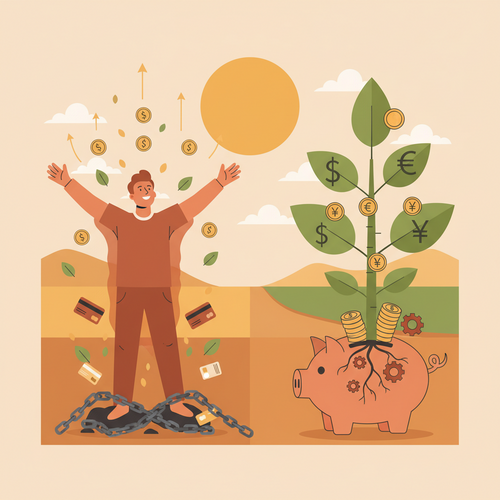
Feeling like your money slips through your fingers, leaving you wondering where it all went? You’re definitely not alone. Many people experience a sense of financial drift, where spending seems to control them rather than the other way around. A 30-day financial detox is your chance to hit the ultimate reset button.
This isn’t about extreme deprivation for the long haul. Instead, think of it as a temporary but intense cleanse designed to reveal your true spending patterns. You’ll gain invaluable clarity and assertive control over your finances in just one month.
Quick Summary: Your 30-Day Financial Reset
- 🚀 Discover where your money goes with a strict spending audit.
- ✂️ Cut unnecessary expenses to build a strong financial foundation.
- 📈 Develop sustainable habits for lasting financial health and peace of mind.
Why a Financial Detox is a Game-Changer for Your Wallet
In my experience, financial stress often stems from a significant lack of awareness, not solely a lack of income. A detox actively forces you to confront your existing habits head-on. It’s a uniquely powerful way to identify and plug those sneaky, hidden money drains.
Think of it like a carefully planned diet for your wallet and bank account. For a focused 30 days, you intentionally limit certain types of spending to understand their true impact on your financial well-being. This concentrated period of financial self-reflection can be incredibly insightful and ultimately liberating.
Moreover, it creates a buffer. By cutting back, even temporarily, you might free up funds for an emergency or debt repayment. This proactive approach builds resilience and reduces future financial anxiety.
Phase 1: The Unflinching Spending Audit (Days 1-7)
The very first step is often the hardest psychologically, but also the most illuminating. You absolutely need to know exactly where every single dollar, cent by cent, is going. This means diligently tracking *everything* you spend, without exception.
Whether you choose a dedicated budgeting app, a simple spreadsheet, or even a small, physical notebook, record every single transaction. Document that daily coffee, every recurring subscription, and each seemingly insignificant impulse purchase. Crucially, during this phase, don’t judge yourself – simply observe and gather the raw data.
Pro Tip: Be Brutally Honest for Real Results!
It’s remarkably easy to overlook or downplay small, everyday expenses. However, these “micro-transactions” often accumulate into surprisingly significant sums over a month. Every single dollar truly counts when you’re attempting to accurately map your financial landscape.
After a full week, take time to review your meticulously gathered findings. You’ll inevitably start to discern patterns and pinpoint specific areas where your money is simply vanishing. Accurately identifying your “financial leakage” points is absolutely crucial for implementing effective and lasting change.
- 💸 Frequent Eating Out: Daily lunch breaks, spontaneous weekend dinners, those frequent coffee shop visits.
- 📺 Unused Subscriptions: Streaming services you rarely watch, gym memberships gathering dust, app subscriptions.
- 🛍️ Impulse Buys: Small, unplanned items purchased without much forethought or necessity.
- 🎮 Excessive Entertainment: Overspending on games, movie tickets, or social events that strain your budget.
- 🎁 Unplanned Gift Overspending: Not allocating funds for birthdays, holidays, or special occasions in advance.
Understanding these categories empowers you. It provides concrete evidence of where your habits are costing you. This data is your foundation for building a healthier financial future.
Phase 2: Implementing Aggressive Cutbacks (Days 8-20)
Now that you possess undeniable insight into your financial weaknesses, it’s time to take decisive action. This phase focuses on temporary, but strategically significant, spending reduction. Your primary goal is to clearly differentiate between true financial needs and discretionary wants.
Needs encompass your absolute essentials: stable housing, nourishing food, critical utilities, and reliable transportation to work. Wants are literally everything else: entertainment, dining out, new clothing, and luxury items. For this intense phase, you must strictly prioritize only your fundamental needs.
Implement a rigorous “no-spend” challenge specifically on non-essential items. This means absolutely no new clothes, no expensive barista-made coffees, and consistently bringing your pre-prepared lunch to work. You will be genuinely surprised by the substantial amount of money you can save in a short period.
In my experience, a vast number of people discover they can live quite comfortably, and often happier, with less material consumption. This focused period actively helps you break automatic spending triggers and mindless consumption patterns. You might even uncover rewarding, free hobbies you never considered before.
Warning: Avoid “All or Nothing” Thinking for Better Success!
Remember, a financial detox is inherently a temporary measure. Don’t feel like you’ve completely failed if you experience a minor slip-up or an unexpected expense. The key is to immediately get back on track and extract valuable lessons from the experience. Consistency, rather than unattainable perfection, is the genuine path to long-term success.
Challenge yourself further by cooking every single meal at home. Actively seek out free entertainment options, such as exploring local parks, visiting public libraries, or enjoying free community events. Every small, conscious choice directly contributes to the success of your financial reset. You can explore broader economic trends that influence spending on sites like CNBC.
During this phase, particularly focus on drastically reducing your variable expenses first. These are typically the easiest to control and offer the quickest, most satisfying wins. Addressing fixed expenses, while important, may require a deeper strategic look at a later stage.
Phase 3: Building Sustainable Financial Habits (Days 21-30)
With a significantly clearer picture of your finances and a growing pile of savings under your belt, it’s now time to proactively build a sustainable financial future. This final phase is all about creating robust, lasting financial systems. You will meticulously build a realistic and functional budget directly based on your profound new insights.
Your new budget should genuinely reflect your core values and your recently acquired spending awareness. Carefully allocate money to your true essentials, prioritize consistent savings, and assign a *realistic* amount for your chosen wants. Crucially, ensure your budget is flexible enough that you can genuinely stick with it long-term.
One of the single most powerful and impactful strategies I consistently recommend is to fully automate your savings. Set up automatic transfers from your checking account to a dedicated savings account every single payday. Embracing the principle of “Pay Yourself First” is an undisputed golden rule for effective wealth building.
| Old Spending Habit | New Detoxed Habit & Benefit |
|---|---|
| Daily coffee shop splurge ($5/day) | Brew coffee at home ($0.50/day), occasional treat. Saving ~$100/month. |
| Mindless impulse online shopping | Implement a 24-hour waiting period before purchase. Prevents regretful buys. |
| Eating out 4+ times a week | Consistent meal prep, dine out only once a week. Healthier and saves ~$200/month. |
| Always paying full price for everything | Actively hunt for deals, use coupons/sales, compare prices. Smarter consumer. |
| No consistent savings plan | Set up automated weekly/bi-weekly transfers to savings. Builds wealth effortlessly. |
Revisit all your subscriptions with a critical eye. Cancel anything you genuinely don’t use, no longer value, or can find a free alternative for. Even seemingly small monthly fees compound significantly over the course of a year.
If you haven’t already, make starting or beefing up your emergency fund a top priority. This vital financial safety net is absolutely critical for your peace of mind and resilience. Aim to accumulate at least 3-6 months’ worth of essential living expenses.
Maintaining Your Financial Momentum Beyond 30 Days
The successful completion of your 30-day detox is truly just the very beginning of a much larger journey. The real and ongoing challenge lies in consistently maintaining these newly established positive changes. Regular, proactive financial check-ins are absolutely essential for sustained success.
Schedule a dedicated monthly “money date” with yourself. During this time, review your budget’s performance, diligently track your savings progress, and make any necessary adjustments. This consistent habit keeps you both accountable and well-informed about your financial trajectory.
Crucially, don’t forget to acknowledge and reward yourself for consistently sticking to your new financial goals. These rewards don’t need to be extravagant or expensive. Celebrating small, incremental wins is a powerful motivator for long-term adherence.
Consider setting new, ambitious financial goals, such as saving for a significant down payment on a home, planning for early retirement, or making strategic investments. Having clear, compelling objectives keeps your financial focus incredibly sharp and purposeful. For more advanced financial strategies, you can always find reliable insights on trusted sites like Fidelity.
Conclusion
A successful 30-day financial detox offers far more than just saved money; it provides invaluable clarity, renewed confidence, and assertive control over your financial destiny. You’ve actively built a profound awareness, established vital spending discipline, and meticulously created a solid foundation for a more secure financial future. This powerful reset fundamentally empowers you to make intentional, mindful choices, effectively breaking free from old, costly, and unconscious habits. Remember, true financial health is an ongoing journey of learning and adaptation, not a fixed destination. Continue to educate yourself with reputable resources such as Bloomberg or Investopedia.
Now that you’re armed with new insights, what’s the very first small spending habit you’re truly ready to tackle and transform?