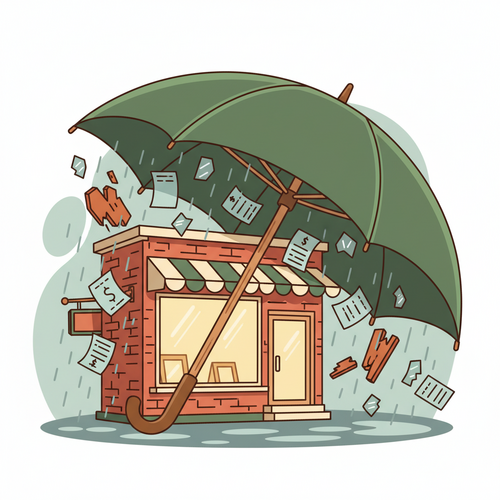
Imagine your thriving business suddenly brought to a halt. What if a fire, flood, or unforeseen event forces you to close your doors for days, weeks, or even longer? This isn’t just about property damage; it’s about the income you lose every single day you’re not operating.
Business interruption insurance is specifically designed for these devastating scenarios. It acts as a crucial financial lifeline, helping you keep your business afloat and recover when unexpected crises strike.
Quick Summary: Your Business Interruption Insurance Essentials
- 🛡️ Protects Lost Income: Replaces the revenue your business would have earned during a shutdown.
- 💸 Covers Operating Costs: Helps pay ongoing expenses like rent, utilities, and payroll when you can’t.
- 🚀 Ensures Swift Recovery: Crucial for small businesses to survive and bounce back quickly after a crisis.
What Exactly Is Business Interruption Insurance?
Simply put, this coverage steps in to replace your lost business income when you can’t operate due to a covered peril. It’s almost always an add-on to your standard commercial property insurance policy, but its financial impact during a crisis is incredibly important.
This type of insurance doesn’t cover the physical damage itself – that’s your property insurance’s job. Instead, it focuses on the severe financial hit your business takes while repairs are underway or operations are paused, ensuring your cash flow doesn’t completely dry up.
In my experience, many new business owners initially overlook this crucial protection. They prioritize physical assets and inventory, often forgetting about the daily revenue that keeps their entire operation alive and thriving.
What Does This Essential Coverage Typically Include?
- 💰 Lost Profits: The policy replaces the net income you would have earned based on your business’s historical financial records.
- 💵 Operating Expenses: It helps you continue paying critical ongoing costs like rent, utilities, property taxes, and loan payments even when you’re not generating income.
- 👥 Employee Payroll: You can keep your valuable employees on staff, helping you retain talent and restart operations smoothly once the crisis passes.
- 🔄 Temporary Relocation: If you need to operate from a different, temporary space while your primary location is being repaired, these costs can often be covered.
- 📢 Marketing & Advertising: Funds may be available to help you rebuild your customer base and announce your reopening to the community.
Why Your Business Absolutely Needs This Protection
Think about a popular local bakery forced to close its doors after a severe water leak or a kitchen fire. Without customers, they earn zero income, but their rent, supplier invoices, and staff wages don’t magically disappear. Business interruption insurance bridges this critical financial gap.
It prevents a temporary operational setback from spiraling into a permanent business closure. This protection is especially vital for small and medium-sized businesses, as they often lack the deep cash reserves larger corporations might use to weather such storms.
Without it, many businesses face an impossible choice: either go into significant debt or shut down permanently. It’s a foundational piece of a resilient business strategy.
Who Benefits Most from Business Interruption Coverage?
Honestly, almost any business that relies on a physical location or uninterrupted day-to-day operations should seriously consider this. From bustling retail stores and busy restaurants to specialized manufacturing plants and professional dental offices, the risk of unexpected closure is universal.
If your business would face significant financial hardship or even outright failure after even a short closure, then this insurance is a non-negotiable part of your comprehensive risk management strategy. It’s about safeguarding your entire livelihood and investment.
Even home-based businesses with specific equipment or inventory can be vulnerable. Don’t assume your small scale makes you immune to disruption.
Pro Tip: Don’t wait for a crisis to understand your coverage. Review your business interruption policy annually with your agent, especially after any major changes to your business operations, revenue streams, or asset values.
Understanding What’s Covered – And What Isn’t
Most business interruption policies are triggered after direct physical loss or damage from events like fire, windstorms, certain types of theft, or vandalism. The key here is typically “physical damage to insured property.” Always scrutinize your specific policy’s terms and conditions.
However, it usually doesn’t cover losses from non-physical damages, such as a general economic downturn that reduces customer demand or closures due to a widespread pandemic (unless specifically endorsed with special riders). Understanding these precise limitations is absolutely critical before you purchase.
For example, if a supplier you rely on experiences a major disaster, and that impacts your ability to operate, regular business interruption might not cover it. You might need “contingent business interruption” for such supply chain risks.
Common Scenarios: Business Interruption Coverage Explained
| Scenario | Business Interruption Coverage | Key Reasoning |
|---|---|---|
| Fire severely damages your restaurant kitchen, forcing closure. | Likely Covered ✅ | Direct physical damage to your insured property, causing operational halt. |
| A burst water pipe floods your retail shop, making it unusable. | Likely Covered ✅ | Physical damage to premises, assuming water damage is covered by property policy. |
| A widespread power outage lasts for a week, preventing operations. | Maybe Covered ❓ | Often requires physical damage; check for “utility interruption” endorsements. |
| A new competitor opens next door, causing a sharp drop in your sales. | Not Covered ❌ | No physical damage, losses due to market forces or competition are excluded. |
| Government-mandated shutdown due to a non-physical pandemic. | Rarely Covered ❌ | Typically requires physical damage; very specific “communicable disease” endorsements are needed. |
| Your main supplier’s factory burns down, stopping your raw material flow. | Not Directly Covered ❌ | Requires “contingent business interruption” coverage, as damage isn’t to *your* property. |
How Does a Business Interruption Claim Work?
Filing a claim for lost business income can feel overwhelming, especially when you’re already dealing with a crisis. However, knowing the process helps tremendously. You must document everything meticulously from the moment the incident occurs.
Your insurer will require clear evidence of your lost income and all continued operating expenses during the shutdown period. This means having readily accessible financial records, detailed payroll documentation, and solid proof of your pre-loss revenue streams. Be prepared to provide comprehensive data.
The better organized your financial records are, the smoother your claim process will be. It’s about proving your loss accurately to the insurer.
Essential Steps When Filing Your Claim:
- 📞 Notify Your Insurer Immediately: Contact your insurance provider as soon as possible after the covered incident to report the loss.
- 📝 Document All Damages: Take extensive photos and videos of any physical damage, and create detailed lists of affected property and business areas.
- 📊 Gather Financial Documentation: Compile sales records, profit and loss statements, tax returns, bank statements, and expense reports for pre-loss periods.
- 💼 Act to Mitigate Losses: You have a duty to do everything reasonable to minimize further damage or reduce the length of the interruption, such as temporary repairs or moving stock.
- 🗣️ Maintain Open Communication: Stay in close, consistent contact with your assigned claims adjuster throughout the entire process, providing any requested information promptly.
- 🧾 Track Extra Expenses: Keep records of any “extra expenses” incurred to reduce the period of interruption or resume operations more quickly, as these can also be covered.
Key Factors That Influence Your Policy and Premiums
Several critical elements will significantly influence both the cost and the overall scope of your business interruption coverage. Understanding these helps you tailor a policy that genuinely fits your specific risks and operational model. This isn’t a generic, one-size-fits-all product.
One major factor is the “period of restoration,” which defines how long the policy will continue to pay out after a covered incident. A longer period of restoration provides more extensive protection but will naturally result in a higher premium. Consider your industry’s typical recovery times.
Warning: Always pay extremely close attention to your policy’s “waiting period” or “deductible.” This specifies the amount of time (e.g., 24, 48, or 72 hours) or the dollar amount you must cover yourself before your insurance benefits officially kick in. A common waiting period is 72 hours, meaning the first three days of interruption are on you.
Important Policy Considerations to Review:
- ⏰ Waiting Period: How many hours or days must pass after the incident before your coverage payments begin?
- 💲 Coverage Limits: This is the absolute maximum amount your policy will pay out for a single loss. Ensure it’s adequate to cover projected income and expenses for a worst-case scenario.
- 🗓️ Period of Restoration: How long will the insurer continue to pay for lost income and expenses? This period typically ends when your business is physically restored or when revenue returns to pre-loss levels.
- 🗺️ Contingent Business Interruption (CBI): This crucial add-on covers your income loss if a *key supplier or customer* suffers an interruption that impacts your business.
- 📈 Extended Period of Indemnity: This extends the payout period beyond the physical restoration, covering ongoing income losses during the time it takes for your business to fully recover its customer base and revenue stream.
- ⚡ Service Interruption: Covers losses due to disruptions in utility services (power, water, communication) caused by physical damage to the utility provider’s property.
Choosing the Right Business Interruption Policy for You
Shopping for the right business interruption insurance requires careful thought and a thorough understanding of your operations. Never just settle for the cheapest option available; instead, prioritize comprehensive coverage that truly aligns with your unique potential risks and financial needs.
My advice is always to consult with an experienced commercial insurance broker. They possess the expertise to help you accurately assess your specific vulnerabilities, analyze your financial projections, and navigate the often-complex nuances of different policy types and endorsements. This expert guidance is invaluable.
They can also help you understand how factors like your industry, location, and specific dependencies (e.g., sole suppliers) might affect your coverage needs. A good broker is your best advocate in this process.
Beyond the Policy: Preparing for the Unexpected Holistically
While having robust business interruption insurance is absolutely vital, remember it’s just one crucial piece of a larger puzzle. Implementing a comprehensive disaster recovery and business continuity plan can significantly reduce the overall impact of any crisis, both insured and uninsured. Proactive planning consistently saves businesses from permanent closure.
Think critically about developing strategies for off-site data backups, identifying alternative work locations or remote work capabilities, and establishing clear communication protocols for your employees and customers during an emergency. These operational safeguards powerfully complement your financial protection. Don’t overlook them.
Regularly test your plans and educate your team. A well-prepared team can minimize downtime significantly.
Conclusion
Business interruption insurance isn’t merely another policy to check off your list; it is a profound, strategic investment in the long-term resilience and future of your business. It provides the essential financial peace of mind that even during the toughest, most unexpected times, your doors can eventually reopen, and your income can recover.
Effectively protecting your income stream and ensuring you can cover ongoing operational expenses can genuinely mean the profound difference between a temporary, recoverable closure and permanent, devastating failure. It is, at its core, about building and maintaining business resilience.
What concrete steps will you take today to meticulously review your current coverage and ensure your business is fully prepared to withstand the next unexpected crisis that may come your way?
Forbes
The Wall Street Journal
Investopedia
Entrepreneur