Executive Summary
- Sovereign yield curves reflect investor expectations. They signal future economic conditions.
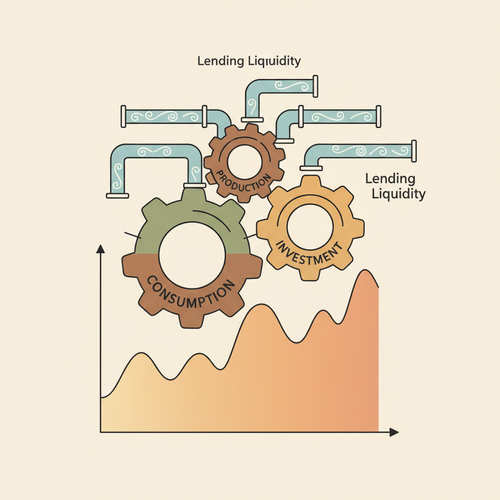
- Lending liquidity critically impacts financial stability. Central bank actions profoundly influence it.
- Macroeconomic policies require precise calibration. This ensures optimal market function and credit flow.
Understanding Sovereign Yield Curve Architecture
The sovereign yield curve maps bond yields against their maturities. It offers a critical barometer of market sentiment. This curve reflects investor expectations regarding inflation. It also forecasts future economic growth trajectories.
Yield curve shapes provide crucial forward-looking insights. An inverted curve often signals impending recessionary pressures. A steep curve may suggest robust economic expansion. Its architecture is dynamic and responds to various catalysts.
Expert Insight: Analyzing the term structure provides granular data. This data informs both tactical and strategic asset allocation decisions. Market participants meticulously watch these movements.
Monetary Policy Transmission and Yield Dynamics
Central banks exert significant influence over yield curves. Their monetary policy decisions directly impact bond pricing. Interest rate adjustments alter short-term borrowing costs. This effect cascades across the entire yield spectrum.
Open market operations modify systemic liquidity. Such interventions manage the money supply. Forward guidance shapes market expectations effectively. These tools calibrate the yield curve’s response.
- Policy rates influence the short end.
- Quantitative easing (QE) targets longer maturities.
- Balance sheet normalization (QT) shifts term premia.
For more on yield curves, refer to Investopedia’s yield curve definition.
Fiscal Prudence, Debt Management, and Market Perception
Government fiscal policy profoundly impacts sovereign yields. Prudent fiscal management fosters investor confidence. High debt-to-GDP ratios can elevate perceived default risk. This increases the cost of borrowing for the state.
Effective debt management strategies are paramount. They ensure sustainable public finances. Market perception of fiscal rectitude is key. It directly influences bond demand and pricing. Any fiscal slippage can rapidly steepen curves.
Market Warning: Uncontrolled fiscal expansion frequently leads to higher sovereign yields. This reflects an increased inflation premium. Investors demand greater compensation for holding riskier debt.
Lending Liquidity Channels: Banking Sector Nexus
Lending liquidity represents the ease of obtaining credit. It is fundamentally linked to the banking sector’s health. Sovereign bond holdings are crucial for bank balance sheets. These bonds serve as collateral and liquidity buffers.
Yield curve movements directly affect bank profitability. A flatter curve compresses net interest margins. This discourages long-term lending activities. Banks adjust their asset-liability management strategies accordingly.
- Stable funding sources enhance lending capacity.
- Regulatory capital requirements influence credit supply.
- Interbank market dynamics transmit liquidity shocks.
Quantitative Easing (QE) and Tightening (QT) Effects
Quantitative Easing involves large-scale asset purchases. Central banks buy government bonds and other securities. This action suppresses long-term yields effectively. It injects substantial liquidity into financial systems.
Conversely, Quantitative Tightening unwinds these positions. Central banks reduce their balance sheets. This process removes liquidity from markets. It can exert upward pressure on sovereign yields. Understanding these operations is crucial for portfolio management.
For a detailed explanation of Quantitative Easing, visit Investopedia’s guide to QE.
Global Capital Flows and External Shocks
Sovereign yield curves are not isolated. Global capital flows significantly influence them. International investor demand for safe-haven assets impacts bond prices. Geopolitical events often trigger such shifts.
Currency fluctuations also play a role. A weaker domestic currency can deter foreign investors. This reduces demand for local sovereign debt. External shocks, like commodity price spikes, can alter inflation expectations. These factors collectively recalibrate yield structures.
Expert Insight: Tracking cross-border investment trends provides early signals. These signals can indicate potential dislocations in domestic bond markets. Vigilance is essential in a globalized economy.
Risk Premia Decomposition and Investor Sentiment
Yields comprise several distinct risk premia. These include inflation expectations and real yield components. Liquidity premium compensates for the inability to sell quickly. Credit risk premium reflects default probabilities.
Investor sentiment heavily influences these premia. Periods of heightened uncertainty expand risk premiums. Flight-to-quality dynamics can compress them for perceived safe assets. Dissecting these components offers deeper analytical value.
- Inflation risk premiums adjust with expectations.
- Term premium reflects future interest rate uncertainty.
- Liquidity premium addresses market depth.
Strategic Implications for Investment Portfolios and Policy Makers
Yield curve analysis is indispensable for portfolio managers. It guides duration management strategies. Asset allocation decisions frequently incorporate curve dynamics. Understanding these shifts can enhance returns.
For policymakers, calibration is continuous. Monetary and fiscal authorities must coordinate effectively. This ensures financial stability and robust economic growth. Timely interventions prevent systemic risks. Proactive measures are critical for market resilience.
Expert Insight: Integrating forward-looking yield curve models into policy frameworks is vital. This enables more precise macroeconomic adjustments. It fosters greater confidence in financial markets.
Conclusion
Macroeconomic calibrations of sovereign yield curves are intricate. They are pivotal for financial market stability. The interplay between monetary policy, fiscal health, and lending liquidity is constant. Prudent management of these factors is non-negotiable.
Understanding these complex dynamics empowers better decisions. It guides investors in turbulent markets. It informs policymakers for sustainable growth. How will evolving global dynamics further reshape these essential calibrations?