Executive Summary
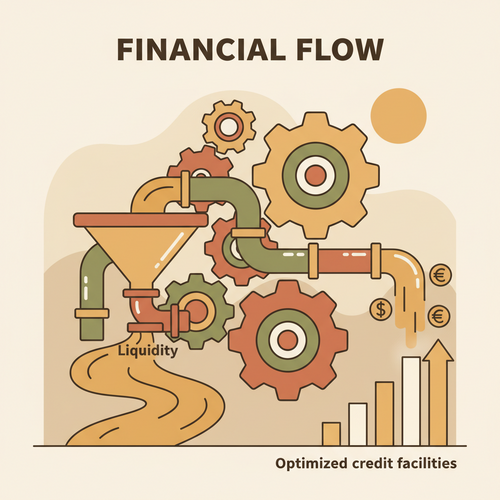
- Strategic credit facility optimization transcends mere capital access, focusing on profound liquidity enhancement.
- Sophisticated reward arbitrage techniques leverage cost-of-capital differentials for substantial yield generation.
- Integrated operational frameworks are crucial for mitigating covenant risks and sustaining long-term financial agility.
Businesses constantly seek optimal capital structures. Credit facilities, often viewed simply as funding sources, present a profound strategic advantage. Their intelligent deployment can redefine an entity’s financial resilience. This extends beyond immediate liquidity needs. It embraces a proactive stance on capital efficiency. Maximizing these tools requires intricate understanding. It demands a holistic approach to financial engineering.
The Nexus of Capital Efficiency and Strategic Financing
Credit facilities represent more than traditional loan products. They are dynamic instruments for corporate financial architecture. Their role extends to underpinning operational stability. They also fuel aggressive growth initiatives. The shift is from opportunistic to highly strategic utilization. This involves deeply analyzing an entity’s capital velocity. Capital velocity measures how quickly capital generates revenue. An optimized credit facility directly enhances this metric.
Understanding these facilities is paramount. They provide a flexible capital reservoir. This reservoir can be tapped for various corporate objectives. These include working capital, M&A, or market expansion. Smart organizations view them as strategic assets. They are not merely liabilities. This perspective drives advanced financial decision-making.
Deconstructing Advanced Credit Facility Structures
A granular understanding of credit facility types is essential. Revolving Credit Facilities (RCFs) offer flexibility. They allow borrowers to draw, repay, and redraw funds. This is crucial for managing cyclical cash flows. Term Loans A (TLA) feature amortizing principal payments. They often include stricter covenants. Term Loans B (TLB) typically have minimal amortization. They suit leveraged finance scenarios. TLBs also offer more flexibility for sponsors.
Asset-Based Lending (ABL) facilities collateralize specific assets. Receivables and inventory are common examples. This structure often provides higher advance rates. It links directly to the underlying asset base’s liquidity. Hybrid structures combine elements of these. They tailor financing to unique corporate profiles. Subordinated debt can also integrate into the capital stack. This provides an additional layer of capital. It balances risk and return for lenders. Each structure has specific implications. These affect pricing, covenants, and flexibility. Careful selection maximizes strategic alignment.
Dynamic Liquidity Management: Beyond Cash Flow Hedging
Effective liquidity management transcends mere cash flow hedging. It demands a proactive, forward-looking strategy. Organizations must consistently assess their liquidity positions. This involves rigorous stress testing. Scenario analysis reveals potential vulnerabilities. It quantifies credit availability under adverse conditions. Optimizing drawdowns minimizes interest expenses. Strategic repayments reduce outstanding debt. This preserves future borrowing capacity.
Unfunded commitments represent a critical safety net. They ensure access to capital when needed. However, commitment fees are a direct cost. Balancing this cost against liquidity insurance is key. The cost of carry for undrawn facilities must be evaluated. This includes administrative fees and potential negative arbitrage. Dynamic management ensures optimal capital deployment. It prevents costly idle capital. It also mitigates liquidity crunch risks.
Expert Insight: Navigating Liquidity in Volatile Markets
“In analyzing recent market shifts, proactive liquidity stress-testing has proven indispensable. Entities that regularly simulate severe but plausible market dislocations are significantly better positioned. They adapt swiftly. Their capital preservation strategies are more robust.”
Unlocking Reward Arbitrage: Yield Enhancement Strategies
Reward arbitrage capitalizes on cost-of-capital differentials. It exploits discrepancies in borrowing costs versus investment returns. A common strategy involves utilizing low-cost credit facility draws. These funds are then invested in higher-yielding short-term instruments. This could include money market funds or high-grade commercial paper. The spread between borrowing and investment rates generates profit. This requires careful risk assessment. Investment tenor must align with facility repayment terms.
Strategic acquisitions can also leverage low-cost credit. Companies might acquire assets generating higher returns than the debt cost. Dividend recapitalizations employ new debt to pay shareholders. This enhances shareholder value. It shifts equity to debt. Interest rate differentials across different markets or currencies offer another avenue. However, these strategies introduce currency and interest rate risks. Prudent risk management is non-negotiable for successful arbitrage.
- Identify disparate borrowing and investment rates.
- Allocate drawn funds into secure, yield-generating assets.
- Monitor market conditions for optimal arbitrage windows.
- Implement robust hedging strategies for interest rate and currency exposures.
- Regularly review the credit facility’s cost of capital.
Covenant Management and Compliance: Mitigating Risk Exposure
Covenant management is a cornerstone of facility optimization. Financial covenants bind borrowers to specific performance metrics. Key examples include Debt-to-EBITDA and Interest Coverage Ratios. Breaching these triggers an event of default. This can lead to accelerated repayment. It can also restrict future borrowing. Affirmative covenants mandate certain actions. These include providing financial statements. Negative covenants restrict specific activities. Examples are limits on additional debt or asset sales.
Proactive covenant monitoring frameworks are critical. These involve real-time tracking of financial performance. They project future compliance scenarios. Early identification of potential breaches allows for remedial action. This might involve negotiating waivers or amendments. Strong legal counsel is vital during documentation review. They ensure terms are clear and manageable. Operational departments must understand their impact. Effective compliance ensures facility continuity. It protects against costly defaults.
For more detailed information on credit facilities, refer to Investopedia’s Credit Facility Definition.
Operationalizing Credit Facility Optimization: A Framework
Effective credit facility optimization requires robust operationalization. This integrates seamlessly with existing treasury systems. Advanced data analytics tools are indispensable. They provide predictive modeling capabilities. This anticipates future liquidity needs and borrowing costs. Establishing clear internal review processes is crucial. These ensure consistent monitoring and reporting. Cross-functional team collaboration is essential. Finance, legal, and operational teams must work in concert. Regular lender relationship management fosters trust. It facilitates smoother negotiations. It also secures better terms over time. This holistic framework ensures sustained optimization.
From an operational standpoint, automation plays a significant role. Automated reporting streamlines covenant compliance. It reduces manual errors. Integration with enterprise resource planning (ERP) systems provides real-time data. This enhances decision-making accuracy. A dedicated team often oversees this function. They act as the central point of contact. This centralizes expertise. It ensures consistent strategic execution.
Macroeconomic Headwinds and Tailwinds: Adapting Facility Strategy
Credit facility strategy must adapt to macroeconomic shifts. Interest rate hikes directly increase borrowing costs. Conversely, rate cuts reduce them. Inflationary pressures erode purchasing power. They can also impact collateral values. Geopolitical risks introduce market volatility. This affects lender appetite and liquidity. Sector-specific credit availability fluctuates. Understanding these dynamics is crucial. It informs timely adjustments to facility utilization. Counter-cyclical facility use can be highly advantageous. Drawing down during periods of low rates proves beneficial. It secures cheaper capital. This proactive stance hedges against future market uncertainty.
During economic downturns, access to credit can tighten. Maintaining strong lender relationships becomes even more vital. Diversifying funding sources also provides resilience. A robust understanding of central bank policies is necessary. These policies directly influence credit markets. Organizations must continually re-evaluate their capital stack. They adjust based on prevailing economic forecasts. This ensures the facility remains an asset. It avoids becoming a burden.
For a deeper dive into liquidity, consult Investopedia’s Liquidity Explained.
Conclusion
Strategic credit facility optimization is a complex imperative. It demands sophisticated financial acumen. It requires proactive risk management. Maximizing liquidity and exploiting reward arbitrage are key goals. Organizations must embrace dynamic operational frameworks. They should continuously adapt to macroeconomic shifts. This ensures enduring financial strength. Are your current credit facilities truly optimized for future market realities?