Executive Summary
- Monetary tightening fundamentally reprices fixed income assets, driving bond valuations lower.
- Sovereign yields escalate, increasing government borrowing costs and debt sustainability concerns.
- Investors must recalibrate portfolios for heightened duration risk and shifting credit dynamics.
Unpacking Monetary Tightening Mechanisms
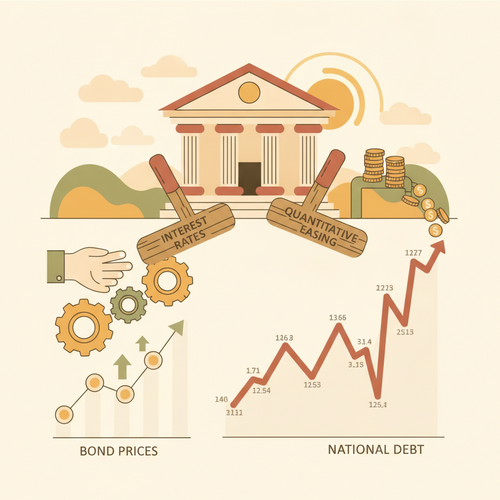
Central banks globally initiate monetary tightening to combat persistent inflationary pressures. This typically involves two primary levers: raising the benchmark policy rate and engaging in quantitative tightening (QT). Policy rate hikes directly increase the cost of overnight borrowing for commercial banks. This elevated cost then propagates through the financial system, affecting all other interest rates.
Quantitative tightening involves reducing the central bank’s balance sheet. This means allowing previously purchased government bonds and mortgage-backed securities to mature without reinvesting the proceeds. This process effectively removes liquidity from the financial markets. The aim is to reduce demand for sovereign debt, pushing yields higher, and to constrict overall credit availability.
Such policy shifts are often communicated through forward guidance. Central bank pronouncements about future rate paths critically influence market expectations. These signals help shape investor behavior, affecting bond demand and pricing even before actual policy implementation. Understanding these mechanisms is crucial for anticipating market reactions.
Direct Impact on Fixed Income Valuation
Monetary tightening creates an immediate downward pressure on existing fixed income valuations. Bond prices and yields maintain an inverse relationship. As central banks raise rates, newly issued bonds offer higher yields. This makes older, lower-yielding bonds less attractive by comparison.
The repricing mechanism compels existing bond prices to fall until their effective yield matches prevailing market rates. This sensitivity is particularly pronounced for bonds with longer durations. Duration risk measures a bond’s price sensitivity to interest rate changes. A longer duration implies greater volatility.
Higher discount rates reduce the present value of a bond’s future cash flows. This is a fundamental principle of asset valuation. Furthermore, monetary tightening can widen credit spreads, especially for corporate bonds. Economic slowdowns, often a consequence of tightening, increase perceived default risk for corporate issuers. Consequently, investors demand higher compensation for holding corporate debt over safer government securities.
Expert Insight: “Through several tightening cycles, we consistently observe that fixed income portfolios heavily weighted towards long-duration assets experience the most significant capital depreciation. Prudent management requires proactive duration hedging.”
Sovereign Yields and Fiscal Headwinds
Monetary tightening has profound implications for sovereign yields. Higher policy rates directly translate to elevated government borrowing costs. As existing sovereign debt matures, governments must refinance at these new, higher prevailing market rates. This significantly increases annual debt service payments.
For nations with substantial debt-to-GDP ratios, this can create severe fiscal headwinds. Increased interest expenses can crowd out other essential public spending, potentially necessitating fiscal austerity measures or tax increases. Such pressures can lead to credit rating downgrades, further exacerbating borrowing costs.
Quantitative tightening also directly impacts sovereign yield dynamics. By reducing central bank purchases of government bonds, the market loses a major buyer. This reduced demand, coupled with increased supply from government issuance, naturally pushes yields higher. A flattening or inverted yield curve often signals impending economic slowdowns, reflecting investor concerns about future growth. Learn more about the impact of duration on bond prices.
Global Interdependencies and Capital Flows
Monetary tightening in major economies triggers significant global capital reallocations. Higher risk-free rates in developed markets, such as the United States or the Eurozone, enhance their relative attractiveness. This often leads to a reversal of carry trades, where investors previously borrowed in low-interest-rate currencies to invest in higher-yielding assets elsewhere.
Capital flows from emerging markets to developed markets strengthen the currencies of tightening economies. A stronger U.S. Dollar, for instance, makes dollar-denominated debt more expensive for emerging market nations. This creates a double burden: higher local interest rates and a depreciating local currency against their foreign debt obligations.
This interconnectedness can lead to contagion risk. Financial stress in one region, triggered by capital outflows, can quickly spread globally. Policymakers in smaller economies must navigate complex trade-offs, often forced to raise their own rates defensively to stem capital flight, even if their domestic economic conditions do not warrant such tightening.
Investment Strategies Amidst Tightening Cycles
Navigating a monetary tightening cycle demands adaptive investment strategies. Investors often shift towards shorter-duration assets to mitigate interest rate risk. Short-term bonds, money market instruments, and floating-rate notes become more appealing. These assets reprice more quickly, aligning their yields with rising market rates.
Diversification beyond traditional fixed income is also critical. Alternative asset classes, inflation-protected securities (IPS), and robust equity strategies can provide portfolio ballast. Active management becomes paramount. Passive bond index tracking can lead to significant underperformance during periods of rising rates.
- Shorten Duration: Reallocate capital to bonds with maturities under five years.
- Consider Floating-Rate Notes: These instruments adjust their coupon payments to prevailing interest rates.
- Enhance Credit Quality: Focus on investment-grade corporate bonds to minimize default risk in a slowing economy.
- Explore Real Assets: Commodities and real estate can offer inflation hedges.
Historical Precedents and Forward Guidance
Studying past monetary tightening cycles provides invaluable context. The Federal Reserve’s actions in 1994, 2004-2006, and the recent 2022-2023 period offer critical lessons. Each cycle presented unique challenges but shared common threads: initial market volatility, subsequent economic adjustments, and eventual disinflationary outcomes.
In 1994, a rapid succession of rate hikes caught markets by surprise, leading to significant bond market losses. The 2004-2006 cycle was more gradual but preceded the 2008 financial crisis. The current cycle has been marked by aggressive hikes responding to historic inflation levels. Central bank communication, known as forward guidance, is now a more sophisticated tool. It aims to guide market expectations, reducing abrupt shifts. Understanding how the Federal Open Market Committee (FOMC) communicates is key.
Risk Management and Hedging Techniques
Proactive risk management is indispensable during monetary tightening. Investors employ various hedging techniques to protect fixed income portfolios. Interest rate swaps allow parties to exchange fixed-rate payments for floating-rate payments. This effectively converts a fixed-rate bond’s exposure into a floating-rate one, reducing duration risk.
Bond futures contracts also provide a mechanism for hedging. Selling bond futures can offset potential losses on physical bond holdings if rates rise. Scenario analysis and stress testing are crucial. These methods simulate portfolio performance under different interest rate trajectories. This prepares investors for various market outcomes.
Diversification across different fixed income sectors and geographies can further reduce idiosyncratic risks. A holistic approach integrating derivatives, active portfolio rebalancing, and robust analytical frameworks is essential. This safeguards capital in an environment of increasing interest rate volatility.
Conclusion
Monetary tightening profoundly reshapes fixed income landscapes. It drives down valuations, elevates sovereign borrowing costs, and reconfigures global capital flows. Navigating this environment demands a deep understanding of macroeconomic forces and astute portfolio management. Vigilance, adaptability, and a proactive approach to risk are non-negotiable for investors. Are your portfolios robust enough for sustained monetary headwinds?