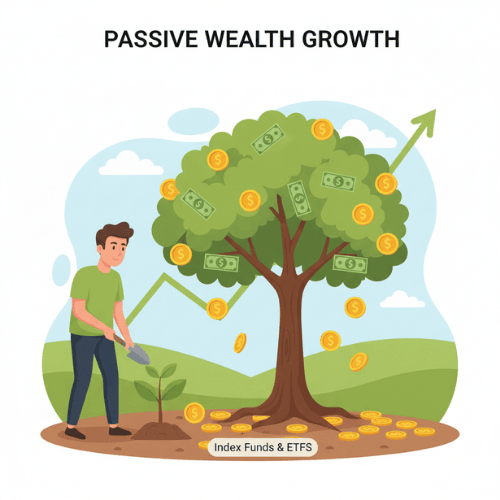
Introduction
Many aspiring investors often face a common dilemma. They want to grow their wealth over time but feel overwhelmed. The vast array of investment options can seem daunting. Understanding complex financial products is a significant barrier for many. This often leads to hesitation or missed opportunities in the market. Fortunately, there are simpler, yet powerful, avenues for wealth creation.
This guide will demystify investing in index funds and ETFs. These investment vehicles offer a straightforward path. They allow individuals to participate in the market efficiently. We will explore how these tools work. We will also discuss their benefits for building passive wealth. Learning about them can transform your financial journey. It can set you on a path to long-term financial security. This approach focuses on consistency, not constant market watching.
Understanding Index Funds and ETFs
Embarking on your investment journey requires understanding core concepts. Index funds and Exchange Traded Funds (ETFs) are popular choices. They appeal to both new and experienced investors. Both offer unique advantages for passive investing. They simplify market participation significantly.
What are Index Funds?
An index fund is a type of mutual fund. It aims to mirror the performance of a specific market index. Examples include the S&P 500 or the Dow Jones Industrial Average. Instead of picking individual stocks, these funds hold a basket of securities. This basket matches the index’s composition. When the index goes up, so does the fund. When the index goes down, the fund follows.
- Broad Market Exposure: They offer instant diversification.
- Low Costs: Management fees are typically lower.
- Passive Management: Fund managers do not actively trade. They simply track the index.
- Long-Term Growth: Ideal for patient investors seeking market returns.
What are ETFs?
An Exchange Traded Fund (ETF) is similar to an index fund. However, ETFs trade like individual stocks. They are bought and sold on stock exchanges. This happens throughout the trading day. ETFs can track various assets. These include market indexes, commodities, or bonds. Some even focus on specific industries.
- Intra-day Trading: You can trade ETFs during market hours.
- Diversification: Like index funds, they offer broad exposure.
- Lower Expense Ratios: Often more cost-effective than traditional mutual funds.
- Transparency: Holdings are usually disclosed daily.
Key Differences and Similarities
While often grouped, they have distinctions. Both offer diversification. Both are generally cost-effective. They both facilitate investing in index funds and ETFs for broad market exposure.
- Trading: Index funds trade once a day. This occurs after the market closes. ETFs trade continuously. They behave like stocks.
- Fees: Both generally have low expense ratios. ETFs might have trading commissions. Index funds often have minimum investment requirements.
- Flexibility: ETFs offer more flexibility in trading. Index funds are simpler for set-and-forget strategies.
- Structure: Index funds are typically mutual funds. ETFs are a distinct investment vehicle.
Benefits of Index Funds and ETFs
Choosing the right investment vehicles is crucial. Index funds and ETFs offer several compelling advantages. These benefits make them attractive options. They are excellent for passive wealth building. They align with long-term financial goals.
Diversification
Diversification is a cornerstone of smart investing. It means spreading your investments. This reduces the risk of any single asset. Index funds and ETFs excel at this. They hold many different securities.
- Instant Portfolio: A single purchase gives you exposure to hundreds of companies.
- Reduced Idiosyncratic Risk: The failure of one company has minimal impact.
- Market Exposure: You gain exposure to entire sectors or the whole market.
For example, an S&P 500 index fund holds 500 of the largest U.S. companies. You instantly own a small piece of each. This strategy minimizes risk. It smooths out market fluctuations. This makes investing in index funds and ETFs a safer bet.
Cost-Efficiency
Fees can erode your investment returns over time. Minimizing these costs is vital. Index funds and ETFs are known for their low expenses. They generally have lower expense ratios. This compares to actively managed funds.
- Low Expense Ratios: These are annual fees charged as a percentage of assets.
- No Active Management Fees: Passive strategies avoid high research costs.
- Potentially Fewer Commissions: Some brokers offer commission-free ETF trading.
Lower costs mean more of your money stays invested. This compounds over decades. It significantly boosts your final returns. This efficiency is a powerful advantage. It supports consistent financial growth.
Simplicity for Beginners
The investment world can seem complex. Index funds and ETFs simplify the process. They remove the need for extensive research. They also eliminate individual stock picking. This makes them ideal for new investors.
- Easy to Understand: Their objective is clear: track an index.
- Minimal Monitoring: Once invested, little ongoing management is needed.
- Set and Forget: Ideal for long-term investors. You can contribute regularly.
This straightforward approach allows beginners to start quickly. It builds confidence in their wealth management journey. It empowers them to begin investing in index funds and ETFs.
Getting Started: How to Invest
Ready to begin investing in index funds and ETFs? The process is quite accessible. It involves a few straightforward steps. Taking these steps sets the foundation for your passive wealth journey. A clear roadmap helps demystify the initial setup.
Opening a Brokerage Account
Your first step is to open a brokerage account. This is where you will hold your investments. Many reputable online brokers exist today. They offer user-friendly platforms.
- Research Brokers: Compare fees, investment options, and customer service.
- Account Types: Choose between a taxable brokerage account or a retirement account. Examples include an IRA or 401(k).
- Funding Your Account: Link your bank account to transfer funds.
Popular brokers often offer diverse investment choices. They also provide educational resources. This helps new investors navigate the market. Ensure the broker aligns with your financial goals.
Choosing the Right Funds
Once your account is set up, you need to select your funds. This is a critical decision. It depends on your investment goals and risk tolerance. Focus on broad-market funds initially.
- Identify Your Index: Decide which market index you want to track. The S&P 500 is a common starting point.
- Research Specific Funds: Look for ETFs or index funds that track that index. Use reputable fund providers.
- Consider Your Asset Allocation: Determine the mix of stocks and bonds. This should match your long-term plan.
For example, a total stock market index fund offers maximum equity exposure. A total bond market index fund adds stability. A balanced approach often combines both for diversification.
Understanding Expense Ratios
The expense ratio is a crucial factor. It is the annual fee charged by the fund. This fee covers management and operating costs. It is expressed as a percentage of your investment. Lower expense ratios mean more money in your pocket.
- Compare Expense Ratios: Always choose funds with the lowest possible fees.
- Impact on Returns: Even small differences compound significantly over decades.
- Look for Vanguard, Fidelity, iShares: These providers are known for low-cost funds.
For instance, an expense ratio of 0.03% is excellent. One of 0.50% is significantly higher. Over 30 years, this difference can amount to thousands. Prioritizing low fees is key for long-term investment success.
Building a Passive Wealth Strategy
Investing in index funds and ETFs is just one component. Building truly passive wealth requires a strategic approach. This involves consistent effort and a long-term mindset. It’s about setting up a system. This system works for you over decades.
Asset Allocation Principles
Asset allocation is distributing your investment capital. This occurs across various asset classes. Examples include stocks, bonds, and cash. Your allocation depends on your age, goals, and risk tolerance. It’s a key part of financial planning.
- Diversify Across Classes: Do not put all your money into one type of asset.
- Risk vs. Return: Stocks offer higher potential returns but also higher risk. Bonds offer stability.
- Age-Based Allocation: Younger investors might favor more stocks. Older investors might prefer more bonds.
A common guideline is the “110 minus your age” rule for stock allocation. If you are 30, you might aim for 80% stocks. The remaining 20% would be in bonds. This provides a balanced approach to wealth building.
Rebalancing Your Portfolio
Over time, your asset allocation will shift. Market performance causes some assets to grow faster. This can throw your desired balance off. Rebalancing brings your portfolio back to your target allocation.
- Regular Intervals: Rebalance annually or semi-annually.
- Selling Winners, Buying Losers: Sell off assets that have grown too large. Use the proceeds to buy underperforming assets.
- Maintain Risk Level: This ensures your portfolio’s risk profile remains consistent.
Rebalancing is a disciplined approach. It helps you stay true to your strategy. It prevents your portfolio from becoming too risky or too conservative. This supports sustained financial growth.
The Power of Compounding
Compound interest is often called the eighth wonder of the world. It is the process of earning returns on your initial investment. You also earn returns on the accumulated interest. This effect is incredibly powerful over long periods.
- Start Early: The earlier you begin, the more time compounding has to work.
- Regular Contributions: Consistently adding to your investments accelerates growth.
- Long-Term Horizon: Compounding truly shines over decades.
For example, $100 invested today could become much more. If it grows at 7% annually, it doubles in about ten years. With regular contributions, this growth becomes exponential. This makes investing in index funds and ETFs a powerful tool.
Risk Management and Considerations
While investing in index funds and ETFs offers many advantages, it is not without risks. Understanding these potential downsides is crucial. It prepares you for market fluctuations. It helps you make informed decisions. Responsible investing involves acknowledging and mitigating risks.
Market Volatility
All investments carry some degree of risk. Index funds and ETFs are subject to market volatility. This means their value can go up and down. These fluctuations are a normal part of investing.
- Short-Term Declines: Markets can experience downturns. These can be sharp and sudden.
- Emotional Responses: Avoid panic selling during dips. This can lock in losses.
- Long-Term Perspective: Historically, markets recover and grow over time. Focus on the long haul.
A diversified portfolio helps cushion these blows. However, you should be prepared for periods where your investments may lose value. This requires patience and discipline. It is a key aspect of wealth management.
Understanding Fees
Beyond expense ratios, other fees can impact returns. These include trading commissions and fund-specific fees. Always scrutinize the total cost of ownership.
- Trading Commissions: Some brokers charge a fee for buying or selling ETFs.
- Bid-Ask Spread: ETFs have a bid price and an ask price. The difference is the spread. This is a small transaction cost.
- Account Maintenance Fees: Some brokers charge for maintaining an account.
Choose brokers and funds with transparent and low fee structures. High fees can significantly reduce your net returns. This is especially true over many years. Always compare and choose wisely when investing in index funds and ETFs.
Long-Term Horizon
Investing in index funds and ETFs is best suited for a long-term investment horizon. These strategies are designed for growth over many years. Short-term speculation is generally not advisable.
- Avoid Timing the Market: It is nearly impossible to predict market movements consistently.
- Time in the Market: Focus on the duration of your investment. This is more important than market timing.
- Patience is Key: Allow your investments time to grow and compound.
For retirement planning or other distant goals, a long-term view is essential. It allows you to ride out market cycles. It capitalizes on the power of compounding. This approach leads to more reliable financial growth.
ETFs Beyond Index Tracking
While many ETFs track broad market indexes, their versatility extends further. Understanding this broader scope can enhance your investment knowledge. It reveals more nuanced options available in the market. This section explores some additional types of ETFs. These cater to specific strategies or interests.
Actively Managed ETFs
Unlike traditional index-tracking ETFs, some are actively managed. Here, a fund manager makes active decisions. They choose specific securities. Their goal is to outperform a benchmark index.
- Potential for Higher Returns: If the manager is successful, returns can exceed passive funds.
- Higher Expense Ratios: Active management typically comes with higher fees.
- Manager Risk: Performance depends heavily on the manager’s skill.
These funds introduce an element of active management. This contrasts with the pure passive approach. They might appeal to investors seeking different strategies. However, they require more scrutiny due to their higher costs and manager dependency.
Thematic ETFs
Thematic ETFs focus on specific trends or industries. These trends could be technological innovations. They might also be demographic shifts or environmental changes. Examples include clean energy, artificial intelligence, or cloud computing.
- Exposure to Growth Trends: They offer targeted investment in specific themes.
- Concentrated Risk: Performance is tied to the success of that particular theme.
- Research Required: Understanding the underlying theme is crucial.
These ETFs allow investors to express a view on future market directions. They can complement a core portfolio of broad index funds. However, they typically carry higher risk due to their concentrated nature. They are not usually recommended as a primary investment for beginners. Diversification remains paramount.
Sector ETFs
Sector ETFs invest in companies within a particular economic sector. This could be technology, healthcare, finance, or consumer staples. They provide targeted exposure to specific segments of the economy.
- Industry-Specific Focus: Allows investors to overweight certain sectors.
- Cyclical Performance: Some sectors perform better in different economic cycles.
- Less Diversification: Compared to broad market funds, they are more concentrated.
While offering targeted growth potential, sector ETFs increase concentration risk. They are generally used by investors with a strong conviction about a particular industry’s future. They are not a substitute for core diversified holdings. Understanding these options broadens your perspective on the investing in index funds and ETFs landscape.
Conclusion
Embarking on the journey of investing in index funds and ETFs is a commendable step. It provides a robust and accessible path toward passive wealth building. We have explored the fundamental principles of these powerful investment vehicles. Their ability to offer broad diversification at low costs is a significant advantage. This makes them ideal for new investors and those seeking long-term investment growth.
Remember, successful investing is not about getting rich quickly. It is about consistent contributions and patience. It involves understanding the power of compounding. It also means appreciating the benefits of diversification. By choosing low-cost index funds or ETFs, you align your portfolio with market performance. This avoids the pitfalls of trying to beat the market. Take the knowledge gained here as your foundation. Begin building a financially secure future.