Introduction
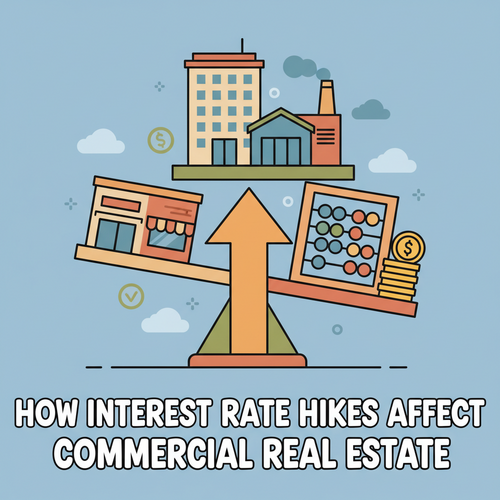
The impact of rising interest rates on commercial real estate is a critical topic for every investor today. Commercial Real Estate (CRE) is a cornerstone of many diverse investment portfolios. It encompasses a wide range of properties, including office buildings, retail centers, industrial warehouses, and multifamily residential complexes. Generally, investors value CRE for its potential for steady income and capital appreciation. However, like all investments, it is subject to various market forces. The impact of rising interest rates on commercial real estate is among the most significant of these forces.
This knowledge helps both novice and experienced investors make informed decisions and safeguard their portfolios. In fact, the impact of rising interest rates on commercial real estate can dramatically alter the landscape for property owners and buyers, affecting everything from property valuations to financing costs.
This article explores exactly how increasing interest rates affect the CRE market. We will cover direct and indirect effects and outline strategies for navigating such challenging conditions. By the end, you will have a clearer picture of how to assess and adapt your investment approach to withstand the full impact of rising interest rates on commercial real estate.
The Basics: Interest Rates and Borrowing Costs
Interest rates reflect the cost of borrowing money. Central banks, such as the Federal Reserve, adjust these rates to manage economic growth and inflation. When interest rates rise, borrowing becomes more expensive. This shift has far-reaching consequences for the entire economy, but especially for capital-intensive sectors like CRE.
For investors, higher rates translate immediately into increased financing costs. Most commercial properties involve significant debt, often through mortgages or construction loans. As rates rise, new financing becomes more expensive, and variable-rate loans see higher monthly payments. This reduces the immediate cash flow available to the investor.
This dynamic directly raises the cost of capital. When debt becomes more expensive, projects may become less profitable or even unfeasible. Lenders often respond by tightening standards, requiring higher down payments or stronger credit profiles. As a result, access to financing becomes more limited, slowing down transaction volume across the market.
The Direct Impact of Rising Interest Rates on Commercial Real Estate
Interest rate hikes have a direct impact of rising interest rates on commercial real estate values, typically causing them to decline. One major reason is the effect on capitalization rates (cap rates), a fundamental metric in the industry.
Understanding Cap Rates and Valuation
A cap rate represents the ratio of a property’s net operating income (NOI) to its market value. Essentially, it is the yield an investor expects. When interest rates rise, risk-free assets like Treasury bonds yield more. Consequently, investors demand higher returns from riskier assets like real estate to justify the investment. This causes cap rates to increase (expand).
There is an inverse relationship between cap rates and property values. When cap rates rise and NOI remains the same, property values fall. For example, a property generating $100,000 in NOI is worth $2 million at a 5% cap rate. If the cap rate rises to 6% due to interest rate hikes, that same property is now worth only roughly $1.67 million. This illustrates the severe impact of rising interest rates on commercial real estate valuations.
Reduced Purchasing Power
Higher borrowing costs also reduce purchasing power. Buyers can afford less debt for the same monthly payment. This leads to fewer competitive bids and lower offer prices. This softens overall demand and puts further downward pressure on valuations, creating a buyer’s market where sellers may need to adjust expectations.
Indirect Effects: Tenant Demand and Rental Income
Rising interest rates also create indirect effects through broader economic slowdowns. Central banks raise rates primarily to control inflation, but this mechanism can inadvertently reduce economic activity.
Economic Slowdown and Business Contraction
As operational costs rise and consumer spending tightens, businesses may reduce hiring or delay expansion plans. This leads to lower tenant demand across CRE sectors. Office vacancies may rise as companies downsize, retailers may hesitate to sign new leases due to lower consumer confidence, and industrial demand can decline as e-commerce slows.
Pressure on Rental Income
Lower tenant demand slows rental growth and may even reduce rental income. Landlords may need to offer concessions, such as free rent periods or tenant improvement allowances, to retain occupants. This lowers the effective Net Operating Income (NOI). Since value is derived from NOI, any reduction here further amplifies the negative impact of rising interest rates on commercial real estate values.
Financing and Refinancing Challenges in a High-Rate Environment
Interest rate hikes make financing and refinancing significantly more difficult. For new acquisitions, higher rates mean larger monthly payments, reducing the Debt Service Coverage Ratio (DSCR) and making properties less affordable. Developers may find that planned projects are no longer profitable due to the increased cost of construction loans.
The Refinancing Wall
Existing owners face significant refinancing risk. Many commercial loans are not fully amortized and have balloon payments maturing every 5 to 10 years. If rates are much higher at maturity than they were at origination, refinancing can cause massive “payment shocks.”
If the property’s cash flow cannot cover the increased debt service, owners may face default or be forced to inject new equity to pay down the loan balance. In extreme cases, they may be forced to sell the asset at a discount. Lenders also monitor the DSCR closely. Higher rates reduce this ratio, making lenders more cautious and restrictive, often requiring borrowers to buy expensive interest rate caps.
Investment Strategies to Mitigate the Impact of Rising Interest Rates on Commercial Real Estate
While the environment is challenging, it is not impossible to navigate. Savvy investors adapt their strategies to mitigate risks and even find opportunities during periods of dislocation. Understanding the impact of rising interest rates on commercial real estate allows for smarter moves.
Shift Toward Core Income Properties
Properties with long-term leases and creditworthy tenants offer stable income. These assets are less sensitive to short-term market fluctuations. For instance, a building leased to a government agency or a blue-chip corporation for 15 years provides a bond-like income stream that is highly defensive.
Prioritize Tenant Strength
In uncertain times, the quality of the tenant is paramount. Choose properties with strong tenant covenants and longer lease terms. These characteristics reduce vacancy risk and ensure income continuity even if the broader economy weakens. Researching tenant financials becomes a critical part of due diligence.
Explore Alternative Financing
Consider mezzanine debt, preferred equity, or joint ventures to reduce reliance on costly traditional bank loans. Additionally, seller financing can sometimes offer more favorable terms than institutional lenders. Being creative with the capital stack can save a deal that would otherwise die due to high rates.
Strengthen Due Diligence
Stress-test financial assumptions against multiple rate scenarios. Never assume that you will be able to refinance at a lower rate in the future. Ensure that cash flow can withstand higher debt service or a drop in occupancy. Understanding the worst-case scenario regarding the impact of rising interest rates on commercial real estate is essential for survival.
Focus on Value-Add Opportunities
Increase NOI through renovations, improved management, or operational efficiencies. By forcing appreciation through income growth, you can counteract the effect of rising cap rates. For example, upgrading an older multifamily complex to justify higher rents can increase the property’s value regardless of market trends.
Diversify Your Portfolio
Spread investments across sectors and regions to reduce exposure to localized market risks. While office space might be suffering, industrial or data center properties might be thriving. Diversification is your primary defense against sector-specific downturns caused by economic tightening. Reports from firms like CBRE can help you identify resilient sectors.
Monitor Market Trends
Stay updated on economic indicators and central bank policy. Monitoring trends enables timely decisions and strategic adjustments. For instance, knowing when the Federal Reserve plans to pause rate hikes can signal the perfect time to re-enter the market aggressively.
Conclusion
Interest rate hikes create challenges for CRE investors by increasing borrowing costs, lowering property values, and complicating financing. However, with a strong understanding of market dynamics and a strategic approach, investors can mitigate risk and uncover new opportunities.
Focusing on stable income, conducting thorough financial planning, diversifying assets, and adapting financing strategies are key to navigating a rising rate environment. Ultimately, understanding the full impact of rising interest rates on commercial real estate allows you to make informed decisions. With these insights, investors can protect and grow their CRE portfolios even during periods of elevated interest rates. For further reading on economic indicators, reliable sources like Bloomberg provide real-time data essential for every investor.