Introduction
In the dynamic world of business, every decision, from managing daily operations to crafting marketing strategies, directly impacts your company’s financial health. One area often overlooked but offering significant potential for savings and rewards is the strategic use of business credit cards. For many entrepreneurs and established companies, advertising expenditure represents a substantial portion of their budget. At the same time, business travel is an unavoidable reality for growth, networking, and client engagement. Effectively merging these two crucial aspects through carefully chosen financial tools can unlock considerable value.
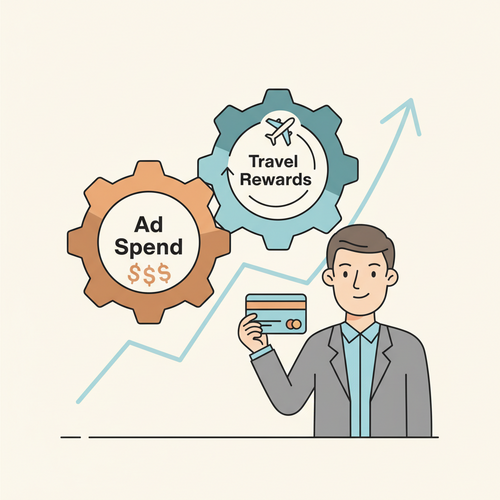
This article explores how selecting the right Business Credit Cards for Ad Spend and Travel Rewards can transform your operational expenses into valuable assets. It is not just about managing cash flow; it is about maximizing every dollar spent. By understanding the intricate reward structures and benefits offered by various cards, businesses can turn necessary outlays into opportunities for significant savings, enhanced travel experiences, and improved financial efficiency. We will delve into how to identify cards that offer superior rewards for advertising costs and simultaneously provide premium travel perks, ensuring your business gets the most out of its investments.
Understanding Business Credit Card Rewards Structures
Before diving into specific card features, it is crucial to grasp the fundamental ways business credit cards reward their users. These structures dictate how you accumulate points or cash back and ultimately influence the card’s overall value to your enterprise.
Cash Back vs. Travel Points
The primary distinction lies between cash back and travel points. Cash back cards typically offer a percentage of your spending back as a statement credit or direct deposit. This approach provides straightforward, tangible savings, making it an attractive option for businesses prioritizing immediate financial returns and simplified reward redemption. For instance, a card offering 2% cash back means you get $2 for every $100 spent, which can be directly applied to reduce future expenses or reinvested into the business. This predictability makes cash back particularly appealing for budgeting and controlling costs.
Conversely, travel points cards award points for every dollar spent. These points are generally more flexible and can often be redeemed for flights, hotel stays, car rentals, or even transferred to airline and hotel loyalty programs. The value of travel points can fluctuate, often depending on how they are redeemed. For example, points used for premium cabin flights or luxury hotel stays might yield a higher per-point value than those redeemed for merchandise or a statement credit. This flexibility is a significant draw for businesses with frequent travel needs, allowing them to offset travel costs considerably. Understanding your business’s typical spending patterns and redemption preferences is key to choosing between these two systems.
Sign-Up Bonuses and Annual Fees
Two other critical factors to consider are sign-up bonuses and annual fees. A sign-up bonus is a substantial one-time reward offered to new cardholders who meet specific spending requirements within an initial period, usually the first few months. These bonuses, often tens of thousands of points or hundreds of dollars in cash back, can significantly boost your initial rewards accumulation. Businesses with upcoming large expenses, such as a major advertising campaign or equipment purchase, can strategically time their credit card application to easily meet these spending thresholds and capitalize on the bonus. This initial influx of rewards can provide immediate value.
However, many premium business credit cards come with an annual fee. These fees can range from under $100 to several hundred dollars. It is essential to weigh the annual fee against the total value of the card’s benefits, including rewards, perks, and credits. A card with a high annual fee might still offer superior net value if its rewards rates, sign-up bonus, and additional benefits (like travel credits, lounge access, or purchase protection) far outweigh the cost. For example, a card with a $450 annual fee that provides $300 in annual travel credits, significant points multipliers, and lounge access could easily provide value exceeding the fee for a frequent business traveler. Always perform a cost-benefit analysis to ensure the card justifies its recurring charge.
Top Cards for Maximizing Ad Spend Rewards
For businesses heavily invested in digital marketing, choosing a credit card that specifically rewards advertising expenditure can lead to substantial savings. These cards are designed to give you more back on what you already spend to grow your brand.
Cards with High Multipliers on Advertising
Many leading business credit cards offer enhanced rewards for spending in specific categories, and advertising is frequently a prime focus. Look for cards that provide high multipliers on expenses categorized as online advertising, social media advertising, or general marketing services. For instance, some cards might offer 4x points or 4% cash back on the first $150,000 spent annually in selected business categories, which often include advertising purchases from major platforms like Google Ads, Facebook Ads, LinkedIn Ads, or other digital marketing agencies. These boosted rates mean that for every dollar spent on promoting your business, you are accumulating rewards at an accelerated pace, significantly reducing the net cost of your campaigns.
Beyond broad advertising categories, some cards might also offer elevated rewards on office supplies or telecommunications services, which can indirectly support marketing efforts. The key is to examine your advertising invoices and understand how your expenses are typically categorized by the credit card network. Knowing this allows you to choose a card that aligns perfectly with your spending habits, ensuring you do not miss out on potential rewards. Prioritizing cards that offer flexible category selection or automatically adjust to your highest spending categories can also be a smart move, adapting to your business needs as they evolve. This adaptability ensures that your rewards continue to be optimized, regardless of shifts in your marketing strategy or spending focus.
Strategies for Optimizing Ad Spend Categories
Maximizing your rewards from ad spend goes beyond just selecting the right card; it also involves smart spending practices. One crucial strategy is to properly categorize your expenses. While many advertising platforms are automatically recognized by credit card companies, always review your statements to ensure your ad purchases are indeed falling into the bonus categories. If a transaction is miscategorized, contacting your credit card issuer might allow for reclassification, ensuring you receive the correct rewards. Diligent tracking and reconciliation are important here.
Another powerful strategy is to leverage introductory offers. Many business cards offer elevated reward rates for specific spending categories for a limited time after account opening. If you have a large advertising campaign planned, applying for a card with an introductory bonus on marketing spend can significantly amplify your rewards during that crucial period. For example, a card offering 5x points on advertising for the first six months could provide an enormous boost to your points balance if you spend heavily on ads during that time. The Consumer Financial Protection Bureau provides helpful resources on understanding credit card terms and features, which can guide your decision-making process. Regularly assessing your card portfolio and being willing to open new cards strategically can keep your rewards optimized.
Leading Cards for Travel Rewards and Business Perks
For businesses where travel is a regular occurrence, whether for client meetings, conferences, or team building, cards offering robust travel rewards and premium perks can make significant differences in operational costs and employee comfort.
Premium Travel Cards for Business
Premium business travel cards are designed to cater to the needs of frequent business travelers, offering a suite of benefits that extend far beyond simple points accumulation. Key features often include lounge access at airports worldwide, providing a comfortable and productive environment during layovers. Many cards offer complimentary access to networks like Priority Pass or specific airline lounges, enhancing the travel experience for employees and executives. Additionally, these cards frequently come with travel credits, which can offset expenses like airline fees, hotel stays, or even rideshare services. A common benefit is a statement credit for Global Entry or TSA PreCheck application fees, streamlining the security process at airports. These small conveniences add up to significant time and stress savings for busy professionals.
The core of travel rewards lies in their flexibility. Look for cards that offer transferable points, allowing you to convert your accumulated points into airline miles or hotel loyalty points with various partners. This flexibility often yields the highest redemption value, especially when used for international flights or luxury accommodations. For example, transferring points to a partner airline during a promotional bonus can sometimes result in 1.5 to 2 cents per point in value, far exceeding the typical 1 cent per point for cash back. Investopedia offers insights into maximizing travel rewards, which can be invaluable for businesses aiming to optimize their travel budget. Also, consider cards that offer complimentary hotel elite status, which can lead to upgrades, late checkouts, and other valuable perks during business trips.
Additional Business Benefits
Beyond travel and ad spend rewards, many business credit cards offer a range of practical benefits designed to support day-to-day operations and provide peace of mind. One significant advantage is the ability to issue employee cards, often with customizable spending limits and detailed reporting. This feature simplifies expense tracking, making it easier to monitor individual employee spending and integrate data into accounting software. It also helps in identifying potential areas for cost reduction. Comprehensive expense management tools, often accessible through online portals, allow businesses to generate reports, categorize transactions, and streamline reconciliation, saving valuable administrative time.
Moreover, business credit cards frequently include various forms of protection. Purchase protection can cover eligible items against damage or theft for a certain period after purchase. Extended warranty protection can double the manufacturer’s warranty on eligible items. For travel, benefits like trip cancellation/interruption insurance, baggage delay insurance, and car rental insurance can offer substantial financial safeguards against unforeseen events. These protections can prevent significant financial losses and provide crucial support during business travel. Always review the specific terms and conditions of these benefits, as they can vary widely between cards and issuers. Understanding these additional perks ensures you are fully leveraging all aspects of your chosen business credit card. The U.S. Small Business Administration provides guidance on various financial aspects for businesses, including credit. These benefits contribute to a more secure and efficient business operation overall.
Choosing the Right Card for Your Business
The myriad of options available can make selecting the ideal business credit card seem daunting. However, a structured approach focused on your specific business needs can simplify the process.
Assessing Your Business Needs
The first step is to conduct a thorough assessment of your business’s unique financial landscape and operational requirements. Consider your annual spending patterns: how much do you typically spend on advertising? What are your other major expense categories, such as supplies, software, or utilities? Knowing where your money goes will help you identify cards that offer the highest rewards in those specific areas. For example, if your ad spend is exceptionally high, a card with a premium multiplier on marketing might be more beneficial than one focused solely on travel.
Next, evaluate your travel frequency and preferences. Do you travel domestically or internationally? Do you prefer a specific airline or hotel chain? If you are a road warrior, a card offering lounge access and robust travel insurance might be paramount. If your travel is infrequent, perhaps a card with strong cash back on general business expenses would be a better fit, even if it has fewer travel perks. Consider the size of your business and your growth trajectory. A small startup might prioritize cash back to reinvest, while a growing company with expanding travel might lean towards travel points. Your cash flow considerations are also important; some cards offer longer interest-free periods on purchases, which can be a lifeline for businesses managing fluctuating revenues. Aligning the card’s features with these specific needs is critical for long-term value.
Comparing Annual Fees and APRs
Beyond rewards, the financial mechanics of a credit card, specifically its annual fee and Annual Percentage Rate (APR), demand careful consideration. We discussed annual fees earlier in the context of overall value, but it bears repeating: never select a card with an annual fee unless you are confident that the benefits and rewards you receive will significantly outweigh that cost. For example, if a card has a $95 annual fee but provides $200 in travel credits and enough rewards to cover another $300 in expenses, the net value is positive. If you do not anticipate fully utilizing a card’s premium benefits, a no-annual-fee option might be more financially prudent, even if its rewards structure is less aggressive. It is important to remember that a higher annual fee usually corresponds to more lucrative benefits, but only if those benefits align with your business’s needs.
The APR is another vital factor, especially if your business anticipates carrying a balance from month to month. A high APR can quickly negate any rewards earned, as interest charges can accumulate rapidly. If you foresee instances where you might not be able to pay off your balance in full, prioritize cards with lower ongoing APRs or look for introductory 0% APR offers on purchases. These offers can provide a valuable window to finance large purchases or manage cash flow without incurring interest charges. However, these promotional rates are temporary, and the regular APR will apply once the introductory period ends. Always aim to pay your balance in full each month to avoid interest, making rewards truly free. For businesses that consistently pay in full, the APR is less of a concern, allowing them to focus primarily on rewards and benefits.
Conclusion
Choosing the optimal Business Credit Cards for Ad Spend and Travel Rewards is a strategic decision that can significantly impact your company’s financial health and operational efficiency. By carefully evaluating your business’s unique spending habits, travel requirements, and cash flow considerations, you can identify cards that not only streamline expenses but also transform them into valuable assets. Whether your priority is maximizing cash back on extensive advertising campaigns or leveraging premium travel perks for your global ventures, there is a credit card designed to meet those needs.
Remember to consider the comprehensive value proposition of each card, weighing sign-up bonuses, annual fees, reward structures, and additional business benefits. Continuously review your card portfolio to ensure it aligns with your evolving business goals. By making informed choices, you can ensure that your business credit cards are powerful tools, contributing to sustained growth and greater financial agility.