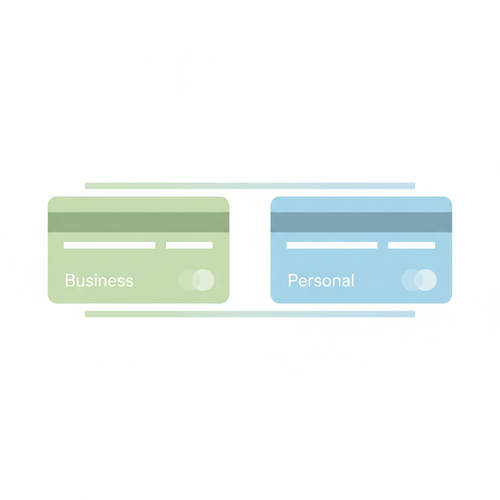
Quick Summary: Why Separate Your Cards
- 🛡️ Legal Protection: You must safeguard your personal assets, such as your home and savings, from potential business liabilities and lawsuits.
- 📈 Financial Clarity: Dedicated accounts simplify your accounting processes, budgeting efforts, and annual tax preparation.
- 💰 Build Business Credit: Using a separate card allows you to establish a credit profile that is unique to your company, independent of your personal score.
Why You Absolutely Must Separate Your Cards
Protect Your Personal Assets and Legal Standing
Imagine your business facing an unexpected lawsuit or a major financial setback. If you are mixing funds on Business vs Personal Credit Cards, your personal savings and even your home could be at risk. In legal terms, this is often described as “piercing the corporate veil” for incorporated businesses. If a court decides that your business and personal lives are indistinguishable, you lose your limited liability protection.
Even if you operate as a sole proprietor, maintaining separate cards makes a strong case that your business is a distinct and professional entity. This distinction is vital for long-term protection. Consequently, it keeps your personal wealth safe from business-specific debts and legal entanglements. It is essentially about creating a transparent financial fortress around your private assets.
Streamline Your Bookkeeping and Tax Compliance
In my professional experience, untangling mixed expenses is one of the most frustrating and time-consuming tasks for any small business owner. Every single transaction on a joint statement needs to be manually sorted, labeled, and categorized during tax season. This manual process is prone to errors. Furthermore, it increases the likelihood of missing out on valuable tax deductions that could save you thousands of dollars.
When you utilize a dedicated business card, all your professional expenses are neatly consolidated in one place. This organization makes monthly reconciliation a breeze and dramatically slashes the time you spend on tax preparation. Therefore, choosing the right tool from the Business vs Personal Credit Cards spectrum is a major win for your operational efficiency. It allows you to focus more on growth and less on administrative cleanup.
Pro Tip: Automate Your Financial Workflow! Link your business credit card directly to your accounting software, such as QuickBooks or Xero. This way, transactions are automatically imported and categorized daily. Automation is your most powerful ally in managing business finance efficiently, as it eliminates human error and provides real-time data on your company’s spending habits.
Build a Strong and Independent Business Credit Profile
Did you know your business can have its own credit score, entirely separate from your personal one? Just like your personal credit history, a strong business credit profile opens critical doors for future expansion. Lenders and financial institutions look at this specific score when considering applications for business loans, equipment financing, or commercial lines of credit.
Using a business credit card responsibly, and consistently paying it on time, contributes positively to this independent profile. This separate credit history is essential for long-term growth. It allows you to secure better interest rates and larger financing options as your business expands. Consequently, separating your spending is an investment in your company’s future credibility and borrowing power.
- 🚀 Future Funding: A solid business credit score makes it significantly easier to secure high-value loans for expansion.
- 🤝 Vendor Relations: Many suppliers and vendors check your business credit before offering favorable net-30 or net-60 payment terms.
- 🌟 Professional Image: Having a dedicated business card shows banks and partners that you run a serious, well-managed operation.
- 📉 Lower Interest Rates: Better business credit can lead to more favorable loan terms, saving you significant capital over time.
Business vs Personal Credit Cards: Key Differences Explained
While they both look like standard plastic rectangles, the underlying legal structure and financial implications of Business vs Personal Credit Cards are vastly different. It is not just a matter of whose name is printed on the card. Instead, it is about the specific consumer protections and reporting standards that apply to each type of account.
Understanding these fundamental distinctions will clarify why separation is not merely a suggestion for entrepreneurs. It is a technical necessity for anyone looking to scale their operations professionally. Here is a comprehensive overview of the main contrasts you need to consider before applying for your next card.
| Feature | Business Credit Card | Personal Credit Card |
|---|---|---|
| Primary Purpose | Business expenses, cash flow management, and building separate credit. | Personal expenses, household budgeting, and personal credit scores. |
| Credit Reporting | Reports to business bureaus (Dun & Bradstreet, Experian Business). | Reports solely to personal bureaus (Experian, Equifax, TransUnion). |
| Liability Structure | Primary liability is with the business; often requires an owner’s guarantee. | Sole liability rests entirely with the individual cardholder. |
| Rewards Focus | Tailored to business needs like office supplies, travel, and shipping. | Focused on personal categories like groceries, gas, and dining. |
| Legal Protections | Fewer consumer protections; the CARD Act does not fully apply. | Strong consumer protections under federal laws like the CARD Act. |
| Spending Limits | Often significantly higher limits to accommodate large operational needs. | Limits based on individual income and personal creditworthiness. |
Navigating the “Personal Guarantee” Clause
Most business credit cards for small business owners still require a personal guarantee. This means that you, as the individual owner, are ultimately responsible for the debt if your business cannot fulfill its payments. While this might seem to blur the lines, the separation of Business vs Personal Credit Cards remains crucial for bookkeeping and building the company’s reputation. It ensures that while you are the ultimate guarantor, the daily financial records remain professional and distinct.
Common Pitfalls of Mixing Your Financial Lives
When you use your personal card for business expenses, you are setting yourself up for a world of administrative pain. This habit creates a financial mess that complicates almost every aspect of your professional life. Avoid these common traps by maintaining strict separation from the very first day of your business operations. It is much easier to start with clean habits than to try and untangle a financial knot years down the line.
- 🤯 Audit Red Flags: Mixed expenses can make your business look disorganized or fraudulent during an IRS audit.
- 🚨 Increased Personal Liability: You risk losing personal assets if your business faces debt issues and the finances are tangled.
- 💸 Missed Tax Deductions: It is remarkably easy to overlook eligible business expenses when they are buried among grocery receipts.
- ⏰ Wasted Administrative Time: You will spend hours manually sorting transactions that could have been spent growing your revenue.
Warning: The IRS Maintains Strict Standards. During an audit, the burden of proof is entirely on you. You must demonstrate which expenses are truly business-related with clear documentation. If you cannot provide a distinct trail, those deductions will be disallowed. This leads to back taxes, interest, and heavy penalties. Keep immaculate, separate records at all times!
How to Effectively Separate Your Finances Today
The good news is that separating your finances is not overly complicated, but it does require consistent discipline. It is a foundational step for any serious entrepreneur. Follow these simple steps to ensure a clear distinction between your Business vs Personal Credit Cards spending habits. Consistency is the key to maintaining long-term financial health and legal safety.
- ✅ Open a Business Checking Account: This is your first and most crucial step. All business income should flow through this account exclusively.
- 💳 Apply for a Business Credit Card: Research options that offer rewards relevant to your industry, such as travel points or office supply cash back.
- 🔁 Transfer Recurring Expenses: Immediately update billing information for all professional subscriptions, utilities, and software to your new business card.
- 🙅♀️ Be Strict with Usage: If it is a business expense, use the business card. Period. Never “borrow” from your personal accounts for convenience.
- 📊 Regularly Review Statements: Check both your personal and business statements monthly to catch any accidental mixing of funds before they become a problem.
To stay informed about the evolving landscape of commerce, you should regularly monitor global business trends at Bloomberg. For expert financial advice and management strategies, Forbes provides excellent insights for small business owners. Additionally, staying updated with the Wall Street Journal and exploring business research from the Harvard Business Review can help you maintain a competitive and professional edge.
Conclusion: Investing in Your Business’s Future Clarity
Separating your Business vs Personal Credit Cards is not just about good accounting; it is about laying a solid foundation for your company’s future success. It protects your personal assets, simplifies your administrative life, and helps your business build its own identity. By taking this simple but powerful step, you are embracing the financial discipline that will pay dividends for many years to come.
Do not procrastinate on this critical aspect of financial hygiene. The sooner you establish these boundaries, the faster you can focus on what truly matters: serving your customers and scaling your vision. What specific steps will you take today to ensure your business and personal finances remain clearly and professionally separated?