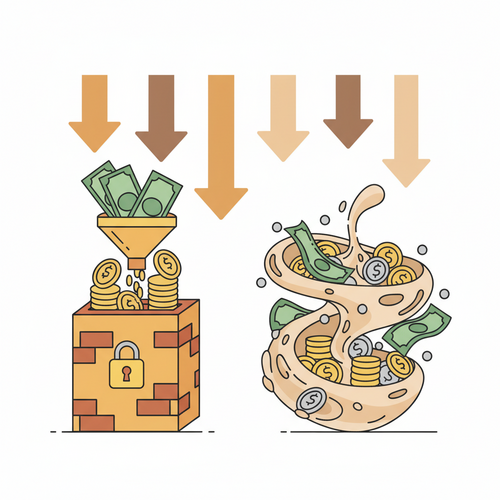
Certificates of Deposit (CDs) vs. High-Yield Savings: Navigating your investment choices, especially for beginner investors, becomes crucial when interest rates begin to fall. Many individuals wonder which option offers the best strategy for preserving and growing their money. Understanding the distinct features of both Certificates of Deposit (CDs) and High-Yield Savings Accounts (HYSAs) is therefore essential. This article will thoroughly compare these two popular savings vehicles, examining their benefits and drawbacks, particularly in a declining rate environment. By the end, you will possess a clearer understanding to make informed financial decisions.
Understanding Certificates of Deposit (CDs)
A Certificate of Deposit, commonly known as a CD, represents a specific type of savings account. Consequently, it holds your money for a fixed period. You agree not to withdraw the funds during this term. In return, the bank pays you a fixed interest rate. This rate remains constant throughout the CD’s entire duration. Furthermore, CDs are typically offered by banks and credit unions. They come with various term lengths, ranging from a few months to several years. Most importantly, your investment is insured by the FDIC up to $250,000 per depositor, per institution, ensuring its safety. This insurance provides considerable peace of mind for savers. Learn more about FDIC insurance here.
What is a CD?
Essentially, a CD is a time deposit account. You commit your money for a predetermined duration. For instance, you might choose a 6-month, 1-year, or 5-year CD. The interest rate is locked in at the time of purchase. Therefore, it does not fluctuate with market changes. Banks prefer CDs because they offer stable funding. For investors, they provide predictable returns. However, accessing your money before the maturity date often incurs a penalty. This penalty can reduce your earned interest. Sometimes, it may even dip into your principal.
Pros of CDs
- Predictable Returns: The interest rate is fixed. Hence, you know exactly how much you will earn. This predictability aids financial planning.
- Safety and Security: CDs are FDIC-insured. Therefore, your principal is protected. This makes them extremely low-risk investments.
- Higher Rates: Historically, CDs have offered higher interest rates than traditional savings accounts. This is especially true for longer terms.
- Disciplined Saving: The early withdrawal penalty encourages you to keep your money invested. Consequently, it promotes long-term savings habits.
Cons of CDs
- Illiquidity: Your money is locked up. Accessing it early means paying a penalty. This can be a significant drawback for unexpected expenses.
- Opportunity Cost: If interest rates rise after you’ve locked in a CD, you miss out on potentially higher earnings. This is a crucial consideration.
- Reinvestment Risk: When your CD matures in a falling rate environment, you will likely have to reinvest your funds at a lower rate. This directly impacts future returns.
- Inflation Risk: For very long-term CDs, inflation could erode the purchasing power of your fixed returns. Therefore, real returns might be lower than expected.
Exploring High-Yield Savings Accounts (HYSAs)
A High-Yield Savings Account (HYSA) is another popular savings vehicle. However, it operates differently from a CD. HYSAs typically offer significantly higher interest rates than standard savings accounts. Many online banks specialize in these accounts. They achieve higher rates by having lower overhead costs. Unlike CDs, HYSAs provide excellent liquidity. You can deposit and withdraw funds freely, usually without penalty. Your money in an HYSA is also FDIC-insured, just like a CD. Therefore, it offers the same level of security. Explore more financial terms on Investopedia.
What is a HYSA?
An HYSA is essentially an enhanced version of a traditional savings account. It allows easy access to your funds. Furthermore, it pays a competitive interest rate. This rate is variable, however. Banks can adjust it at any time, based on market conditions. For example, if the Federal Reserve raises or lowers its benchmark rate, HYSA rates usually follow suit. This flexibility is a key differentiator from CDs. Many people use HYSAs for emergency funds or short-term savings goals. They offer both growth and accessibility.
Pros of HYSAs
- High Liquidity: You can access your money whenever you need it. There are typically no penalties for withdrawals. This offers tremendous flexibility.
- Competitive Interest Rates: HYSAs generally offer much better rates than conventional savings accounts. Therefore, your money grows faster.
- Flexibility: The variable rate means your account can benefit if interest rates rise. You automatically earn more without moving your money.
- FDIC Insurance: Like CDs, HYSAs are also FDIC-insured. This protects your deposits up to the legal limit.
Cons of HYSAs
- Variable Rates: The biggest drawback is that rates can change. They might decrease if the broader economic environment shifts. This introduces some uncertainty.
- No Rate Lock: You cannot lock in a rate for the future. Therefore, your earnings are subject to market fluctuations.
- Online Bank Focus: Many HYSAs are offered by online-only banks. Some individuals prefer brick-and-mortar institutions. However, online banks often have excellent digital tools.
- Not Always Highest Rates: While generally high, HYSA rates might not always match the absolute highest CD rates for longer terms. This depends on the yield curve.
The Impact of Falling Interest Rates
Falling interest rates significantly influence both CDs and HYSAs. Understanding this impact is vital for making sound financial choices. When central banks, like the Federal Reserve, decide to lower their benchmark interest rates, it ripples through the entire financial system. This action typically occurs during economic slowdowns. Consequently, it aims to stimulate borrowing and spending. These rate changes directly affect how much you can earn on your savings. Therefore, investors must adjust their strategies accordingly.
Why Do Rates Fall?
Interest rates primarily fall due to central bank policy decisions. For instance, the Federal Reserve might lower the federal funds rate. This makes it cheaper for banks to borrow money. In turn, banks often pass these lower costs on to consumers and businesses. This encourages more lending and investment. Economic downturns, recessions, or efforts to combat deflation are common reasons for such policy shifts. Consequently, the goal is to inject liquidity and stimulate economic activity. Stay updated on global financial news with Reuters.
How Falling Rates Affect CDs
For existing Certificates of Deposit, falling rates have a somewhat protective effect. Your CD’s interest rate is fixed. Therefore, it remains unchanged for its entire term. This is a significant advantage. You continue to earn the higher rate you locked in. However, the challenge arises when your CD matures. You will then need to reinvest your funds. In a falling rate environment, new CDs will likely offer lower yields. This is known as reinvestment risk. Consequently, your future income from CDs might decrease. Many investors use CD ladders to mitigate this risk, which we will discuss later.
How Falling Rates Affect HYSAs
High-Yield Savings Accounts, with their variable rates, react differently. As interest rates decline, the rates offered by HYSAs typically follow suit. Banks adjust their HYSA rates downward to reflect the new market reality. This means your earnings on an HYSA will decrease over time. Consequently, the attractiveness of HYSAs as a standalone high-yield option can diminish. However, their liquidity remains unchanged. You still have easy access to your funds, even if the yield is lower. For emergency funds, this liquidity often outweighs the rate fluctuation concerns.
CDs vs. High-Yield Savings: A Direct Comparison
Choosing between CDs and HYSAs depends heavily on individual financial goals and market conditions. Both offer security through FDIC insurance. Nevertheless, their operational mechanisms differ significantly. A direct comparison reveals their unique strengths and weaknesses. Therefore, understanding these distinctions is key to making an informed decision, especially when rates are falling.
Predictability vs. Flexibility
- CDs: Offer ultimate predictability. You lock in a rate, and it stays the same. This certainty is appealing for fixed income planning.
- HYSAs: Provide maximum flexibility. Rates can change, reflecting market conditions. This means both potential upside and downside for earnings.
Rate Stability vs. Rate Volatility
- CDs: Guarantee rate stability. Your rate is immune to market fluctuations for the CD’s term. This is a strong advantage in falling rate periods.
- HYSAs: Exhibit rate volatility. Their rates are highly responsive to changes in the broader economic landscape. Consequently, earnings can fluctuate.
Access to Funds
- CDs: Limited access to funds. Early withdrawals incur penalties, making them less suitable for emergency savings.
- HYSAs: Excellent access to funds. You can withdraw money freely, making them ideal for liquid savings or emergency funds.
When Each Shines in a Falling Rate Environment
- CDs: Shine brightest when you anticipate rates to fall and want to lock in a higher prevailing rate before they drop further. They offer protection against declining yields. However, this benefit applies to the existing CD, not future reinvestments.
- HYSAs: While their rates will fall, HYSAs still provide critical liquidity. They are best for funds you might need quickly, regardless of the interest rate climate. Their flexibility is their primary strength here.
Strategies for Beginner Investors Amidst Falling Rates
For beginner investors, navigating a falling rate environment can feel complex. However, several strategies can help you maximize returns and manage risk effectively. It is crucial to consider both your short-term and long-term financial needs. Furthermore, diversifying your approach can yield better results. Therefore, focusing on smart allocation becomes paramount.
CD Ladders
A CD ladder is a popular strategy for mitigating reinvestment risk. Instead of putting all your money into one CD, you divide it among several CDs with staggered maturity dates. For example, you might invest in 1-year, 2-year, 3-year, 4-year, and 5-year CDs. As each CD matures, you reinvest the principal into a new, longer-term CD at the prevailing rate. This strategy provides a balance: you always have some money becoming available, and you can capture rising rates while still locking in some longer-term yields. In a falling rate environment, it ensures you don’t lock all your money into a very long-term CD that matures at a significantly lower rate. It also offers periodic access to your funds. Access consumer financial resources here.
Diversification
Do not put all your financial eggs in one basket. While CDs and HYSAs are excellent for low-risk savings, consider other investment avenues as part of a diversified portfolio. This might include stocks, bonds, or mutual funds, depending on your risk tolerance. However, always ensure a solid foundation of accessible savings. Diversification helps spread risk and potentially enhance overall returns. Consult a financial advisor for personalized guidance.
Emergency Funds
Regardless of interest rate fluctuations, maintaining an adequate emergency fund is non-negotiable. An HYSA is often the best place for this. It offers liquidity, allowing instant access to funds for unexpected expenses. The slight drop in interest rates on an HYSA is a minor concern compared to the importance of immediate access to your emergency cash. Most financial experts recommend having three to six months’ worth of living expenses saved. This buffer provides significant financial security. Find government resources on personal finance.
Monitoring the Economic Landscape
Stay informed about economic news and central bank policies. Understanding why rates are falling can help you anticipate future movements. For instance, if the central bank signals further rate cuts, locking in a CD might be more appealing. Conversely, if there are hints of future rate increases, an HYSA offers more flexibility. However, avoid trying to time the market perfectly. Instead, focus on a strategy that aligns with your long-term financial plan.
Making Your Decision
Choosing between a CD and a High-Yield Savings Account in a falling rate environment requires careful consideration. Your personal financial situation and goals are the most important factors. There is no one-size-fits-all answer. Therefore, assess your needs honestly. This self-assessment will guide you toward the optimal choice. Remember, both options provide safety through FDIC insurance.
Consider Your Financial Goals
What are you saving for? If it’s a short-term goal (e.g., a down payment in 6-12 months), an HYSA offers the necessary liquidity. If you’re saving for a longer-term goal and don’t need access to the money for several years, a CD might be more suitable. However, ensure the CD’s term aligns with your expected need for the funds. Your goals dictate the appropriate savings vehicle.
Assess Your Liquidity Needs
How quickly might you need access to your funds? If you require immediate access for emergencies or unforeseen expenses, an HYSA is the clear winner. The penalty for early withdrawal from a CD can be substantial. Therefore, prioritize liquidity if flexibility is a key concern. Always keep your emergency fund in an easily accessible account.
Understand Your Risk Tolerance
While both are low-risk, CDs offer interest rate certainty. HYSAs, conversely, carry rate volatility. If you prefer knowing your exact earnings, a CD is better. If you value flexibility and are comfortable with fluctuating rates, an HYSA might be more appealing. Your comfort level with these different types of “risk” should influence your decision.
Conclusion
When comparing Certificates of Deposit (CDs) and High-Yield Savings Accounts (HYSAs) in a falling interest rate environment, both offer distinct advantages for beginner investors. CDs provide the security of a fixed rate, protecting you from immediate rate drops and offering predictable returns for their term. However, they lack liquidity and present reinvestment risk. HYSAs, on the other hand, offer unparalleled flexibility and liquidity, making them excellent for emergency funds, though their rates will adjust downwards with the market. Ultimately, the best choice depends on your individual financial goals, liquidity needs, and risk tolerance. Consider strategies like CD ladders to balance predictability and flexibility. By carefully weighing these factors, you can make a strategic decision that aligns with your financial aspirations, even when rates are on the decline.