Introduction
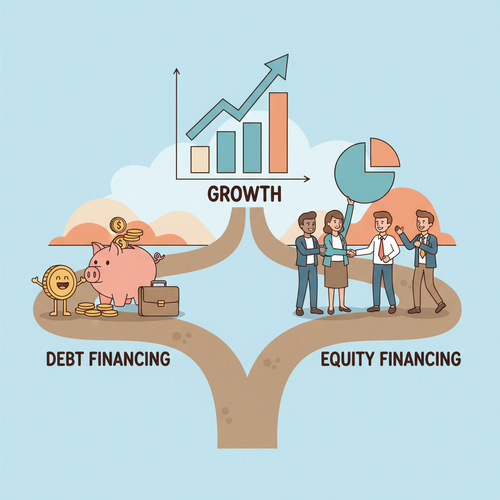
Embarking on the entrepreneurial journey is an exciting venture, yet it often presents a critical challenge: securing sufficient capital. Every startup, regardless of its industry or innovation, eventually reaches a crossroads where it must decide how to fund its growth. This pivotal decision typically revolves around two primary avenues: debt financing and equity financing. Understanding the nuances of each, along with their respective advantages and disadvantages, is fundamental for any founder aiming to build a sustainable and successful business. Choosing the correct funding strategy impacts everything from ownership and control to future profitability and risk.
This article will delve into the intricacies of both debt and equity financing, providing a comprehensive guide for entrepreneurs. We will explore what each method entails, its benefits and drawbacks, and the key factors to consider when making this crucial decision. Ultimately, the goal is to empower you to select the capital structure that best aligns with your startup’s vision and long-term objectives.
Understanding Debt Financing
Debt financing involves borrowing money from a lender with the promise of repaying it, along with interest, over a specified period. This method essentially creates a creditor-debtor relationship. When a startup secures debt financing, it does not give up any ownership or control of the company. Instead, it incurs a financial obligation that must be met regardless of the company’s performance.
Advantages of Debt Financing
- Retention of Ownership: Perhaps the most significant advantage of debt financing is that founders retain full ownership and control of their company. There is no dilution of equity, meaning you keep all the shares and decision-making power.
- Predictable Payments: Debt typically comes with a clear repayment schedule and fixed interest rates. This predictability allows for better financial planning and cash flow management.
- Tax Deductible Interest: In many jurisdictions, the interest paid on debt can be deducted as a business expense. This reduces the company’s taxable income, offering a potential tax advantage.
- Leverage for Growth: Debt can be used to amplify returns on equity. If the return on assets exceeds the cost of borrowing, shareholders benefit from increased profits.
Disadvantages of Debt Financing
- Repayment Obligation: The primary drawback is the mandatory repayment schedule. Even if your startup faces financial difficulties, you are still obligated to make regular payments. Failure to do so can lead to default and severe consequences.
- Personal Guarantees: Many small businesses and startups require founders to provide personal guarantees for loans. This means your personal assets could be at risk if the business defaults.
- Covenants and Restrictions: Lenders often impose covenants, which are conditions or restrictions on the business’s operations. These can limit your flexibility in managing the company, such as restrictions on taking on additional debt or selling assets.
- Collateral Requirements: Lenders typically require collateral to secure the loan. This could include business assets like equipment, inventory, or accounts receivable.
Types of Debt Financing for Startups
- Bank Loans: Traditional loans from commercial banks are common. They often require a solid business plan, strong credit history, and collateral.
- Lines of Credit: These offer flexibility, allowing startups to borrow up to a certain limit as needed. Interest is only paid on the amount borrowed.
- Government-Backed Loans: Programs like those offered by the U.S. Small Business Administration (SBA) provide guarantees to lenders. This makes it easier for startups to qualify for loans.
- Venture Debt: A specialized form of debt provided by venture capital firms to high-growth startups that have already raised equity funding. It typically carries warrants, which give the lender the right to purchase equity.
Understanding Equity Financing
Equity financing involves selling a portion of your company’s ownership in exchange for cash. When you pursue equity financing, you bring on investors who become partial owners of your business. These investors then share in the company’s future profits and potentially its growth in value. They do not expect regular interest payments, but rather a significant return on their investment when the company is sold, goes public, or achieves a major liquidity event.
Advantages of Equity Financing
- No Repayment Obligation: Unlike debt, equity financing does not require periodic payments. This relieves pressure on a startup’s early-stage cash flow, allowing funds to be reinvested into growth.
- Access to Expertise: Equity investors, especially angel investors and venture capitalists, often bring invaluable industry experience, mentorship, and a network of contacts. Their guidance can be critical for strategic decision-making and opening new opportunities.
- Shared Risk: Investors become partners in your venture, sharing both the risks and rewards. If the business struggles, they lose money alongside you, rather than demanding fixed repayments.
- Credibility and Validation: Securing equity funding from reputable investors can significantly boost a startup’s credibility. This validation can attract future funding, talent, and customers.
Disadvantages of Equity Financing
- Dilution of Ownership: The most significant drawback is the dilution of ownership. Each round of equity funding means founders own a smaller percentage of their company, potentially impacting control.
- Loss of Control: Investors, especially those with substantial stakes, often demand a say in the company’s strategic direction, board seats, or veto power over key decisions. This can reduce the founder’s autonomy.
- Pressure for Quick Returns: Equity investors, particularly VCs, often seek high returns within a specific timeframe (e.g., 5-7 years). This can create pressure to achieve rapid growth or an exit strategy that may not align with the founder’s long-term vision.
- Complex and Costly Process: Raising equity capital can be a lengthy, complex, and expensive process. It involves extensive due diligence, legal fees, and valuation negotiations.
Types of Equity Financing for Startups
- Bootstrapping: While not strictly external financing, it’s the initial stage where founders use personal savings or revenue to fund the business, retaining 100% ownership.
- Friends and Family: Often the first external capital, these investments typically come with more flexible terms and a high degree of trust.
- Angel Investors: High-net-worth individuals who invest their own money in early-stage startups. They often provide valuable mentorship alongside capital.
- Venture Capital (VC) Firms: Professional investors who manage funds from limited partners and invest in high-growth potential companies. They usually take significant equity stakes and board seats. For more details on venture capital, you can refer to resources like Investopedia’s guide to Venture Capital.
- Crowdfunding: Raising small amounts of capital from a large number of individuals, often through online platforms.
Key Differences and Considerations
The choice between debt and equity financing is not trivial; it requires a careful evaluation of several critical factors. Understanding their fundamental differences is essential for making an informed decision.
Control and Ownership
With debt financing, founders maintain complete control and ownership of their company. They are not beholden to external shareholders for strategic decisions, provided they meet their repayment obligations. Conversely, equity financing inherently means giving up a portion of ownership. This dilution can lead to shared control, especially with significant investors who may demand board representation or influence over major corporate actions.
Risk Profile for the Startup
Debt financing introduces a fixed financial obligation. Failure to make payments can lead to severe consequences, including bankruptcy. This places the financial risk primarily on the startup itself. Equity financing, however, distributes the financial risk among the investors. If the startup fails, investors lose their capital, but the company is not burdened with repayment obligations.
Cost of Capital
The cost of debt is typically the interest rate paid on the borrowed amount. This cost is finite and often predictable. The cost of equity, on the other hand, is the share of future profits and company value that investors expect in return for their investment. This can be significantly higher than the cost of debt, especially for highly successful startups, as investors seek substantial multiples on their initial investment.
Repayment Structure and Flexibility
Debt financing requires regular, scheduled repayments of principal and interest. This reduces the startup’s available cash flow and can be restrictive. Equity financing offers much greater flexibility in this regard, as there are no mandated repayments. Funds can be freely used for operations, growth, or product development without immediate cash flow constraints related to servicing capital.
Choosing the Right Path for Your Startup
There is no one-size-fits-all answer when selecting between debt and equity financing. The optimal choice depends heavily on various factors specific to your startup.
Stage of Your Startup
- Early-Stage Startups: Often, early-stage startups with unproven business models, limited revenue, or significant growth potential lean towards equity financing. They may not have the assets for collateral or the consistent cash flow to service debt. Angel investors and venture capitalists are more willing to take on early-stage risk in exchange for potential high returns.
- Mature Startups: As a startup matures, generates consistent revenue, and builds a track record, debt financing becomes a more viable and attractive option. They have tangible assets for collateral and predictable cash flow to manage debt repayments.
Growth Potential and Industry
Startups in high-growth industries (e.g., tech, biotech) that require substantial capital to scale rapidly often favor equity financing. The immediate cash infusion without repayment pressure allows for aggressive expansion. Conversely, businesses with steady, predictable cash flows and lower capital needs may find debt financing more suitable, preserving ownership.
Personal Risk Tolerance of Founders
Founders who are highly protective of their ownership and control might prefer debt financing, even with its inherent repayment risks. Those comfortable with diluting their stake in exchange for shared risk, expert guidance, and less immediate financial pressure might opt for equity.
Market Conditions and Investor Appetite
The availability and terms of both debt and equity financing can fluctuate with economic conditions. During periods of economic expansion, both might be more accessible. However, during downturns, lenders may tighten credit, and equity investors might become more selective, demanding more favorable terms for themselves. Keeping an eye on financial market trends is always wise. A look at market sentiment for funding can be found on reputable financial news sites like The Wall Street Journal’s Economy section.
Hybrid Approaches to Startup Funding
Sometimes, a blend of both debt and equity financing offers the best of both worlds. These hybrid approaches are designed to bridge the gap or provide flexibility in specific scenarios.
Convertible Notes
A convertible note is a debt instrument that converts into equity at a later financing round. Initially, it functions as a loan, accruing interest, but instead of being repaid in cash, it converts into shares of the company at a predetermined event, usually a future equity funding round. This allows startups to defer valuation discussions, making it a popular choice for seed-stage funding.
SAFE (Simple Agreement for Future Equity)
The SAFE is an investment contract that provides rights to the investor for future equity in the company, similar to convertible notes, but without being a debt instrument. It has no maturity date or interest rate. SAFEs are often seen as simpler and more founder-friendly than convertible notes, also deferring valuation until a later equity round.
Both convertible notes and SAFEs offer startups capital quickly without immediately determining a valuation, while also avoiding the strict repayment terms of traditional debt. They effectively delay the dilution discussion, providing crucial runway for early development.
Conclusion
The decision between debt financing vs. equity financing is one of the most significant choices a startup founder will make. Each method carries distinct implications for ownership, control, risk, and the long-term financial health of the company. Debt financing allows founders to retain full ownership and control, but comes with mandatory repayment obligations and potential personal risk. Equity financing, conversely, dilutes ownership but provides capital without immediate repayment pressure, often bringing valuable expertise and shared risk.
By carefully evaluating your startup’s stage of development, growth potential, industry, and your personal risk tolerance, you can strategically align your funding choices with your business goals. Remember, the funding landscape is dynamic, and sometimes a hybrid approach leveraging both debt and equity can provide the optimal solution. A thoughtful and informed capital strategy is not just about securing funds; it is about laying a solid foundation for sustainable growth and long-term success.