Executive Summary
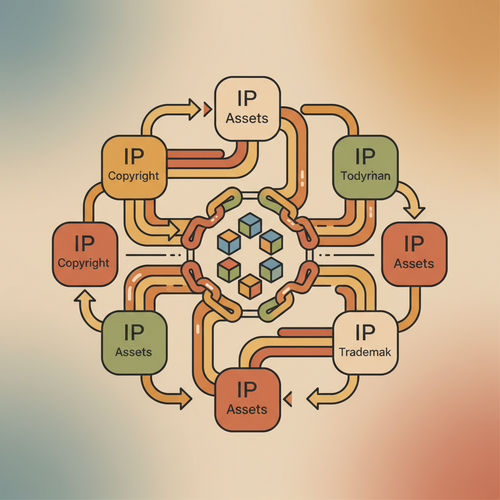
- Decentralized Intellectual Property (DIP) syndication leverages blockchain technology for superior digital rights management.
- This paradigm shift enables high-margin monetization through automated royalties, fractional ownership, and disintermediation.
- Architecting robust DIP systems demands meticulous attention to on-chain governance, security, and evolving legal frameworks.
The Paradigm Shift: From Centralized Control to Distributed Ledger IP
Traditional intellectual property (IP) management confronts inherent inefficiencies. Centralized registries and opaque licensing agreements impede global accessibility and swift monetization. Legacy systems often involve multiple intermediaries, eroding potential revenue streams for creators.
Blockchain technology introduces a foundational shift. It provides an immutable, transparent ledger for IP registration and transfer. This distributed infrastructure underpins true digital scarcity and verifiable provenance for all asset classes. It fundamentally alters the control and distribution mechanics.
Architecting Digital Rights: Tokenization and Smart Contract Frameworks
Tokenization is central to decentralized IP syndication. Non-Fungible Tokens (NFTs) serve as unique, verifiable representations of IP ownership. Each NFT immutably links to its underlying asset, whether art, music, or a patent claim. This creates a clear audit trail.
Fractional ownership models become economically viable through tokenization. Large-value IP assets can be divided into smaller, tradable units. This democratizes investment opportunities. It also allows broader participation in royalty streams.
Smart contracts automate the entire royalty distribution process. These self-executing agreements enforce terms programmed directly onto the blockchain. They ensure creators receive predetermined percentages automatically. This eliminates manual reconciliation and associated delays. Intellectual property gains unprecedented liquidity and transparency.
High-Margin Opportunities: Monetization and Global Syndication
Decentralized IP offers substantial high-margin monetization avenues. Creators can engage in direct artist-to-consumer models. This circumvents traditional gatekeepers and their associated fees. Revenue retention increases significantly.
Micro-licensing and granular rights management unlock new revenue streams. Specific usage rights can be tokenized and licensed for precise terms. This optimizes asset utilization. It creates flexible monetization strategies.
Disintermediation is a primary economic driver. Removing unnecessary intermediaries like publishers or distributors slashes overhead. This directly translates to higher margins for IP owners. Market access expands globally without geographical restrictions.
New arbitrage and investment opportunities emerge for sophisticated investors. Fractionalized IP tokens can trade on secondary markets. This provides liquidity for previously illiquid assets. Valuation mechanisms become more dynamic and responsive to market demand.
Expert Insight: “The economic leverage afforded by disintermediating traditional IP brokers fundamentally reshapes profit profiles. Our analysis indicates a potential 20-40% increase in net revenue for creators adopting robust decentralized models.”
Operational Imperatives: Governance, Security, and Interoperability
Effective decentralized IP systems demand robust on-chain governance frameworks. Stakeholders must collectively manage IP rights, updates, and dispute resolution. This ensures fairness and adaptability. Community-driven decision-making becomes paramount.
Security protocols for digital assets are non-negotiable. Smart contract audits and secure wallet practices mitigate risks. Immutable ledgers protect against unauthorized alterations. User education on security best practices remains crucial.
Cross-chain compatibility and oracle networks enhance system utility. Interoperability allows IP tokens to move across different blockchains. Oracle networks feed real-world data into smart contracts. This enables more complex, data-driven IP agreements. Blockchain innovation drives this evolution.
The choice between custodial and non-custodial solutions impacts operational risk. Non-custodial options empower users with direct asset control. Custodial services offer convenience but introduce third-party risk. Strategic alignment with risk appetite is essential.
Legal & Regulatory Landscape: Navigating the New Frontier
Navigating the legal and regulatory landscape presents unique challenges. Jurisdictional complexities arise from the global nature of blockchain. Traditional IP laws often struggle to accommodate tokenized assets. Clarity is still evolving.
Evolving IP law in the blockchain era requires constant monitoring. Legislators worldwide are deliberating new frameworks. These frameworks aim to address digital ownership, royalties, and enforcement. Proactive legal counsel is advisable.
Compliance challenges include Know Your Customer (KYC) and Anti-Money Laundering (AML) regulations. Even in decentralized environments, regulatory obligations persist. Solutions often involve hybrid approaches. These combine on-chain transparency with off-chain identity verification.
The potential for new legal frameworks is significant. Industry participants are actively contributing to policy discussions. This collaborative effort seeks to establish clear guidelines. It will foster innovation while ensuring legal certainty.
Real-World Implementations: Case Studies and Emerging Verticals
Decentralized IP is seeing burgeoning adoption across diverse sectors. In the art world, NFTs facilitate transparent provenance and artist royalties. Music platforms empower musicians with direct revenue streams. Gaming utilizes NFTs for in-game asset ownership.
Patents and academic research represent high-value emerging verticals. Tokenizing research papers can streamline peer review and citation tracking. Fractional ownership of patents could unlock new investment capital. This accelerates innovation funding.
The metaverse and virtual economies inherently rely on decentralized IP. Virtual land, digital fashion, and in-world assets are tokenized. This creates verifiable ownership within these nascent digital realms. It fuels vibrant creator economies.
Enterprise applications of Decentralized Intellectual Property (DIP) are gaining traction. Supply chain provenance benefits from immutable records of IP licensing. Brand protection can leverage blockchain for anti-counterfeiting measures. This enhances overall market integrity.
Strategic Risk Mitigation: Volatility and Scalability Considerations
Market volatility of digital assets poses a significant risk. The value of IP tokens can fluctuate dramatically. This impacts investment returns and asset collateralization. Diversification and risk management strategies are crucial.
Blockchain scalability issues remain a technical hurdle. High transaction fees and slow processing times can hinder mass adoption. Layer-2 solutions and alternative consensus mechanisms aim to address these limitations. Continuous technological advancements are vital.
Potential for smart contract vulnerabilities necessitates caution. Bugs or exploits in code can lead to significant financial losses. Rigorous auditing and formal verification are essential. Ongoing monitoring of deployed contracts is paramount.
User adoption hurdles include complexity and education gaps. New users face steep learning curves. Simplified interfaces and comprehensive educational resources are necessary. These will facilitate broader participation in decentralized IP ecosystems.
The Future Trajectory: Composability and Ecosystem Integration
The future of decentralized IP lies in its composability. IP tokens will function as foundational financial primitives. They will integrate seamlessly with Decentralized Finance (DeFi) protocols. This enables new forms of collateralization and lending.
Integration with the broader Web3 ecosystem is inevitable. Decentralized autonomous organizations (DAOs) will govern IP assets. Metaverse platforms will directly interact with on-chain rights. This creates a fluid, interconnected digital economy.
The long-term vision is a global, permissionless IP market. Creators will directly connect with consumers and investors worldwide. This fosters innovation and fair compensation. It represents a fundamental restructuring of digital asset value creation.
Conclusion
Decentralized Intellectual Property syndication represents a transformative economic frontier. It offers unprecedented opportunities for high-margin digital rights systems. Architects must navigate technical complexities and evolving legalities. Strategic implementation unlocks profound value. Are you prepared to capitalize on this paradigm shift in digital asset management?