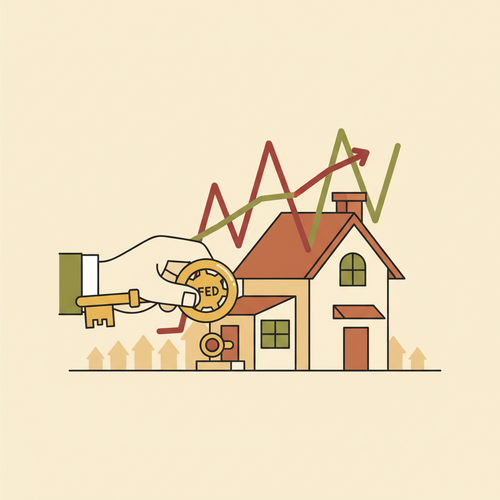
Understanding how Fed meetings influence your variable rate mortgage is essential for any homeowner. Indeed, these key Federal Reserve gatherings directly impact your monthly housing costs. Many borrowers choose variable rate mortgages. Consequently, their payments fluctuate with broader economic conditions. This article will demystify the connection between the Federal Reserve and your mortgage.
What Exactly Are Fed Meetings?
The Federal Reserve acts as the central bank of the United States. Its primary goals include maximizing employment and maintaining stable prices. To achieve these objectives, the Fed conducts monetary policy. Specifically, a group within the Fed, known as the Federal Open Market Committee (FOMC), holds regular meetings. Therefore, these meetings are highly anticipated by financial markets.
The Federal Open Market Committee (FOMC)
The FOMC consists of twelve members. This includes seven governors of the Federal Reserve System. Also, the president of the Federal Reserve Bank of New York (FRBNY) serves on the committee. Furthermore, presidents of four other Federal Reserve Banks participate on a rotating basis. This committee meets approximately eight times a year. However, emergency meetings can occur if economic conditions demand it. During these meetings, members discuss the current economic outlook. They also review future projections. Subsequently, they decide on key monetary policy actions.
Monetary Policy Decisions
A primary decision made by the FOMC concerns the federal funds rate. This rate represents the target for overnight lending between banks. For instance, when banks lend excess reserves to each other, they use this rate. The FOMC does not directly set the federal funds rate. Rather, they set a target range for it. Subsequently, the Fed influences this rate through open market operations. This involves buying or selling government securities. Therefore, these actions adjust the money supply in the banking system.
Understanding the Federal Funds Rate
The federal funds rate stands as a foundational interest rate. It serves as a benchmark for many other rates in the economy. Specifically, when the FOMC announces a change, a ripple effect begins. Banks use this rate for short-term borrowing. Consequently, their own cost of funds changes. This directly influences the rates they offer to customers. Thus, a decision made in a Fed meeting quickly translates into market adjustments.
How Rate Changes Spread
Imagine the federal funds rate as the base layer of a financial pyramid. When this base shifts, everything above it also moves. For example, if the Fed raises the federal funds rate target, banks must pay more to borrow from each other. Therefore, banks pass these increased costs along. They do so in the form of higher interest rates for loans to consumers and businesses. Conversely, a cut in the federal funds rate provides relief. Lower borrowing costs for banks can lead to lower rates for borrowers. Indeed, this mechanism connects Fed policy to everyday financial products.
Connecting the Federal Funds Rate to the Prime Rate
The prime rate is another critical interest rate. It represents the interest rate that commercial banks charge their most creditworthy corporate customers. Specifically, the prime rate moves in lockstep with the federal funds rate. Most banks typically set their prime rate at about three percentage points above the upper bound of the federal funds rate target. For instance, if the Fed’s target is 2.25%-2.50%, the prime rate would likely be 5.50%. This relationship is almost always consistent. Thus, changes in the federal funds rate immediately affect the prime rate.
Why the Prime Rate Matters
The prime rate is highly significant for consumers. Many financial products are directly tied to it. Specifically, credit card interest rates often use the prime rate as a benchmark. Home equity lines of credit (HELOCs) also link to the prime rate. Furthermore, various business loans reference this rate. For variable rate mortgage holders, this connection is particularly important. Consequently, your mortgage rate likely references the prime rate. Therefore, understanding the prime rate’s movement is key to predicting your mortgage payments.
How Your Variable Rate Mortgage is Influenced
Your variable rate mortgage, also known as an adjustable-rate mortgage (ARM), has an interest rate that can change over time. Most ARMs are tied to an index. Often, this index is the prime rate. For instance, your mortgage agreement might state your rate is “Prime Rate + 1.0%.” This means if the prime rate is 5.50%, your mortgage rate would be 6.50%. If the prime rate increases to 6.00%, your mortgage rate would automatically adjust to 7.00%. Conversely, a decrease in the prime rate would lower your mortgage rate. Specifically, this direct link means Fed actions quickly affect your housing costs.
Understanding Your Mortgage Agreement
Reviewing your specific mortgage agreement is crucial. It outlines which index your variable rate mortgage follows. Furthermore, it details how frequently your rate can adjust. Many ARMs have an initial fixed-rate period. This period might last 3, 5, 7, or 10 years. After this initial period, the rate becomes variable. It then adjusts periodically, perhaps every six months or annually. The agreement also specifies caps. These caps limit how much your interest rate can change. Specifically, there are usually initial caps, periodic caps, and lifetime caps. These caps protect borrowers from extreme rate fluctuations. However, even with caps, significant payment changes can occur.
The Direct Impact on Your Monthly Payments
When the Fed raises its target for the federal funds rate, the prime rate typically follows quickly. Consequently, your variable rate mortgage interest rate will increase. This directly leads to higher monthly mortgage payments. For example, a 0.25% increase in your interest rate might add tens or even hundreds of dollars to your monthly bill. This depends on your outstanding loan balance. Conversely, if the Fed cuts rates, your interest rate and payments could decrease. Therefore, monitoring Fed announcements is vital for budgeting.
Budgeting for Fluctuations
Variable rate mortgages introduce an element of uncertainty. Therefore, financial planning becomes even more important. It is wise to budget for potential payment increases. Specifically, consider what a 1% or 2% increase in your interest rate would mean for your monthly budget. Building an emergency fund can also provide a cushion. This fund helps cover higher payments during periods of rising rates. Furthermore, reviewing your mortgage statement regularly ensures you understand any adjustments. Indeed, proactive financial management is key with an ARM.
Why the Fed Changes Rates
The Fed adjusts interest rates based on economic conditions. When inflation is high, the Fed often raises rates. This aims to slow down borrowing and spending. Consequently, demand decreases, which can help cool off prices. Conversely, during economic downturns, the Fed might cut rates. This encourages borrowing and investment. Therefore, lower rates stimulate economic activity. Their decisions are not arbitrary. They reflect careful analysis of various economic indicators. Specifically, inflation, employment numbers, and GDP growth are all considered.
Inflation and Rate Hikes
Inflation refers to the general increase in prices over time. When inflation runs too high, the purchasing power of money diminishes. To combat this, the Fed often employs tighter monetary policy. Raising the federal funds rate makes borrowing more expensive. This discourages businesses from expanding. It also makes consumers less likely to take on new debt. Therefore, demand for goods and services softens. This reduction in demand can help bring inflation back down to the Fed’s target of around 2%. Indeed, these actions have direct consequences for your variable rate mortgage.
Economic Growth and Rate Cuts
During periods of slow economic growth or recession, the Fed might pursue looser monetary policy. Cutting the federal funds rate makes borrowing cheaper. This encourages businesses to invest and hire. It also makes it more attractive for consumers to borrow for homes or other large purchases. Therefore, increased spending and investment can stimulate the economy. These rate cuts often provide welcome relief for variable rate mortgage holders. Specifically, lower rates can reduce monthly payments, freeing up household income. Indeed, the Fed balances these competing objectives constantly.
Strategies for Variable Rate Mortgage Holders
Managing a variable rate mortgage effectively requires a proactive approach. Understanding the link between Fed meetings and your mortgage empowers you. Here are several strategies to consider.
Monitor Fed Announcements
Stay informed about FOMC meetings and their outcomes. The Fed typically announces its decisions after each meeting. You can find this information on financial news websites. Furthermore, the Federal Reserve’s official website provides detailed minutes and transcripts. Understanding the Fed’s outlook helps anticipate potential rate changes. Consequently, you can prepare your finances accordingly. Therefore, making this a regular habit is beneficial. Indeed, timely information empowers better decisions.
Understand Your Mortgage Terms
Re-read your mortgage agreement periodically. Specifically, know your loan’s index, margin, and adjustment period. Also, identify any interest rate caps (periodic and lifetime). Knowing these terms helps predict your maximum potential payments. Therefore, you won’t be caught off guard by large increases. Furthermore, understanding the reset dates allows you to plan. Indeed, familiarity with your loan details is critical.
Consider Refinancing
If interest rates are rising, or if you anticipate future increases, consider refinancing. Moving from a variable rate to a fixed-rate mortgage can provide payment stability. This locks in your interest rate for the life of the loan. Consequently, your monthly payment will remain consistent. This eliminates the uncertainty of future rate hikes. However, refinancing involves closing costs. Weigh these costs against the benefit of stability. Specifically, compare current fixed rates to your potential variable rate increases. Reuters often provides excellent market insights on this topic.
Make Extra Payments
Paying more than your minimum monthly payment reduces your principal balance faster. A smaller principal balance means less interest accrues over time. This also reduces the impact of any rate hikes. For instance, if your rate goes up, the increase applies to a smaller remaining balance. Therefore, the dollar amount of your payment increase will be less significant. This strategy saves money over the life of the loan. Furthermore, it builds equity more quickly. Indeed, it’s a powerful way to mitigate risk.
Build an Emergency Fund
An emergency fund provides a financial safety net. It can help cover increased mortgage payments if rates rise unexpectedly. Aim for at least three to six months of living expenses. Specifically, ensure this fund is easily accessible but separate from your regular checking account. This fund gives you peace of mind. Furthermore, it prevents you from dipping into high-interest debt to cover mortgage increases. Therefore, prioritizing savings is a smart move. Bloomberg often emphasizes the importance of financial preparedness.
Consult a Financial Advisor
A qualified financial advisor can offer personalized guidance. They can help evaluate your specific financial situation. Furthermore, they can discuss the pros and cons of different mortgage strategies. An advisor can analyze your risk tolerance. They can also provide insights into market trends. Specifically, they can help you decide if refinancing or other actions are right for you. Therefore, seeking professional advice is often a valuable step. The Wall Street Journal regularly features articles on financial planning.
Conclusion
The Federal Reserve plays a profound role in the broader economy. Specifically, its monetary policy decisions ripple through the financial system. Understanding how Fed meetings influence your variable rate mortgage is not just academic. It has tangible effects on your household budget. The federal funds rate directly impacts the prime rate. Consequently, your variable mortgage rate adjusts in tandem. Therefore, staying informed and adopting proactive strategies is crucial. Whether it’s monitoring Fed announcements, understanding your loan terms, or considering refinancing, knowledge is power. Indeed, by remaining vigilant, you can navigate the dynamic landscape of variable rate mortgages with greater confidence. This empowers you to make smarter financial choices for your home and your future. Investopedia offers further resources for understanding these complex topics. The Federal Reserve’s own website is also an invaluable source for official information.