Introduction
Understanding the intricate relationship between the Federal Reserve’s actions and your personal finances is a cornerstone of intelligent financial planning. Many homeowners closely monitor economic indicators, hoping for favorable conditions. Among the most anticipated economic events are changes in the Federal Reserve’s benchmark interest rate.
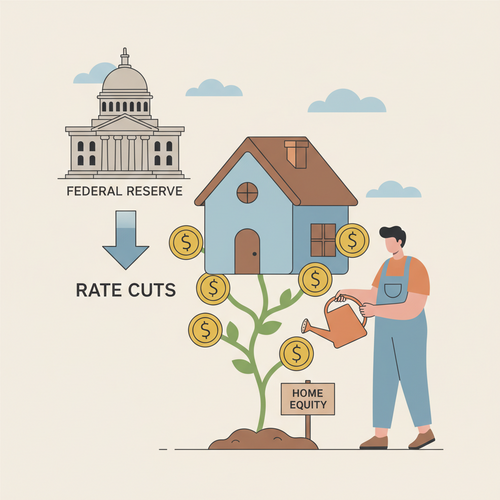
These rate adjustments send ripples throughout the financial system. They significantly influence consumer borrowing costs. For homeowners, specifically, federal rate cuts can unlock substantial opportunities. These opportunities often relate to refinancing existing mortgages and leveraging the equity built in their homes through various loan products.
This article explores how Fed rate cuts impact mortgage refinancing and home equity loans. We will delve into the mechanisms by which these changes affect your financial options. This knowledge is crucial for anyone looking to optimize their housing costs or access their home equity strategically.
Understanding the Federal Reserve and Interest Rates
The Federal Reserve, often called “the Fed,” acts as the central banking system of the United States. Its primary mandates include maximizing employment, stabilizing prices, and moderating long-term interest rates. The Fed achieves these goals primarily through its monetary policy tools.
One of its most influential tools is setting the federal funds rate. This is the target interest rate at which commercial banks borrow and lend their excess reserves to each other overnight. While the Fed does not directly set mortgage rates, changes to the federal funds rate cascade through the financial system.
When the Fed cuts its target rate, borrowing money generally becomes cheaper for banks. This reduced cost often leads banks to lower the rates they charge consumers for various loans, including credit cards, auto loans, and crucially, mortgage-related products. However, it’s important to understand that mortgage rates do not always move in perfect lockstep with the federal funds rate.
Several factors influence mortgage rates beyond just the Fed’s actions. These include:
- Inflation expectations
- The bond market, particularly the yield on 10-year Treasury notes
- Global economic conditions
- Lender competition
Consequently, while a Fed rate cut often signals a downward trend for mortgage rates, the exact timing and magnitude of the impact can vary. Therefore, homeowners must observe broader market trends, not just Fed announcements.
How Fed Rate Cuts Affect Mortgage Refinancing
Mortgage refinancing involves replacing your existing home loan with a new one. Typically, people refinance to secure a lower interest rate. This reduces their monthly payments or changes the loan terms. A cut in the federal funds rate makes refinancing significantly more attractive.
Lower Interest Rates and Reduced Monthly Payments
The most direct benefit of Fed rate cuts for refinancing is the potential for a lower interest rate on a new mortgage. A reduced interest rate translates directly into smaller monthly mortgage payments. Over the life of a 30-year mortgage, even a half-percentage point decrease can save tens of thousands of dollars.
For example, consider a homeowner with a $300,000 mortgage at 5% interest. Their principal and interest payment would be approximately $1,610. If they could refinance to 4.5%, their payment would drop to about $1,520, saving them $90 per month. This adds up to over $32,000 in savings over 30 years, excluding other costs.
Changes in Loan Terms and Options
Fed rate cuts also open up opportunities to adjust your loan terms. You might refinance to a shorter term, such as a 15-year mortgage. While this typically means higher monthly payments, you pay off the loan faster and incur less interest over time. If rates are low enough, a 15-year mortgage might have a similar payment to your current 30-year loan, offering significant long-term savings.
Alternatively, some homeowners may choose to refinance from an adjustable-rate mortgage (ARM) to a fixed-rate mortgage. This locks in a low rate for the life of the loan. It provides stability and protection against future rate increases, which is particularly appealing during periods of low interest rates.
Cash-Out Refinancing Opportunities
Another popular option during periods of lower rates is cash-out refinancing. This allows you to take out a new, larger mortgage than your current loan. You then receive the difference in cash. Homeowners often use this cash for:
- Home improvements
- Debt consolidation (e.g., paying off high-interest credit card debt)
- Funding education expenses
- Making other significant investments
By using a cash-out refinance at a lower interest rate, you can convert high-interest debt into a more manageable, tax-deductible mortgage payment. This strategy requires careful consideration of the additional debt and its impact on your long-term financial health.
Key Considerations Before Refinancing
While attractive, refinancing is not without costs. Homeowners must account for closing costs, which typically range from 2% to 5% of the loan amount. These costs include appraisal fees, origination fees, title insurance, and other charges. You must calculate your break-even point, which is how long it takes for your monthly savings to offset the closing costs.
Your credit score also plays a significant role. A higher credit score generally qualifies you for the best interest rates. Lenders look for a strong payment history and a healthy debt-to-income ratio. Therefore, it is wise to check your credit report and address any issues before applying for a refinance. You can learn more about credit scores and their impact on borrowing from reputable sources like the Consumer Financial Protection Bureau.
The Impact on Home Equity Loans and HELOCs
Home equity loans and Home Equity Lines of Credit (HELOCs) are powerful tools for homeowners. They allow you to borrow against the equity you have built in your home. Fed rate cuts directly influence the attractiveness and cost of these borrowing options.
Defining Home Equity Loans and HELOCs
A home equity loan is a second mortgage that provides a lump sum of money. It typically comes with a fixed interest rate and a set repayment schedule. This makes it predictable and suitable for specific, large expenses like a major renovation.
A Home Equity Line of Credit (HELOC), on the other hand, functions more like a credit card. It offers a revolving line of credit that you can draw from as needed, up to a certain limit. HELOCs almost always come with variable interest rates, meaning the rate can change over time based on a benchmark, often tied to the prime rate.
Variable Rates and HELOCs: Direct Impact
Because HELOC rates are predominantly variable and tied to the prime rate, they are highly sensitive to Fed rate cuts. When the Federal Reserve lowers the federal funds rate, the prime rate typically follows suit. This directly reduces the interest rate on existing HELOCs.
For homeowners with an active HELOC, a Fed rate cut immediately lowers their monthly interest payments. This provides instant relief and makes drawing on the line of credit more affordable. For those considering opening a new HELOC, lower rates mean a cheaper cost of borrowing from the outset, increasing its appeal for flexible financing needs.
Fixed Rates and Home Equity Loans: Potential for Savings
While home equity loans typically have fixed rates, these rates are still influenced by the broader interest rate environment. When the Fed cuts rates, the overall cost of borrowing for banks decreases. This allows them to offer new home equity loans at more competitive, lower fixed rates.
If you are considering a new home equity loan, a period of Fed rate cuts can be an opportune time to secure a favorable fixed rate. This can lead to significant savings over the life of the loan, especially for large borrowing amounts. Comparing offers from various lenders during such times is always prudent to ensure you get the best terms.
Using Home Equity Strategically
With lower borrowing costs driven by Fed rate cuts, home equity products become even more attractive for various financial strategies:
- Debt Consolidation: Combining high-interest debts (like credit card balances or personal loans) into a lower-interest home equity loan or HELOC can simplify payments and reduce overall interest paid.
- Home Improvements: Funding renovations with low-interest home equity can increase your home’s value. This is a strategic investment in your asset.
- Educational Expenses: Using home equity for college tuition can be a more affordable alternative to private student loans, though it does put your home at risk.
- Investment Opportunities: Some savvy investors use home equity to fund other investments, aiming for returns higher than their borrowing cost. This strategy involves higher risk and should be approached cautiously.
Risks and Considerations for Home Equity Products
Despite the benefits, borrowing against your home equity carries inherent risks. Your home serves as collateral for these loans. Failing to make payments can lead to foreclosure, a severe financial consequence. Furthermore, for HELOCs with variable rates, while a rate cut is beneficial, subsequent rate hikes by the Fed could increase your monthly payments in the future.
It is essential to borrow responsibly and ensure that your new debt does not exceed your ability to repay. Always consult with a financial advisor to understand the implications for your specific situation. You can find valuable resources on home equity loans and HELOCs from reliable government sources like the USA.gov website.
When is the Best Time to Act?
Deciding when to refinance or take out a home equity loan is a crucial financial decision. While Fed rate cuts create favorable conditions, timing the market perfectly is challenging. Instead, focus on a combination of market observation and personal financial readiness.
Monitor announcements from the Federal Reserve and pay attention to economic news that influences interest rates. Look for trends rather than reacting to single events. Keep an eye on mortgage rate forecasts from reputable financial institutions. This proactive approach can help you anticipate potential rate movements.
However, the “best time” is also highly personal. It depends on your current mortgage rate, how much equity you have, your credit score, and your financial goals. If you have significant high-interest debt, or if a lower mortgage payment would free up crucial funds, then acting when rates are favorable makes sense.
Always consult with financial professionals. Mortgage brokers, financial advisors, and loan officers can provide personalized advice. They can help you analyze your specific situation, compare loan offers, and understand all the costs involved. This expert guidance is invaluable in making an informed decision that aligns with your long-term financial strategy.
Conclusion
Federal Reserve rate cuts are more than just economic headlines; they represent tangible opportunities for homeowners to improve their financial standing. Whether through the potential for a lower monthly payment via mortgage refinancing or the strategic use of home equity loans and HELOCs, these policy changes can significantly impact your wallet.
The ability to secure a lower interest rate can lead to substantial savings over time. It also provides flexibility to consolidate debt, fund home improvements, or pursue other financial goals. However, careful consideration is always paramount. Homeowners must weigh the benefits against the costs, understand the risks, and ensure any new borrowing aligns with their overall financial capacity.
By staying informed about Fed policy and broader market trends, and by seeking professional guidance, you empower yourself to make intelligent decisions. These decisions can optimize your housing costs and harness the value of your home equity effectively. Proactive financial planning in response to Fed rate cuts can truly pave the way for greater financial stability and opportunity.