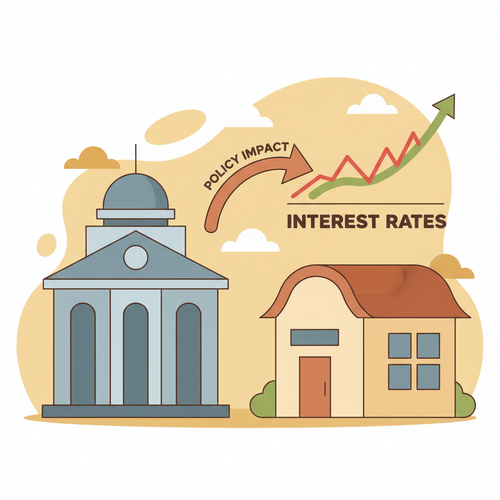
Understanding how federal interest rate hikes affect your Adjustable-Rate Mortgage (ARM) is crucial for any homeowner. The Federal Reserve’s monetary policy decisions ripple throughout the entire financial system. Consequently, these actions directly influence the borrowing costs associated with various financial products, including ARMs. For homeowners with these specific types of mortgages, a changing rate environment can lead to significant shifts in monthly payments and overall financial planning. Therefore, a clear grasp of this relationship empowers you to make informed decisions about your most significant investment.
Understanding Adjustable-Rate Mortgages (ARMs)
Adjustable-Rate Mortgages, commonly known as ARMs, represent a unique segment within the mortgage market. Unlike their fixed-rate counterparts, ARMs do not maintain a consistent interest rate throughout the entire loan term. Instead, their rates fluctuate periodically, reflecting broader market conditions. This inherent variability introduces both opportunities and potential risks for borrowers.
What is an ARM?
An ARM begins with an initial period during which the interest rate remains fixed. This fixed period can range from one year to ten years, or even longer, depending on the specific product. For instance, a “5/1 ARM” means the rate is fixed for the first five years, then adjusts annually thereafter. Following this initial phase, the interest rate becomes variable. This means your monthly mortgage payment will change based on how the underlying index performs. Additionally, ARMs are characterized by three key components: the index, the margin, and interest rate caps. Each element plays a vital role in determining your effective interest rate and payment obligations.
How ARM Interest Rates Are Determined
The interest rate on an ARM is derived from a combination of factors. Primarily, it is linked to an index, which is a widely published market rate. Historically, common indices included the London Interbank Offered Rate (LIBOR), but more recently, the Secured Overnight Financing Rate (SOFR) has become the prevalent benchmark. The lender then adds a “margin” to this index. This margin is a fixed percentage, representing the lender’s profit and administrative costs, and it remains constant throughout the life of the loan. For example, if the index is 3% and the margin is 2.5%, your interest rate would be 5.5%. However, interest rate caps impose limits on how much your rate can increase or decrease during each adjustment period and over the entire life of the loan. These caps provide a degree of protection, preventing sudden and extreme payment shocks. Consequently, understanding these caps is paramount for managing your ARM.
The Federal Reserve’s Role and Interest Rate Hikes
The Federal Reserve, often called “the Fed,” serves as the central bank of the United States. Its decisions on monetary policy profoundly influence the economic landscape. Particularly, the Fed wields significant power over interest rates, affecting everything from credit card rates to mortgage costs. Therefore, observing the Fed’s actions is crucial for anyone with an ARM.
The Federal Funds Rate and Monetary Policy
The primary tool the Fed uses to implement monetary policy is the federal funds rate. This is the target rate for overnight lending between banks. While the Fed does not directly set mortgage rates, changes to the federal funds rate cascade through the financial system. When the Fed decides to raise the federal funds rate, it generally aims to cool down an overheating economy and combat inflation. Such a move signals a tighter monetary policy. As a result, borrowing becomes more expensive across the board, impacting various lending products, including adjustable-rate mortgages.
Connecting Federal Hikes to ARM Indices
Although ARM indices like SOFR are not directly tied to the federal funds rate, they are highly correlated. For example, when the Fed raises the federal funds rate, the cost of borrowing for banks generally increases. This heightened cost then translates into higher rates for consumers and businesses. Consequently, market rates, including those that ARM indices track, tend to rise in response. Therefore, a series of federal interest rate hikes typically leads to an upward movement in the underlying indices that determine your ARM’s interest rate. This direct linkage makes Fed announcements a critical factor for ARM holders.
Direct Impact on Your ARM Payments
For homeowners with an Adjustable-Rate Mortgage, federal interest rate hikes are not abstract economic concepts. Instead, they have a tangible and often immediate impact on personal finances. Understanding this direct connection is vital for anticipating and planning for changes in your housing budget.
When Your ARM Adjusts
The moment your ARM enters its adjustable phase, or when an existing adjustable rate period comes to an end, is critical. Each ARM has a predefined adjustment period, which dictates how frequently your interest rate can change. For example, with a 5/1 ARM, after the initial five-year fixed period, your rate will adjust annually. Lenders are typically required to provide you with notice before an adjustment occurs. This notice outlines your new interest rate and projected monthly payment. Receiving this information allows you time to assess the change and consider your options. Hence, carefully reviewing these notices is an essential financial habit.
Calculating Your New Payment
Once your ARM adjusts, your new interest rate will be calculated by adding the current index value to your fixed margin. If the underlying index has increased due to federal rate hikes, your overall interest rate will also rise. For instance, if your initial rate was 4% (2% index + 2% margin) and the index climbs to 3% at your adjustment, your new rate becomes 5% (3% index + 2% margin). However, it is important to remember the role of interest rate caps. These caps prevent your rate from increasing beyond a certain percentage in any single adjustment period and over the life of the loan. For example, a “2/2/5” cap means the rate cannot increase by more than 2% in the first adjustment, 2% in subsequent adjustments, and 5% over the life of the loan. Even with caps, a higher interest rate generally translates into a higher monthly mortgage payment. Consequently, your disposable income might decrease, requiring adjustments to your household budget.
Potential Financial Strain and Strategies
A significant increase in your monthly mortgage payment can create financial strain. Higher housing costs mean less money available for other expenses, savings, or investments. Therefore, proactive financial management becomes even more important during periods of rising rates. Budgeting adjustments might be necessary to accommodate the increased payment. Furthermore, exploring strategies to mitigate this impact, such as making extra payments or considering refinancing, can provide a buffer against future rate increases. Ultimately, being prepared for potential payment adjustments is a cornerstone of responsible ARM ownership.
Strategies for ARM Holders During Rising Rate Environments
Navigating a rising interest rate environment with an Adjustable-Rate Mortgage requires a strategic approach. Proactive planning and a clear understanding of available options can help mitigate the financial impact of increased payments. Fortunately, several strategies exist to empower ARM holders.
Monitor Market Conditions
Staying informed about the broader economic climate, particularly the Federal Reserve’s actions and announcements, is paramount. The Fed’s signals regarding future interest rate policy can provide valuable insights into potential movements of your ARM’s underlying index. Regularly checking financial news and economic reports can help you anticipate when your rate might adjust upwards. This vigilance allows you to prepare financially and evaluate your options before your payment actually changes. Therefore, proactive monitoring is a powerful defense mechanism.
Refinancing Options
For many ARM holders, refinancing into a fixed-rate mortgage becomes an attractive option when interest rates are expected to rise further or when their ARM is approaching its adjustment period. A fixed-rate mortgage offers predictability, locking in your interest rate for the remainder of the loan term. This eliminates the uncertainty of future payment increases. However, refinancing involves closing costs, and you will need to qualify for the new loan. Carefully weigh the costs of refinancing against the potential savings and payment stability it offers. Consulting with a mortgage professional can help you determine if refinancing is the right move for your specific situation. This strategic pivot can offer long-term peace of mind.
Making Extra Payments
Consider making additional principal payments on your ARM, especially during the initial fixed-rate period or before an anticipated rate adjustment. Reducing your principal balance means you will pay interest on a smaller amount, even if your interest rate increases. This strategy can significantly lower the impact of a rate hike on your overall monthly payment and total interest paid over the life of the loan. Even small, consistent extra payments can add up over time, building equity faster and reducing your future financial burden. Ultimately, this disciplined approach strengthens your financial position.
Understanding Your Loan Documents
Thoroughly reviewing your original ARM loan documents is a crucial step. These documents contain vital information, including your specific index, margin, and most importantly, your interest rate caps (periodic and lifetime). Understanding these caps will give you a clear picture of the maximum possible increase in your monthly payment. Furthermore, some ARMs offer a “conversion option,” allowing you to convert your ARM to a fixed-rate mortgage with your current lender, sometimes with lower fees than a full refinance. Knowing these details empowers you to plan effectively. Hence, familiarity with your loan terms is a powerful tool for financial control.
Conclusion
In conclusion, the direct correlation between federal interest rate hikes and your Adjustable-Rate Mortgage (ARM) is an undeniable financial reality. As the Federal Reserve adjusts its benchmark rates, the indices that govern ARM interest rates tend to follow suit, ultimately impacting your monthly mortgage payments. Therefore, understanding the mechanics of your ARM, from its initial fixed period to its adjustment caps, is absolutely essential. By proactively monitoring market conditions, exploring refinancing opportunities, considering extra principal payments, and thoroughly reviewing your loan documents, you can navigate rising rate environments with greater confidence. Empowering yourself with this knowledge ensures you maintain control over your financial future, regardless of market fluctuations. Ultimately, informed homeowners are better equipped to make sound financial decisions.