Introduction
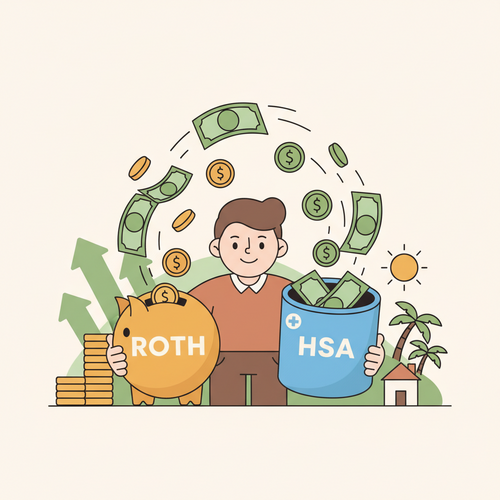
Achieving a financially secure retirement is a common goal for many individuals. However, the dream of relaxation and financial freedom can sometimes be overshadowed by the specter of taxes. Understanding how to generate tax-free income in your golden years is a critical component of effective retirement planning. This article delves into two powerful strategies: Roth conversions and the strategic use of Health Savings Accounts (HSAs).
These approaches offer distinct advantages for building a robust, tax-efficient retirement nest egg. They allow your money to grow largely free from annual tax burdens. Furthermore, they can provide tax-free withdrawals in retirement, under specific conditions. By exploring these options, you can significantly enhance your financial outlook for the future.
Understanding Tax-Free Retirement Income
The concept of tax-free retirement income might seem elusive. Yet, it is a cornerstone of sophisticated financial planning. Essentially, it means that the money you withdraw from certain accounts in retirement will not be subject to federal income taxes. In some cases, state income taxes may also be avoided.
This differs significantly from traditional retirement accounts. With traditional IRAs and 401(k)s, you contribute pre-tax dollars. Your investments grow tax-deferred. However, withdrawals in retirement are taxed as ordinary income. The goal of tax-free income is to eliminate this future tax liability.
The Lure of Tax-Free Growth
Imagine your investments compounding year after year, completely unburdened by annual taxes. This is the inherent advantage of tax-free growth. Every dollar earned through capital gains or dividends remains within your account. It continues to work harder for you. Over decades, this can lead to a substantially larger sum.
Consider a scenario where two identical portfolios grow at the same rate. One is subject to annual taxes on its gains, while the other is not. The tax-free portfolio will always outperform in the long run. This power of compounding is amplified when taxes are removed from the equation.
Why Tax-Free Matters in Retirement
Tax-free income during retirement provides immense flexibility and predictability. You will not need to worry about future tax rate increases impacting your spending power. Furthermore, managing your tax bracket in retirement becomes much simpler. It reduces the need to draw from taxable accounts, which could push you into a higher bracket.
This strategy also offers protection against unexpected legislative changes. Tax laws can shift over time. Relying on tax-free income streams hedges against these uncertainties. It provides a foundational layer of financial security.
Roth Conversions: A Powerful Tool
A Roth conversion is a strategic move for many investors. It involves transferring funds from a traditional IRA or 401(k) into a Roth IRA. While the converted amount is subject to income tax in the year of conversion, the benefits in retirement are substantial. This strategy is particularly appealing for those who anticipate being in a higher tax bracket in retirement than they are today.
The fundamental principle is paying taxes now to avoid them later. This can be a wise decision. It secures tax-free income for your future self. For more detailed information, consider resources from reputable financial institutions like Fidelity on Roth IRA conversions.
What is a Roth Conversion?
A Roth conversion is the act of moving assets from a pre-tax retirement account to a Roth IRA. For example, if you have $50,000 in a traditional IRA, converting it to a Roth IRA means that $50,000 will be added to your taxable income for the year of conversion. You pay the income tax on this amount. Once the funds are in the Roth IRA, they grow tax-free.
All qualified withdrawals in retirement are also completely tax-free. This requires the Roth account to be open for at least five years. You must also be at least 59½ years old, or meet other specific conditions like disability or using the funds for a first-time home purchase.
Benefits of Roth Conversions
The advantages of Roth conversions are compelling. Here are some key benefits:
- Tax-Free Withdrawals in Retirement: This is the primary draw. All qualified withdrawals are free from federal income tax.
- No Required Minimum Distributions (RMDs) for the Original Owner: Unlike traditional IRAs, Roth IRAs do not have RMDs during the original owner’s lifetime. This means your money can continue to grow untouched for as long as you wish.
- Legacy Planning: Roth IRAs can be excellent tools for wealth transfer. Beneficiaries receive tax-free distributions. This can be a significant advantage for your heirs.
- Flexibility: You can convert funds in smaller increments over several years. This allows you to manage the tax impact.
Considerations Before Converting
While attractive, Roth conversions require careful thought. Your current tax situation is paramount. If you expect your tax bracket to be lower now than in retirement, a Roth conversion might be advantageous. Conversely, if your current tax bracket is high, it might be better to defer taxes.
Also, consider the immediate tax bill. You need to have funds available to pay the taxes. Paying taxes from the converted amount itself reduces your Roth balance. This lessens its long-term growth potential. Always plan how to cover the tax liability without depleting your retirement savings.
Strategic Timing for Conversions
Timing is crucial when planning a Roth conversion. Some ideal times include:
- Years with Lower Income: If you have a year with temporarily reduced income, a conversion could be less costly. This might happen during a career break or a sabbatical.
- Bear Markets: Converting when your traditional IRA investments have declined means you pay taxes on a lower value. Your converted assets then have more room to recover and grow tax-free.
- Before Tax Increases: If you anticipate future tax rates will rise, converting now locks in your current tax rate.
- Early in Retirement: Some retirees might be in a lower tax bracket before starting Social Security or other pension income. This “retirement sweet spot” can be ideal for conversions.
Health Savings Accounts (HSAs): The Triple Tax Advantage
Often overlooked as a retirement savings vehicle, the Health Savings Account (HSA) offers an incredible “triple tax advantage.” An HSA is not just for current medical expenses. It can be a powerful tool for long-term retirement savings, especially for healthcare costs in later life. To qualify for an HSA, you must be covered by a High-Deductible Health Plan (HDHP).
This dual purpose makes HSAs unique. They provide a means to cover immediate healthcare needs. Simultaneously, they allow you to save and invest for future medical expenses. Many financial experts now refer to the HSA as the most powerful savings vehicle available. You can learn more about HSA benefits from reliable sources like the IRS Publication 969.
What is an HSA?
An HSA is a tax-advantaged savings account. It is available to those enrolled in an HDHP. Contributions are made with pre-tax dollars (or are tax-deductible). The funds can be used to pay for qualified medical expenses. The unspent money in the account rolls over year to year. It can also be invested, similar to an IRA. This allows for significant growth over time.
Eligibility for an HDHP usually means your health insurance plan has a higher deductible than traditional plans. It also has a maximum out-of-pocket limit. This structure encourages responsible healthcare spending.
The Triple Tax Advantage Explained
The “triple tax advantage” of an HSA is what makes it so exceptional:
- Tax-Deductible Contributions: Contributions to an HSA are tax-deductible. If made through payroll deduction, they are also exempt from FICA taxes (Social Security and Medicare).
- Tax-Free Growth: Any investment earnings within the HSA grow tax-free. This includes interest, dividends, and capital gains. This mirrors the growth in a Roth IRA.
- Tax-Free Withdrawals for Qualified Medical Expenses: When used for eligible medical expenses, withdrawals are completely tax-free. This is true at any age.
No other investment vehicle offers all three of these tax benefits simultaneously. This makes the HSA an incredibly efficient way to save for future healthcare costs.
HSA as an Investment Vehicle
Many individuals treat their HSA solely as a spending account for current medical bills. However, its true power lies in its potential as an investment vehicle. By paying for current medical expenses out-of-pocket (if affordable), you can let your HSA funds grow and compound. This is especially true if you are relatively healthy.
Over decades, the investment returns within an HSA can accumulate substantially. These funds can then be used to cover potentially high medical costs in retirement. This includes Medicare premiums, deductibles, and co-pays. Think of it as a dedicated, tax-advantaged fund for your healthcare future.
Beyond Medical Expenses in Retirement
After age 65, an HSA offers even more flexibility. You can withdraw funds for any purpose, not just medical expenses. If used for non-medical expenses, these withdrawals are taxed as ordinary income. This is similar to a traditional IRA or 401(k) withdrawal. However, this still provides a valuable option.
Essentially, after 65, your HSA acts like a traditional IRA. The key difference is that medical withdrawals remain tax-free. This dual functionality makes the HSA an exceptionally versatile retirement account. It offers a safety net for healthcare costs. It also provides a supplementary income source if needed.
Integrating Roth Conversions and HSAs for Optimal Planning
Both Roth conversions and HSAs are powerful tools on their own. However, integrating them into a cohesive strategy can create an even more robust tax-free retirement income plan. Understanding how they complement each other is vital for maximizing their benefits.
A well-structured plan considers your current financial situation. It also accounts for your anticipated needs in retirement. Professional financial advice can be invaluable in this process. They can help you tailor these strategies to your unique circumstances.
Synergy of Strategies
Imagine having a diversified set of income streams in retirement. Some are fully taxable, some are tax-deferred, and some are completely tax-free. Roth accounts and HSAs contribute significantly to the tax-free portion. This gives you unparalleled control over your tax bill in retirement.
For example, you could draw from your HSA for medical expenses without tax. You might then use Roth IRA withdrawals for discretionary spending, also tax-free. This leaves your traditional IRA/401(k) as a potential last resort. This approach minimizes your taxable income. It keeps you in a lower tax bracket.
Prioritizing Contributions
Deciding where to allocate your savings can be a challenge. Here’s a common prioritization strategy for many experts:
- 401(k) Match: Always contribute enough to get your employer’s full 401(k) match. This is free money.
- HSA Contributions: Maximize your HSA contributions if you are eligible. Its triple tax advantage is unmatched. Treat it as a long-term investment.
- Roth IRA/401(k) or Traditional (depending on current vs. future tax bracket): After maximizing your HSA, consider Roth options if you expect higher taxes in retirement. Otherwise, traditional accounts might be suitable.
- Taxable Brokerage Accounts: Once tax-advantaged accounts are maximized, consider taxable accounts for further investment.
This hierarchy prioritizes the most tax-efficient accounts first. It ensures you are leveraging every available tax advantage.
Scenario Examples
Let’s consider two hypothetical scenarios:
Scenario 1: The Young Professional
Sarah is 30, healthy, and has an HDHP. She maximizes her HSA contributions annually, investing the funds. She also contributes to her Roth 401(k). She plans to pay current medical expenses out-of-pocket. Her goal is to build a substantial, tax-free HSA balance for retirement healthcare costs and a Roth nest egg for general spending.
Scenario 2: The Mid-Career Investor
David is 50. He has accumulated a significant balance in a traditional IRA. He anticipates being in a higher tax bracket in retirement. He starts a series of Roth conversions over several years. He converts a portion of his traditional IRA each year during periods of lower income. This strategy minimizes the tax impact of the conversion. It shifts a substantial portion of his savings into a tax-free Roth account.
These examples illustrate how these strategies can be tailored to different life stages and financial goals. They are adaptable to individual circumstances.
Conclusion
Building a comfortable retirement requires foresight and strategic planning. Utilizing Roth conversions and Health Savings Accounts (HSAs) are two of the most effective ways to generate substantial tax-free income in your golden years. These strategies offer significant tax advantages, protecting your wealth from future tax liabilities and providing peace of mind.
From the tax-free growth and withdrawals of a Roth IRA to the triple tax advantage of an HSA, these tools empower you to take control of your financial future. Remember, financial planning is not a one-size-fits-all endeavor. It is highly recommended to consult with a qualified financial advisor. They can help you assess your personal situation and craft a tailored plan. Starting early and being consistent are keys to unlocking a truly tax-free retirement.