Introduction
Imagine your rented apartment or house for a moment. It is likely filled with your personal belongings. For example, you have a laptop for work, furniture, clothes, and a television. These are the items that make your space feel like a home. Now, imagine a sudden disaster strikes. Perhaps a fire breaks out in a neighbor’s unit, or a pipe bursts while you are away. What would happen to all of your valuable things?
A dangerous misconception exists among many renters. They often believe their landlord’s insurance policy will cover their personal property. Unfortunately, this is not true at all. A landlord’s policy protects the building itself, not the tenant’s belongings inside. This is precisely why renter’s insurance exists. In short, it is an affordable and essential safety net that protects your financial life from an unexpected catastrophe.
The Biggest Misconception: Your Landlord’s Insurance vs. Yours
Let’s make this point crystal clear from the start. Your landlord has a responsibility to insure the physical structure you live in. Their insurance policy covers the walls, the roof, and the building’s essential systems. If a fire damages the building, for instance, their policy pays for the repairs.
However, that policy does absolutely nothing to help you, the tenant. It will not cover your laptop that the fire destroyed. It will not cover your furniture ruined by water damage. Furthermore, it will not cover your television stolen during a break-in. In all of these situations, you need your own renter’s insurance policy. Without it, you are completely on your own to cover the incredibly high replacement costs.
The Three Pillars of Renter’s Insurance Coverage
A standard renter’s insurance policy is surprisingly comprehensive. It typically stands on three main pillars of protection. Understanding them shows just how valuable this coverage can be for your peace of mind.
1. Personal Property Coverage
First and foremost, this is the core of your policy. Personal property coverage helps you repair or replace your belongings. This applies if they are stolen or damaged by a covered event. These events usually include fire, theft, vandalism, and water damage from internal sources. To get started, you should do a quick home inventory. This will help you estimate how much coverage you truly need. You might be surprised by the total value.
When you select this coverage, you will face an important choice: Actual Cash Value (ACV) or Replacement Cost (RC).
- Actual Cash Value (ACV) coverage pays you for the value of your item at the time it was damaged or stolen. This means it accounts for depreciation. For example, your five-year-old laptop might only be worth $200 today, even though you paid $1,000 for it. ACV would only pay you that depreciated $200 value.
- Replacement Cost (RC) coverage, in contrast, pays the full cost to buy a brand new, similar item today. In the same scenario, RC coverage would give you enough money to buy a new, comparable laptop at its current market price.
Replacement Cost policies have a slightly higher premium. However, for most people, this option is highly recommended. It ensures you can actually replace what you lost without dipping into your own savings.
2. Personal Liability Coverage
Next, we have a hugely important, yet often overlooked, benefit. Personal liability coverage protects you financially. It applies if someone is injured in your apartment and you are found responsible. For example, imagine a guest slips and falls on a wet floor. They could sue you for their medical bills. In that situation, this coverage can pay for their medical costs and your legal defense fees.
This coverage can also apply outside of your home. For instance, if your dog were to bite someone at the park, your renter’s liability insurance might help cover their medical expenses. This protection is essential for your long-term financial health. Without it, a single accident could jeopardize your savings and your entire financial future.
3. Additional Living Expenses (ALE) Coverage
Finally, the third pillar is Additional Living Expenses coverage. This part of your policy helps you if your rented home becomes uninhabitable. This could happen after a major fire, for example. ALE coverage helps pay for your temporary living costs while your apartment is under repair.
It can cover expenses like hotel bills. It can also cover the cost of restaurant meals if you don’t have a kitchen. In essence, it pays for the costs above your normal living expenses. This ensures a disaster does not also create a housing crisis for you.
How Much Does It Cost and What Affects the Price?
Given all this protection, many people assume renter’s insurance is expensive. In reality, it is one of the most affordable types of insurance available. The average cost in many places is just $15 to $30 per month. You should contrast this small, predictable cost with the potentially devastating financial blow of replacing everything you own.
Several factors influence your exact premium.
- Your Location: Rates can vary by city. For instance, areas with higher rates of theft may have slightly higher premiums.
- Your Coverage Amount: The more personal property coverage you need, the higher the cost will be.
- Your Deductible: This is the amount you agree to pay out-of-pocket on a claim. A higher deductible will typically lower your monthly premium.
- Your Claims History: A history of filing claims can sometimes lead to higher rates.
- Bundling Discounts: Many insurance companies will offer you a discount if you “bundle” your policies. For example, you can often get a lower price on your renter’s insurance if you buy it from the same company that provides your auto insurance.
The Financial Ripple Effect of Not Having Renter’s Insurance
Now, let’s paint a clear picture of the consequences. Imagine a fire destroys your apartment. Without insurance, you would face an immediate financial crisis. The cost to replace just your essential furniture, clothes, and a laptop could easily be thousands of dollars.
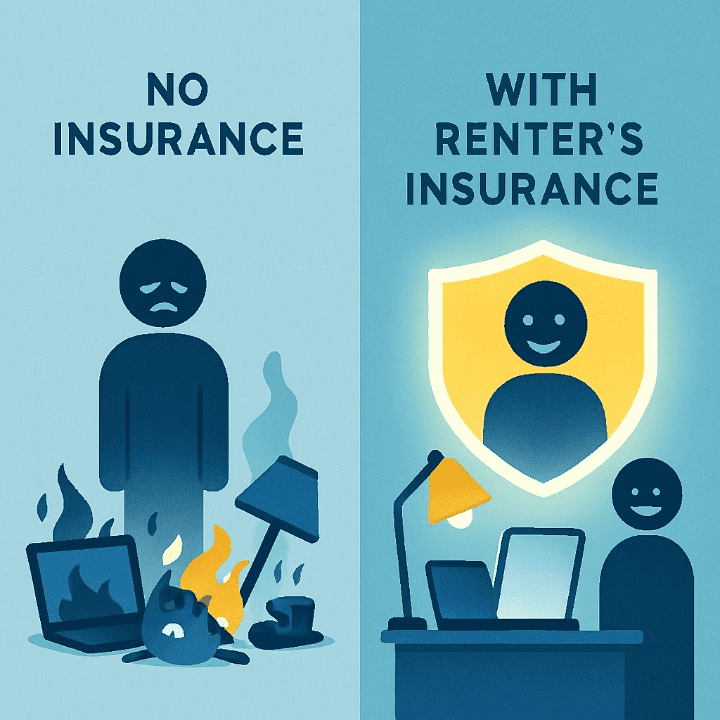
Most people do not have this amount of cash available. As a result, they would likely be forced to use a credit card with a high interest rate. This can quickly spiral into a major debt problem that takes years to pay off. This new debt would then severely damage your credit score. A damaged score makes it much harder and more expensive to get future financing for a car or even a mortgage. In short, the small monthly cost of renter’s insurance acts as a shield for your entire financial future.
Conclusion
In summary, renter’s insurance is not a luxury. Instead, it is an essential safeguard for anyone who rents their home. It protects your property from disasters. It shields you from major liability claims. Furthermore, it provides you with a place to live if your home becomes uninhabitable.
Its affordability makes it one of the best deals in the insurance world. For the cost of a few cups of coffee a month, you are protecting yourself from financial ruin. Therefore, we strongly urge you not to overlook this crucial protection. Getting a quote is usually easy and fast. It is one of the smartest and simplest decisions a renter can make to ensure their financial security.