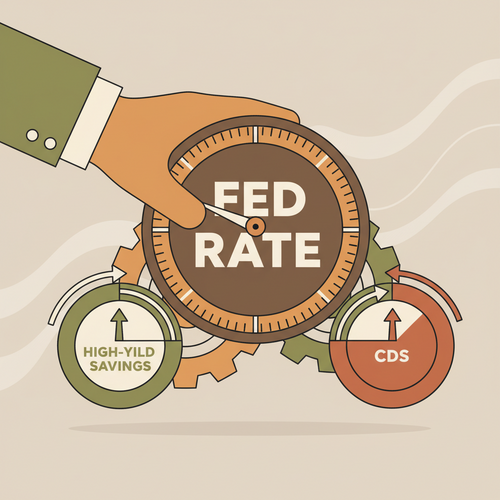
The Impact of Fed Rate Cuts on High-Yield Savings Accounts and CDs significantly influences how beginner investors manage their money. Understanding these shifts is crucial for optimizing your savings strategy. Specifically, Federal Reserve decisions directly affect the interest rates banks offer. Therefore, learning about these mechanisms can empower you financially.
Understanding High-Yield Savings Accounts
A high-yield savings account offers a significantly higher interest rate compared to traditional savings accounts. Generally, these accounts are available through online banks. Consequently, they often have lower overhead costs, allowing them to pass on better rates to depositors. Furthermore, your money remains easily accessible. However, despite the higher returns, these accounts are still liquid. Indeed, they provide a safe place for your emergency fund or short-term savings goals. For instance, many people use them for down payments or vacation funds. These accounts are FDIC-insured, protecting your deposits up to federal limits. Therefore, your principal is secure. Moreover, interest earned compounds over time, helping your money grow faster.
Exploring Certificates of Deposit (CDs)
Certificates of Deposit, or CDs, represent another popular savings vehicle. Specifically, you deposit a lump sum for a fixed period. This period, known as the term, can range from a few months to several years. In return, the bank pays a fixed interest rate. Consequently, CDs often offer higher rates than high-yield savings accounts. However, a key difference is liquidity. Indeed, withdrawing money before the maturity date usually incurs a penalty. Therefore, CDs are best suited for money you will not need in the near future. Furthermore, like savings accounts, CDs are FDIC-insured. This insurance offers peace of mind. For example, a 5-year CD locks in a rate for that entire duration. This predictability is a major advantage for some investors. Learn more about market trends on Bloomberg.
The Federal Reserve and Interest Rates
The Federal Reserve, often called “the Fed,” serves as the central bank of the United States. Its primary goal involves maintaining price stability and maximizing employment. Consequently, the Fed utilizes various tools to influence the economy. One of its most powerful tools is adjusting the federal funds rate. This rate represents the target rate for overnight lending between banks. Therefore, changes to this rate ripple throughout the entire financial system. Specifically, commercial banks adjust their own lending and savings rates in response. Indeed, the federal funds rate acts as a benchmark. Furthermore, decisions are made by the Federal Open Market Committee (FOMC). Their meetings are closely watched by investors globally. Understanding the Fed’s role is foundational for comprehending rate movements.
Why the Fed Cuts Rates
The Fed typically cuts interest rates to stimulate economic growth. This action usually occurs during periods of economic slowdown or recession. Consequently, lower rates make borrowing cheaper for businesses and consumers. For instance, businesses can more affordably invest in expansion. Consumers might take out more loans for homes or cars. Therefore, increased spending and investment are encouraged. Furthermore, lower rates can also help combat deflation, which is a general decline in prices. A struggling economy often leads to reduced demand. Indeed, the Fed aims to inject liquidity into the system. Conversely, when the economy is overheating, the Fed raises rates to curb inflation. Thus, rate cuts are a tool for economic revitalization. Keep up with economic news at Reuters.
Direct Impact on High-Yield Savings Accounts
When the Federal Reserve cuts the federal funds rate, high-yield savings accounts almost immediately feel the effect. Specifically, banks will reduce the annual percentage yield (APY) they offer on these accounts. Consequently, new deposits will earn less interest. Furthermore, existing balances will also see their interest earnings decrease. Therefore, the attractive rates that initially drew investors may diminish. For instance, an account previously earning 4.00% APY might drop to 3.50% or lower. This adjustment reflects the lower cost of borrowing for banks. Indeed, banks no longer need to attract as many deposits at high rates. However, even after a rate cut, high-yield accounts typically still offer better rates than traditional banks. Thus, they remain a superior choice for many savers. It is essential to monitor your account’s APY during these periods. Remaining proactive ensures you are always earning the best possible rate.
Direct Impact on Certificates of Deposit (CDs)
The impact of Fed rate cuts on CDs is somewhat nuanced, depending on when you open the CD. For instance, if you open a CD before a rate cut, your interest rate is locked in. Consequently, that rate will remain fixed for the entire term of your CD. Therefore, you are insulated from subsequent rate decreases. This stability is a significant advantage of CDs. However, if you are looking to open a new CD after a rate cut, the story changes. Specifically, new CD offerings will feature lower interest rates. Consequently, future earnings will be reduced. Furthermore, existing CDs with expiring terms will also face lower rates upon renewal. Therefore, investors might consider “CD laddering” in a declining rate environment. This strategy involves staggering CD maturities. Indeed, this approach allows you to reinvest at prevailing rates periodically. Conversely, waiting too long to lock in a rate can mean missing out on higher yields. Thus, timing can be crucial for CD investors. Access financial insights from The Wall Street Journal.
Indirect Economic Impacts
Fed rate cuts ripple beyond just savings accounts and CDs. Specifically, they influence the broader economic landscape. Consequently, lower interest rates make borrowing cheaper across the board. For instance, mortgage rates often decrease, making homes more affordable. Car loans and personal loans also become less expensive. Therefore, consumer spending tends to increase. Furthermore, businesses find it cheaper to finance expansion and innovation. This can lead to job creation and economic growth. However, a side effect can be increased inflation. Indeed, more money circulating in the economy can drive up prices. Conversely, if the cuts are due to a weak economy, inflation might remain subdued. Thus, the overall economic health significantly impacts everyone’s financial well-being. Keeping an eye on these broader trends helps investors make informed decisions. The interplay of these factors creates a complex economic environment. Consequently, understanding the bigger picture is vital for effective financial planning.
Strategies for Beginner Investors Amidst Rate Cuts
Navigating interest rate changes can feel daunting for beginner investors. However, several strategies can help protect your savings. Firstly, always compare rates from different banks. Specifically, online banks frequently offer more competitive APYs. Consequently, you can often find better returns even after a rate cut. Secondly, consider “CD laddering” if you use CDs. This strategy involves investing in CDs with varying maturity dates. For instance, you might buy a 1-year, a 2-year, and a 3-year CD. Therefore, as each CD matures, you can reinvest the funds into a new, longer-term CD at the current rate. This approach provides liquidity and allows you to capture potentially higher future rates. Furthermore, do not neglect diversification. Indeed, while savings accounts are safe, they may not offer significant long-term growth. Conversely, a diversified portfolio might include stocks and bonds. Thus, balancing risk and reward is key. Finally, review your financial goals regularly. Specifically, adjust your savings strategy as market conditions change. Consequently, you can ensure your money is working as hard as possible for you. Staying informed helps you make smarter financial decisions. Always be proactive with your financial planning.
Conclusion
Understanding the impact of Fed rate cuts on high-yield savings accounts and CDs empowers beginner investors. Specifically, lower federal funds rates directly translate to reduced interest earnings on these conservative savings vehicles. Consequently, it becomes even more important to actively manage your cash. Furthermore, while existing CDs offer locked-in rates, new CDs will reflect the lower market conditions. Therefore, strategic approaches like comparing bank offers and CD laddering become invaluable. Indeed, staying informed about the Federal Reserve’s monetary policy is essential for making smart financial decisions. Conversely, ignoring these changes can lead to missed opportunities for maximizing your savings. Thus, by proactively adjusting your approach, you can navigate these economic shifts successfully. Always prioritize financial literacy for long-term success. Moreover, continuously educating yourself on financial markets will serve you well. Financial acumen leads to greater stability. Therefore, embrace continuous learning in your investment journey.