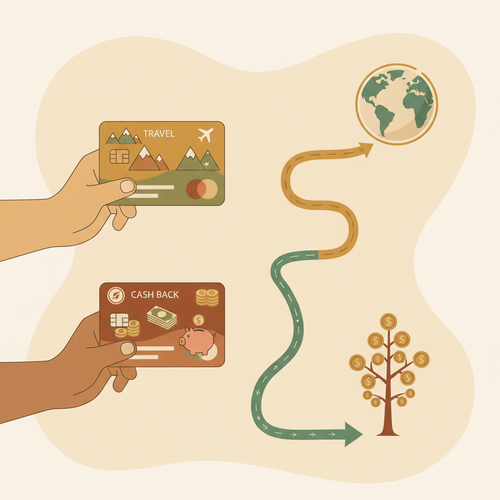
Navigating the world of credit cards can feel overwhelming, especially when choosing between travel rewards and cash back. Both options offer great perks, but one will always align better with your lifestyle and spending habits.
Understanding the core differences helps you make a strategic choice that maximizes your benefits. This guide will help you decode which card strategy is truly right for you.
Quick Summary: Your Card Strategy at a Glance
- ✈️ Travel Rewards: Ideal if you love to travel and spend significantly on flights, hotels, or dining.
- 💸 Cash Back: Perfect for everyday spending and those who prefer direct savings or flexibility without travel specifics.
- ✅ Your Goal Matters: Your financial goals and spending habits are the ultimate deciders for the best card.
Understanding Your Options: Travel Rewards
What Are Travel Rewards Cards?
Travel rewards cards are designed for individuals who frequently travel or dream of their next vacation. These cards typically earn points or miles that you can redeem for flights, hotel stays, rental cars, or even experiences.
Many cards also offer enticing sign-up bonuses that can fund a significant portion of your next trip. From what I’ve seen, these bonuses are a major draw for frequent flyers.
Pros of Travel Rewards Cards
- ✈️ Big Redemptions: Points can often be worth more when redeemed for travel than for cash back.
- 🏨 Perks & Privileges: Many cards offer benefits like lounge access, free checked bags, or elite status.
- 🌍 Travel Flexibility: You can often transfer points to various airline or hotel loyalty programs, offering diverse redemption options.
- 📈 High Sign-Up Bonuses: Initial bonuses can quickly provide enough points for a free flight or hotel night.
Cons of Travel Rewards Cards
- 💲 Higher Annual Fees: Often, the best travel cards come with a significant yearly cost to justify their benefits.
- 🤷 Complex Redemption: Redeeming points can sometimes be tricky, requiring research to find the best value.
- 🗓️ Expiration Dates: Some points or miles might expire if not used within a certain timeframe, so stay vigilant.
- ✈️ Travel-Dependent: If your travel plans change, these rewards might not be as valuable.
Pro Tip: Maximize Your Travel Points
In my experience, the biggest mistake beginners make is not researching redemption values. Always check if transferring points to a partner airline or hotel offers a better deal than booking directly through the card portal. A little research can save you hundreds!
Understanding Your Options: Cash Back
What Are Cash Back Cards?
Cash back cards are straightforward: you earn a percentage of your spending back as cash. This cash can be applied as a statement credit, deposited into your bank account, or sometimes used for gift cards.
These cards are fantastic for simplifying your financial rewards and enjoying tangible savings on everyday purchases. They offer a direct benefit that appeals to many.
Pros of Cash Back Cards
- 💰 Simplicity: Earning and redeeming cash back is usually very easy and transparent.
- ✅ Flexibility: Cash back can be used for anything you want – groceries, bills, investments, or treats.
- 🚫 No Expiration: Most cash back rewards don’t expire, giving you peace of mind.
- ⬇️ Lower Fees: Many excellent cash back cards have no annual fees, making them highly accessible.
Cons of Cash Back Cards
- 📉 Lower Redemption Ceiling: The value of cash back is always face value; you won’t find “outsize” value like with travel points.
- 🎁 Fewer Perks: Generally, cash back cards offer fewer travel-specific perks or premium benefits.
- 🔄 Fixed Rates: Your earning rate is often fixed, limiting opportunities for bonus earnings on specific categories unless the card has rotating categories.
Warning: Don’t Overspend for Rewards
Never spend more than you can afford to pay off each month, regardless of the rewards. The interest you pay will always outweigh any cash back or travel points you earn. Credit card debt can quickly erode any perceived benefits.
Travel Rewards vs. Cash Back: A Quick Comparison
| Feature | Travel Rewards Cards | Cash Back Cards |
|---|---|---|
| Primary Benefit | Points/miles for travel | Direct cash back |
| Redemption Value | Potentially higher (esp. with transfers) | Fixed, face value |
| Annual Fees | Often higher | Often none, or low |
| Complexity | Can be complex to optimize | Very simple |
| Ideal User | Frequent travelers, points enthusiasts | Everyday spenders, budget-conscious |
| Key Perks | Lounge access, elite status, travel insurance | Simplicity, direct savings |
Who Should Choose Travel Rewards?
You should lean towards travel rewards if you have a clear travel goal in mind, like a dream vacation or annual international trips. These cards shine brightest when you consistently spend on categories that earn bonus points for travel.
It also helps if you are organized and willing to learn the ins and outs of various airline and hotel loyalty programs. This strategy really pays off for those who are strategic planners.
Key Considerations for Travel Rewards
- ✈️ Frequent Traveler: You take several trips a year, either domestically or internationally.
- 💰 High Spender: Your monthly spending is significant enough to rack up points quickly.
- 🗓️ Flexible Travel Dates: You have the flexibility to book travel when award space is available.
- 🤓 Reward Optimizer: You enjoy researching the best ways to redeem points for maximum value.
Who Should Choose Cash Back?
Cash back cards are your best friend if you prefer simplicity and direct financial benefit for your daily life. If your focus is on saving money on groceries, gas, or just getting a little extra back on everything, cash back is superior.
These cards are also excellent for those who don’t travel often or want a “set it and forget it” rewards system. They offer immediate and tangible value.
Key Considerations for Cash Back
- 🏠 Everyday Spender: Your spending is primarily on daily necessities and household bills.
- 🧘 Simplicity Seeker: You prefer straightforward rewards without complex redemption charts.
- 🚫 No Annual Fees: You want to avoid annual fees to maximize your net savings.
- 💸 Immediate Savings: You appreciate getting cash back directly applied to your statement or bank account.
My Experience: Making the Choice
When I first started, the biggest question was always, “What’s the *best* card?” I quickly learned there isn’t one. The “best” card is always the one that aligns with *your* specific financial habits and aspirations.
For years, I focused on cash back because I was saving for a down payment. Later, when travel became a priority, I strategically shifted to travel rewards. Your life stages will influence your card choice.
Step-by-Step Decision Guide
- 🔍 Review Your Spending: Look at your last three months of bank statements. Where do you spend the most?
- 🎯 Define Your Goal: Are you saving for a trip, or do you want to reduce everyday expenses?
- 🗓️ Assess Your Travel Frequency: How often do you genuinely travel, and where do you typically go?
- 🏦 Check Your Credit Score: Premium cards often require excellent credit. You can check yours via Experian.
- 💰 Consider Annual Fees: Are you comfortable paying a fee for premium benefits, or do you prefer no-fee options?
- 📈 Compare Offers: Don’t just pick the first card. Use sites like NerdWallet to compare features.
Hidden Fees & Annual Fees: What You Need to Know
While many cash back cards boast no annual fees, some travel cards carry significant yearly costs. Always factor these fees into your calculation when determining the true value of your rewards. Sometimes, a high fee is justified by the perks, but not always.
Foreign transaction fees are another hidden cost, especially for travelers. Be aware that some cards charge 2-3% on purchases made outside your home country. This can quickly add up if you’re globe-trotting.
Important Considerations
- 💲 Annual Fee Justification: Does the value of the rewards and perks truly outweigh the annual fee?
- 🌍 Foreign Transaction Fees: If you travel internationally, ensure your chosen card has no foreign transaction fees.
- 💸 Balance Transfers: Avoid using rewards cards for balance transfers unless it’s a specific promotional offer, as interest can accrue quickly.
- 💳 Late Payment Fees: Always pay on time to avoid penalties that can negate any rewards earned.
Maximizing Your Rewards
No matter which strategy you choose, understanding how to maximize your rewards is crucial. Always pay your balance in full each month to avoid interest charges that cancel out your gains. This is the golden rule of credit card usage.
Beyond that, consider using different cards for different spending categories. For example, one card for gas and groceries, another for dining out. This strategy is often called “card stacking” or “category spending.”
Tips for Maximizing Your Rewards
- 🔄 Category Bonuses: Utilize cards that offer bonus rewards in categories where you spend the most.
- 🎁 Sign-Up Bonuses: Strategically apply for cards with generous sign-up bonuses, but ensure you can meet the spending requirements.
- 🤝 Referral Programs: Some cards offer bonuses for referring friends or family, adding to your overall rewards.
- 📊 Review Annually: Your spending habits and card offers change. Review your card portfolio once a year to ensure it still meets your needs.
- 🔗 Link Your Loyalty: If you have a travel card, link it to your preferred airline or hotel loyalty programs for seamless point transfers. Consider checking financial news from Bloomberg for market insights.
Important Considerations Before You Apply
Your credit score plays a vital role in being approved for the best rewards cards. A higher score typically unlocks premium cards with better benefits and lower interest rates. Always check your credit score before applying for new credit.
Furthermore, budgeting is key. A credit card, whether cash back or travel rewards, should complement your budget, not dictate it. Your financial discipline is the most powerful tool you have. For more financial insights, you might visit The Wall Street Journal or Investopedia.
Conclusion
Choosing between travel rewards and cash back isn’t about finding the “better” card; it’s about finding the “better” card *for you*. Your spending habits, financial goals, and lifestyle are the ultimate determinants.
By carefully evaluating your options and being mindful of fees and responsibilities, you can select a credit card strategy that truly enhances your financial well-being.
What’s your go-to credit card strategy, and why does it work for you?