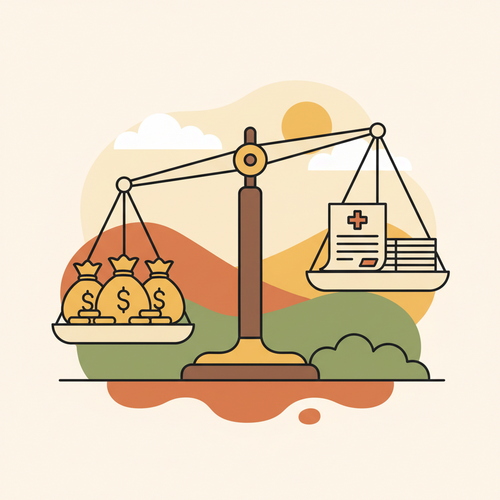
Understanding deductibles is crucial for making informed financial decisions about your insurance coverage. A deductible is the fixed amount you must pay out-of-pocket before your insurance company starts covering eligible costs. This payment threshold applies to various types of insurance, including health, auto, and home policies. Therefore, grasping the differences between high and low deductibles can significantly impact your annual expenses and financial planning. We will explore both options in detail. Specifically, this guide aims to equip you with the knowledge to choose the best deductible strategy for your unique situation.
What is a Deductible?
A deductible clearly defines your initial financial responsibility for a covered claim. For instance, if your health insurance has a $1,000 deductible, you pay the first $1,000 in medical bills yourself. Only after meeting this amount will your insurer begin to pay its share. Conversely, if your car insurance has a $500 deductible, you pay $500 towards repairs after an accident. The insurance company then covers the remaining balance, up to your policy limits. Indeed, the deductible serves as a pivotal cost-sharing mechanism. Consequently, it directly influences both your monthly premiums and your potential out-of-pocket costs during a claim.
High-Deductible Plans Explained
High-deductible plans feature a substantially higher out-of-pocket payment requirement before insurance coverage commences. Specifically, these plans invariably come with noticeably lower monthly premiums. This inherent trade-off can prove attractive for certain individuals. For example, a health insurance plan might stipulate a deductible of $3,000 or more per individual. Similarly, an auto policy could carry a $1,500 deductible. Therefore, while your recurring monthly costs are reduced, you assume more significant financial risk if you need to file a claim. However, these plans often present distinct advantages, especially for health insurance.
Advantages of High-Deductible Plans
- Lower Monthly Premiums: Consequently, you save money on a regular basis. This frees up cash for other investments or savings goals.
- Eligibility for Health Savings Accounts (HSAs): For health insurance, high-deductible health plans (HDHPs) often qualify you for an HSA. An HSA allows tax-free savings for medical expenses. Furthermore, contributions are tax-deductible, growth is tax-free, and qualified withdrawals are tax-free. Indeed, this triple tax advantage makes HSAs a powerful savings tool. Learn more about financial planning.
- Lower Overall Costs for Healthy Individuals: If you rarely visit the doctor or file claims, you might spend less annually. Specifically, premium savings could outweigh occasional out-of-pocket expenses.
- Increased Financial Awareness: Managing a higher deductible can encourage more thoughtful healthcare decisions. Patients might compare costs for services.
Disadvantages of High-Deductible Plans
- Higher Out-of-Pocket Costs for Claims: You must pay a significant amount before your insurance activates. Therefore, an unexpected major event could result in a substantial bill.
- Requires a Strong Emergency Fund: Individuals need sufficient savings to cover the deductible if an unforeseen event occurs. Consequently, without an adequate fund, these plans can become financially burdensome.
- Potential for Delayed Care: Some individuals might delay necessary medical treatment to avoid paying the deductible. This can lead to worsening conditions.
- Can Be Challenging for Families: Family deductibles are often higher. Thus, a family could face a very large initial cost.
Low-Deductible Plans Explained
Low-deductible plans require a smaller out-of-pocket payment before insurance coverage begins. Specifically, these plans come with higher monthly premiums. Conversely, you take on less financial risk when filing a claim. For instance, a health insurance plan might have a $500 deductible or even $0. Similarly, an auto policy could carry a $250 deductible. Therefore, while your monthly costs are higher, your financial exposure for an incident is considerably reduced. Indeed, these plans offer greater predictability regarding costs during a claim.
Advantages of Low-Deductible Plans
- Lower Out-of-Pocket Costs for Claims: If you have frequent medical needs or file claims often, your immediate costs will be less. This provides greater financial security during unforeseen events.
- Greater Predictability: Knowing your financial exposure is limited offers peace of mind. Therefore, budgeting for potential incidents becomes easier.
- Suitable for Frequent Users: Individuals who regularly access healthcare services or are prone to accidents benefit greatly. Specifically, higher premiums offset constant smaller payments.
- Reduced Need for a Large Emergency Fund (for deductibles): You don’t need to save as much specifically for a large deductible. However, an emergency fund remains vital for other unexpected expenses. Stay informed on global finance.
Disadvantages of Low-Deductible Plans
- Higher Monthly Premiums: Consequently, your recurring expenses are higher, regardless of insurance usage. This can strain budgets for some individuals.
- Less Opportunity for HSA Contributions: Most low-deductible health plans do not qualify for an HSA. Therefore, you miss out on valuable tax advantages.
- Higher Overall Cost for Infrequent Users: If you rarely use your insurance, higher premiums might exceed deductible savings. Indeed, you could pay more over time.
Key Factors to Consider When Choosing
Selecting between a high and low deductible plan requires careful consideration of several personal factors. Indeed, there is no one-size-fits-all answer. Your choice should align with your financial health, lifestyle, and risk tolerance. Consequently, evaluating these elements will guide you toward the most appropriate decision. It’s about balancing potential savings with potential risks.
Your Financial Situation
Assess your current income, expenses, and savings. Can you comfortably afford higher monthly premiums for a low-deductible plan? Conversely, do you have enough liquid savings to cover a high deductible if an emergency occurs? For instance, individuals with stable income and substantial savings might find a high-deductible plan appealing. However, those on a tighter budget may prefer the predictability of a low deductible. Therefore, understanding your financial capacity is paramount. Explore market insights for financial planning.
Health and Usage Patterns
Consider how often you anticipate using your insurance. Do you have chronic conditions requiring regular doctor visits or prescriptions? Specifically, if you expect frequent claims, a low-deductible plan could save you money overall. Conversely, if you are generally healthy and rarely need medical attention, a high-deductible plan with lower premiums might be more economical. Indeed, past usage can often predict future needs. Therefore, review your history of claims and healthcare expenditures.
Emergency Fund Availability
A robust emergency fund is critical, especially with high-deductible plans. Could you cover the entire deductible amount without financial strain if an unexpected event occurred tomorrow? Furthermore, having a safety net ensures you won’t fall into debt because of an accident or illness. Consequently, if your emergency fund is insufficient, a low-deductible plan offers a safer alternative. This provides a buffer against unforeseen costs. Read expert financial advice.
Premium Costs vs. Out-of-Pocket Maximums
Always compare the total potential cost. Look beyond just the deductible. Specifically, examine the monthly premium and the out-of-pocket maximum. The out-of-pocket maximum is the absolute most you will pay for covered services in a policy year. Therefore, calculate the sum of your annual premiums plus your deductible. Then, compare this to the maximum exposure. This comprehensive view helps you understand the true cost. Consider the potential worst-case scenario. Get unbiased financial information.
Real-World Examples
To illustrate these concepts, consider two hypothetical scenarios. These examples highlight how different financial situations and health needs influence the optimal deductible choice. Indeed, personal circumstances are always key. Therefore, these scenarios provide practical insights into decision-making.
Scenario 1: Healthy Individual with Savings
Meet Sarah, a 30-year-old active professional with no chronic health issues. She has a robust emergency fund of $15,000. Sarah rarely visits the doctor, maybe once a year. She is considering two health insurance plans. Plan A has a $500 monthly premium and a $1,000 deductible. Plan B has a $250 monthly premium and a $5,000 deductible. Therefore, Sarah analyzes her options. Given her health and savings, Plan B initially looks appealing. Her premium savings are $3,000 annually. She is confident she can cover the $5,000 deductible if an emergency arises. Consequently, she chooses the high-deductible plan, saving significantly on premiums. She also opens an HSA.
Scenario 2: Individual with Chronic Conditions
Now consider David, a 45-year-old with a chronic autoimmune condition. He requires monthly specialist visits and daily medication. David has an emergency fund of $3,000. He is also comparing Plan A ($500 premium, $1,000 deductible) and Plan B ($250 premium, $5,000 deductible). David knows he will easily meet a $1,000 deductible each year. With Plan A, his annual premiums are $6,000, plus a $1,000 deductible. His maximum out-of-pocket is often met. With Plan B, his annual premiums are $3,000. However, he would have to pay $5,000 out-of-pocket first. His $3,000 emergency fund is insufficient for this. Furthermore, his monthly medical costs would quickly accumulate towards the lower deductible. Consequently, David wisely chooses Plan A. The higher monthly premium provides greater financial security. His out-of-pocket costs are far more manageable when he needs care.
Conclusion
Choosing between a high and low deductible involves weighing premiums against potential out-of-pocket expenses. Ultimately, the best choice depends on your personal financial situation, health status, and risk tolerance. Specifically, a high deductible can save you money on premiums if you are healthy and have a strong emergency fund. Conversely, a low deductible offers greater financial predictability and lower immediate costs for those with frequent medical needs. Therefore, carefully evaluate your circumstances. Make an informed decision that aligns with your financial goals. Your proactive planning will help protect your financial well-being. Indeed, understanding deductibles empowers you to make smarter insurance choices.