Introduction
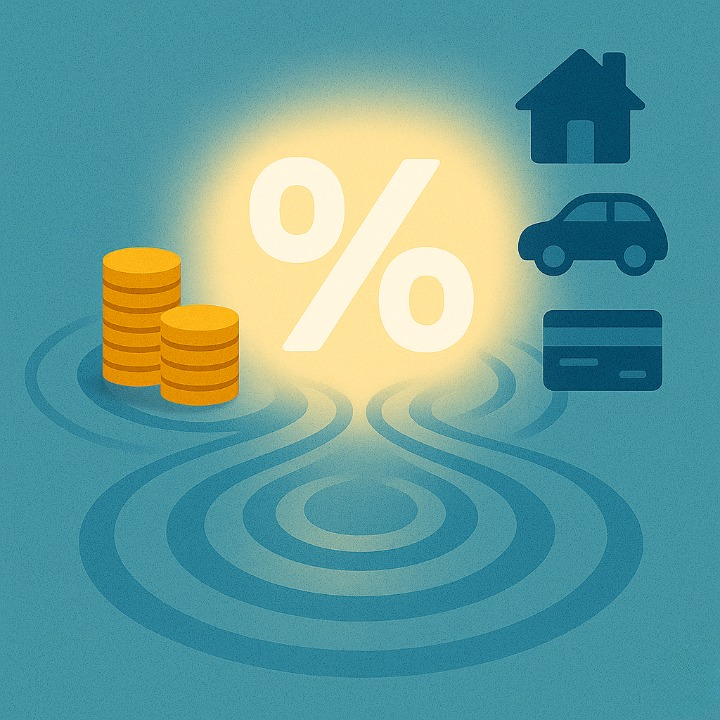
You see the headlines all the time: “Central Bank Raises Rates to Combat Inflation,” or “Policymakers Cut Rates to Stimulate Economy.” For many, these announcements can feel like abstract economic jargon, disconnected from the realities of daily life. It’s easy to dismiss them as news for Wall Street traders and economists. However, these decisions, made in quiet boardroom meetings, are among the most powerful forces shaping your personal finances. They create ripples that touch everything from the cost of your morning coffee (through inflation) to the dream of buying a new home.
The interest rate set by a nation’s central bank is, in essence, the foundational cost of money. Understanding how this single number influences your savings accounts, loans, and credit cards is a fundamental piece of financial literacy. It transforms you from a passive observer of economic news into a proactive manager of your own financial destiny. This guide will demystify the world of interest rates, explaining exactly how those high-level decisions flow down to your wallet and what steps you can take to navigate any economic climate to protect your financial health and grow your wealth.
What Are Central Bank Interest Rates, Really?
At the heart of every modern economy is a central bank, such as the U.S. Federal Reserve or the European Central Bank. These institutions have crucial mandates, primarily to maintain price stability (control inflation) and foster maximum sustainable employment. One of their most powerful tools to achieve these goals is the policy interest rate.
In simple terms, this policy rate—often called the “key rate” or “base rate”—is the interest rate at which commercial banks can borrow money from the central bank or lend money to each other overnight. Think of it as the wholesale cost of money for the entire banking system.
An analogy can be helpful here: imagine the central bank is the main supplier of a vital ingredient, let’s say flour, to all the bakeries in a city. If the supplier raises the price of flour, every bakery will soon have to charge more for their bread. Conversely, if the supplier lowers the price, the bakeries can afford to offer discounts to attract more customers. The central bank’s interest rate works in precisely the same way for money. It sets the baseline cost, which then influences every other interest rate in the economy. When the central bank wants to slow down an overheating economy and curb inflation, it raises rates, making borrowing more expensive. When it wants to encourage spending and investment to kickstart a sluggish economy, it lowers rates, making borrowing cheaper.
The Ripple Effect: How Rates Flow Down to You
Once the central bank makes its move, a predictable chain reaction occurs, directly impacting the financial products you use every day. Understanding this ripple effect is key to anticipating changes in your own finances.
Savings Accounts and Investments
This is where higher rates can be your friend. When the central bank increases its rate, commercial banks are incentivized to attract more deposits from consumers like you. To do this, they raise the interest rate they offer on products like high-yield savings accounts and certificates of deposit (CDs). Suddenly, the idle cash in your emergency fund starts working harder for you, generating more passive income. This is a direct reward for savers.
Credit Cards and Variable-Rate Debt
The impact here is swift and direct. Most credit card agreements have a variable Annual Percentage Rate (APR). This means the interest rate on your balance is not fixed; it’s tied to a benchmark rate, which moves in lockstep with the central bank’s policy rate. When the central bank announces a rate hike of 0.25%, you can expect the APR on your credit card to increase by the same amount within a billing cycle or two. This makes carrying a balance significantly more expensive and highlights the importance of paying down high-interest debt in a rising-rate environment.
Mortgages and Auto Loans
The cost of long-term financing is also heavily influenced by central bank policy. When you apply for a new mortgage or a car loan, the lender determines the rate based on the current economic conditions and their own cost of money. When central bank rates are high, the cost of new long-term financing rises as well. This means a larger portion of your monthly payment will go toward interest, and the total cost of borrowing over the life of the loan will be much higher. This can impact housing affordability and the overall cost of major purchases.
The Broader Economy and Your Job
The influence of the interest rate even extends to the health of the job market. Higher rates make it more expensive for businesses to borrow money for expansion, new equipment, or research and development. This can lead to a slowdown in business investment and, consequently, a cooling of the hiring market. Conversely, lower rates can stimulate business activity, potentially leading to more job creation.
How to Navigate a High-Interest-Rate Environment
When you hear news that rates are rising, it’s a signal to take specific actions to protect and enhance your finances.
- Attack High-Interest Debt: This is your top priority. With the interest rate on your credit card and other variable-rate loans increasing, these debts become more dangerous. Create a plan to aggressively pay down these balances to save money and protect your financial health.
- Maximize Your Savings: The silver lining of high rates is the return on savings. Shop around for the best high-yield savings accounts or CDs to ensure your emergency fund and other cash savings are earning the highest possible return.
- Strengthen Your Credit Score: A good credit score is always important, but it’s even more critical when rates are high. A strong score can help you qualify for the best available loan terms, saving you a significant amount of money on any necessary financing.
- Delay Major Borrowing if Possible: If you are considering a major purchase that requires financing, you might consider if it’s possible to wait for a more favorable rate environment.
How to Navigate a Low-Interest-Rate Environment
When rates are falling, a different set of opportunities and challenges emerges.
- The Prime Time to Borrow or Refinance: Low rates mean cheaper borrowing. This is the ideal time to seek financing for a home or vehicle. It’s also the perfect opportunity to refinance existing high-interest debt—like mortgages, private student loans, or auto loans—to a lower fixed rate, which can reduce your monthly payments and save you thousands over the life of the loan.
- The Challenge for Savers: While borrowers rejoice, savers face headwinds. The interest rate on savings accounts will be very low, meaning your cash will earn very little. This can make it challenging to grow your savings through interest alone.
- Consider Your Long-Term Strategy: In a sustained low-rate environment, the low returns on cash might prompt you to learn more about other long-term investment options as part of a diversified plan. This can be a good time to focus on financial education about different asset types, while always being mindful of their associated risks. A robust emergency fund is a form of self-insurance that remains critical regardless of the rate environment.
Conclusion
The decisions made by a central bank are not merely abstract economic theories; they are direct and impactful signals about the financial climate you live in. The key interest rate dictates the cost of borrowing and the reward for saving, influencing every major financial decision you make. By understanding this fundamental connection, you can move from being a passive victim of economic cycles to a savvy navigator.
Learning to read these signals allows you to know when to aggressively pay down debt, when to maximize the returns on your savings, and when to seize opportunities for affordable financing. This knowledge empowers you to build a resilient financial plan, protect your assets, and confidently work toward your goals, no matter which way the economic winds are blowing.