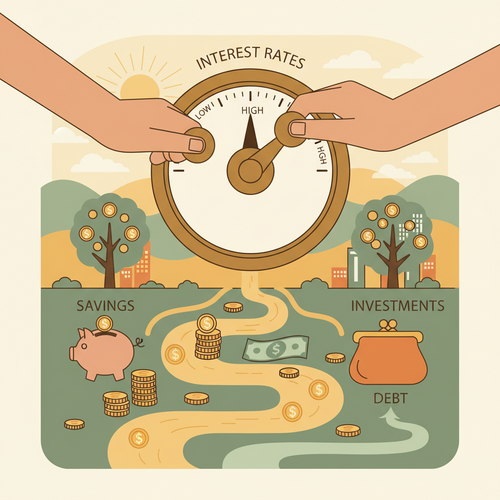
Federal Reserve rate cuts significantly influence your financial landscape. Understanding these shifts is crucial for managing both your savings and your investment portfolio. Therefore, grasping the mechanics behind these decisions empowers you to make informed choices. This guide will demystify how central bank actions ripple through the economy, affecting everyday finances for beginner investors.
Understanding Federal Reserve Rate Cuts
The Federal Reserve, often called “the Fed,” acts as the central bank of the United States. Its primary goals include maximizing employment and stabilizing prices. Moreover, the Fed uses various tools to achieve these objectives. One powerful tool involves adjusting the federal funds rate. This target rate influences other interest rates across the economy. A “rate cut” means the Fed lowers this target. Consequently, it signals a desire to stimulate economic activity.
Why would the Fed cut rates? Typically, they do so during periods of economic slowdown. Lowering borrowing costs encourages businesses to invest more. Furthermore, it prompts consumers to spend more. This increased activity can boost job creation and prevent a recession. Therefore, rate cuts are often a response to weakening economic indicators. It is a proactive measure to support growth.
Impact on Your Savings Accounts
When the Federal Reserve cuts interest rates, a direct impact often falls on your savings. Specifically, bank savings accounts, money market accounts, and Certificates of Deposit (CDs) usually see their interest rates decline. Banks pay less interest on deposits. This is because their own borrowing costs are lower. Consequently, they pass these lower costs onto savers.
For individuals, this means your money earns less interest. Over time, this erosion of returns can be significant. Imagine a scenario where you have substantial savings. A 0.25% or 0.50% cut might seem small initially. However, it compounds over many months and years. Your purchasing power could diminish if inflation remains stable or increases. Therefore, savers must actively seek alternatives. Simply leaving money in a low-yield account becomes less appealing. This situation compels many to reconsider their cash management strategies. It encourages a shift towards higher-yielding options, albeit with potentially greater risk.
Certificates of Deposit (CDs)
CDs are time-deposit accounts. They offer a fixed interest rate for a set period. Federal Reserve rate cuts directly affect new CD rates. Specifically, banks offer lower rates on newly issued CDs. If you purchase a new CD after a rate cut, your return will likely be less. However, existing CDs are generally unaffected. Your current CD rate remains fixed until maturity. Upon renewal, you will face the new, lower rates. Therefore, laddering CDs (buying CDs with different maturity dates) can be a smart strategy. This approach helps mitigate the impact of fluctuating rates.
Money Market Accounts
Money market accounts are another common savings vehicle. They typically offer slightly higher interest rates than traditional savings accounts. Furthermore, they often provide check-writing privileges. However, their rates are variable. Consequently, they are highly sensitive to Federal Reserve actions. When the Fed cuts rates, money market account yields tend to fall relatively quickly. This means your returns on these accounts will decrease. It impacts your passive income from cash holdings. Therefore, always monitor these rates. Compare them with other short-term investment options.
How Rate Cuts Influence Your Investments
The investment world reacts profoundly to Federal Reserve rate cuts. Various asset classes respond differently. Therefore, understanding these nuances is critical for portfolio management. Let’s explore the specific impacts on bonds, stocks, and other asset types.
Bonds and Fixed Income
Bonds are essentially loans made to governments or corporations. They pay a fixed interest rate. Federal Reserve rate cuts usually cause bond prices to rise. This is an inverse relationship. When new bonds are issued at lower interest rates, older bonds with higher rates become more attractive. Consequently, their market value increases. If you hold existing bonds, you might see a capital gain. However, new bonds will offer lower yields. Therefore, your future income from new bond purchases will be reduced. This can be challenging for income-focused investors. Furthermore, actively managing your bond portfolio becomes more important. Consider shorter-duration bonds to reduce interest rate risk.
Corporate Bonds
Corporate bonds also see similar effects. Lower interest rates reduce a company’s borrowing costs. This can improve their financial health. Consequently, the credit risk of some corporate bonds might decrease. However, their yields also fall. Investors must balance risk and return. Seek out companies with strong financials. This mitigates some of the risk associated with lower yields. Moreover, diversification across different bond types is always a prudent strategy.
Treasury Bonds
U.S. Treasury bonds are considered very safe. They are backed by the full faith and credit of the U.S. government. Their yields are highly sensitive to Federal Reserve policy. Rate cuts mean lower yields for new Treasury issues. This impacts conservative investors. They rely on these bonds for stable income. Nevertheless, their safety aspect remains attractive. Consider Treasury Inflation-Protected Securities (TIPS) if you are concerned about inflation erosion of returns.
Stocks and the Equity Market
Federal Reserve rate cuts generally have a positive impact on the stock market. Lower interest rates stimulate economic growth. This benefits corporate earnings. Therefore, the overall market tends to react favorably. However, specific sectors and types of stocks may experience different outcomes.
Corporate Borrowing and Earnings
Businesses often borrow money for expansion, research, and operations. Lower interest rates make borrowing cheaper. This reduces their interest expenses. Consequently, it can boost their net profits. Higher profits often translate to higher stock prices. Furthermore, it encourages companies to invest more. This fuels further economic expansion. Therefore, rate cuts are generally seen as good for corporate earnings.
Consumer Spending
Lower interest rates also make borrowing cheaper for consumers. Mortgages, car loans, and credit card interest rates may decrease. This leaves consumers with more discretionary income. Consequently, they are more likely to spend. Increased consumer spending drives revenue for many businesses. This further contributes to corporate profitability. Therefore, sectors sensitive to consumer spending often perform well during rate-cut cycles.
Growth Stocks vs. Value Stocks
Growth stocks are companies expected to grow earnings faster than the market. Value stocks are perceived as undervalued. Rate cuts can disproportionately benefit growth stocks. This is because future earnings are discounted at a lower rate. Therefore, their present value increases. Technology and innovation-driven companies often fall into this category. Conversely, value stocks may see a more moderate positive impact. However, both generally benefit from an expanding economy. It is important to maintain a diversified portfolio.
Dividend Stocks
Dividend stocks pay regular income to shareholders. When bond yields fall, dividend stocks can become more attractive. Investors seeking income might shift from bonds to dividend-paying equities. This increased demand can push up their stock prices. Therefore, consider stable companies with a history of consistent dividend payments. Utilities and consumer staples often fit this profile.
Sector-Specific Impacts
- Financials: Banks might face pressure on their net interest margins. However, increased lending volume can offset some of this. Therefore, the impact can be mixed.
- Real Estate: Lower mortgage rates boost housing demand. This can increase home sales and property values. Real estate investment trusts (REITs) can also benefit. Consequently, the real estate sector typically performs well.
- Utilities: These are often seen as bond proxies. Their stable dividends become more appealing in a low-rate environment. Therefore, they often attract income-seeking investors.
- Technology: Growth companies in technology benefit from lower borrowing costs. Their future earnings are also valued more highly. Consequently, the tech sector can see significant gains.
Real Estate and Mortgages
Federal Reserve rate cuts have a profound impact on the real estate market. Specifically, mortgage rates often follow the federal funds rate. When the Fed cuts rates, mortgage rates tend to fall. This makes homeownership more affordable for many. Consequently, housing demand often increases. Increased demand can lead to higher home prices. Therefore, existing homeowners may see their property values rise.
For potential homebuyers, lower mortgage rates mean lower monthly payments. This can make larger homes affordable. Furthermore, it can attract first-time buyers into the market. It also makes refinancing an existing mortgage more attractive. Homeowners can secure a lower interest rate. This reduces their monthly payments or the total interest paid over the loan’s life. Therefore, homeowners should always monitor rate changes. Consider consulting a mortgage professional.
Alternative Investments
Even alternative investments can feel the ripple effect of Federal Reserve rate cuts. Understanding these connections helps diversify your portfolio effectively. Therefore, consider how various assets respond to monetary policy changes.
Gold and Precious Metals
Gold is often seen as a hedge against inflation and economic uncertainty. When interest rates fall, the opportunity cost of holding gold decreases. Gold does not pay interest. Therefore, when interest-bearing assets yield less, gold becomes relatively more attractive. This can push its price higher. Furthermore, a weaker U.S. dollar, often a consequence of lower rates, also tends to boost gold prices. This is because gold becomes cheaper for buyers using other currencies.
Commodities
The impact on commodities is more complex. Lower rates can stimulate economic growth. This increases demand for industrial commodities like oil and copper. However, specific commodity prices are also influenced by supply and demand dynamics. Therefore, the effect is not always straightforward. Diversification across various commodities can help mitigate risk. Consider the global economic outlook.
Economic Implications of Rate Cuts
Federal Reserve rate cuts are not just about your personal finances. They also carry broader economic implications. These actions are designed to influence the entire economy. Therefore, understanding the bigger picture is beneficial for all citizens and investors.
Stimulating Economic Growth
The primary goal of rate cuts is to stimulate economic growth. Lower borrowing costs encourage businesses to expand. They invest in new projects and hire more employees. This boosts overall economic activity. Furthermore, consumers borrow and spend more. This injects money into various sectors. Consequently, GDP growth often improves. It is a powerful lever for policymakers.
Inflation and Deflation
Rate cuts can also influence inflation. When money is cheaper to borrow, there’s more money circulating in the economy. This increased money supply can lead to higher demand for goods and services. If supply doesn’t keep up, prices can rise. This is inflation. The Fed carefully monitors inflation to prevent it from getting out of control. However, if the economy is facing deflation (falling prices), rate cuts can help counteract it. Therefore, the Fed tries to strike a balance. They aim for stable, moderate inflation.
What Beginner Investors Should Do
Navigating financial markets during periods of Federal Reserve rate cuts requires thoughtful consideration. For beginner investors, it’s an opportunity to learn and adapt. Therefore, implementing a few key strategies can help protect and grow your wealth.
Review Your Savings Strategy
With lower interest rates on traditional savings, evaluate alternatives. Consider high-yield online savings accounts. These often offer better rates than brick-and-mortar banks. However, ensure they are FDIC-insured. Explore short-term fixed-income investments if you need slightly higher returns and low risk. Nevertheless, prioritize liquidity for emergency funds. You can find more information on savings accounts at Investopedia.
Assess Your Investment Portfolio
Rate cuts can shift market dynamics. Review your current investments. Are they still aligned with your financial goals? Consider diversifying your portfolio further. This can involve adding different asset classes. Rebalance if necessary. Furthermore, focus on long-term growth. Do not make impulsive decisions based on short-term market fluctuations. Therefore, a disciplined approach is essential.
Consider Diversification
Diversification remains a cornerstone of sound investing. Spreading your investments across various asset classes, industries, and geographies can reduce risk. For instance, if bonds are yielding less, you might explore quality stocks or real estate. However, do not over-diversify to the point of diluting returns. A well-diversified portfolio helps weather economic changes. Learn more about economic policies at the Federal Reserve website.
Consult a Financial Advisor
For many beginner investors, professional guidance is invaluable. A qualified financial advisor can help you understand the implications of rate cuts. They can also tailor strategies to your specific situation. This includes assessing your risk tolerance and financial goals. Therefore, seeking expert advice is a prudent step. It can provide clarity and confidence in uncertain times. You can explore financial news and insights at Reuters.
Stay Informed
Financial markets are dynamic. Staying updated on economic news and Federal Reserve announcements is crucial. Read reputable financial publications. Understand how global events can influence local markets. Therefore, continuous learning is a powerful tool for any investor. Knowledge empowers better decision-making.
Conclusion
Federal Reserve rate cuts create both challenges and opportunities for your savings and investments. While savers might see lower returns on cash, investors can find growth in equities and real estate. Therefore, adapting your financial strategy to these changes is paramount. Remember the importance of diversification and a long-term perspective. Informed decisions, coupled with professional advice when needed, will help you navigate these economic shifts successfully. Always prioritize your financial well-being and continually educate yourself on market dynamics.