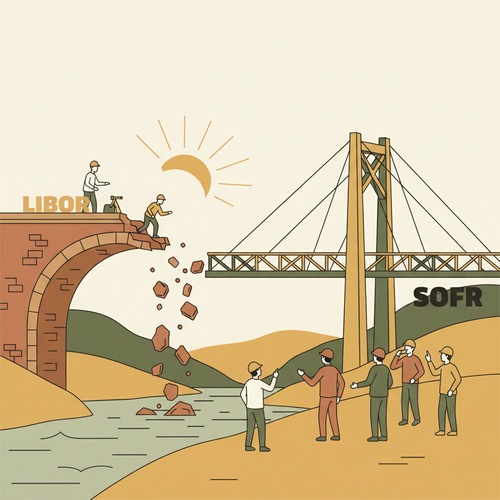
Understanding the LIBOR to SOFR transition is crucial for many borrowers. Specifically, this shift significantly impacts how interest rates are calculated for various financial products. Historically, the London Interbank Offered Rate (LIBOR) served as a benchmark for trillions of dollars in loans worldwide. However, this global benchmark faced significant challenges in its integrity and reliability. Therefore, regulators made a decisive move to phase it out completely. Consequently, a new reference rate, the Secured Overnight Financing Rate (SOFR), has emerged as its primary replacement. This transition represents a monumental change in the financial landscape. Indeed, all borrowers must comprehend its far-reaching implications.
What Was LIBOR?
LIBOR was a daily average of interest rates. Specifically, these rates were estimated by a panel of leading banks in London for short-term, unsecured loans to other banks. It existed in five major currencies and seven different maturities, making it incredibly versatile. Many financial products, including adjustable-rate mortgages (ARMs), corporate loans, student loans, and derivatives, referenced LIBOR. For instance, an ARM might have an interest rate tied to “LIBOR plus a margin.” This meant the borrower’s monthly payments fluctuated directly with the LIBOR rate. However, LIBOR relied heavily on expert judgment and panel bank submissions rather than actual market transactions. Consequently, this made it highly susceptible to manipulation. Indeed, a major scandal in 2012 exposed this critical vulnerability. Furthermore, the volume of underlying interbank lending transactions significantly declined over time. Thus, LIBOR became less representative of true market conditions. This fundamental lack of robustness created an undeniable need for a more reliable alternative.
The Rise of SOFR
SOFR stands as a remarkably more robust and transparent alternative. Specifically, it is a broad measure of the cost of borrowing cash overnight collateralized by U.S. Treasury securities. The Federal Reserve Bank of New York calculates and publishes SOFR daily. Therefore, it is based entirely on actual, observable transactions in the massive repurchase agreement (repo) market. This market is vast, deep, and highly active, with daily volumes often exceeding a trillion dollars. Consequently, SOFR directly reflects genuine market activity and is extremely difficult to manipulate. It is also a secured rate. Indeed, this means every transaction involves collateral, specifically U.S. Treasury bonds. Conversely, LIBOR was an unsecured rate, inherently carrying an element of bank credit risk. This distinction is fundamental. Furthermore, SOFR is widely considered a “nearly risk-free” rate. This designation arises because it is collateralized by ultra-safe U.S. Treasury bonds. Understanding this crucial difference is paramount for all borrowers.
Why the Transition to SOFR?
The transition to SOFR directly addresses LIBOR’s fundamental flaws and weaknesses. Primarily, it tackles the critical issues of reliability, integrity, and sustainability. LIBOR’s reliance on estimates and its historical susceptibility to manipulation necessitated a profound change for the global financial system. Furthermore, the steadily declining volume of transactions underlying LIBOR made it an unsustainable benchmark for future contracts. Consequently, global financial regulators universally deemed LIBOR unfit for purpose in a modern, transparent market. The strategic shift aims to ensure long-term financial stability and to protect consumers from unreliable benchmarks. Therefore, financial markets desperately needed a more robust and transaction-based benchmark. SOFR provides precisely this robustness. Indeed, it is based on a deep, liquid, and highly active market. This makes it significantly harder to manipulate than its predecessor. Therefore, the change dramatically enhances transparency and integrity across the entire financial system. All financial institutions must adapt rigorously to this new standard.
Impact on Borrowers: What to Know
Borrowers need to fully understand how this monumental transition affects their existing and future loans. Many loans previously referenced LIBOR as their primary interest rate benchmark. Specifically, adjustable-rate mortgages (ARMs), various corporate and business loans, and some private student loans were commonly tied to LIBOR. As LIBOR ceases to be published, these contracts must seamlessly transition to SOFR or another approved alternative rate. This process can be complex. Therefore, borrowers should meticulously review their loan documents for specific details. Many existing agreements include robust “fallback language.” This critical language specifies precisely how interest rates will be determined if LIBOR becomes unavailable. For instance, some contracts might automatically switch to a SOFR-based rate. Other agreements might require an amendment, sometimes even an active agreement from the borrower. Consequently, direct and proactive communication with your lender is absolutely essential. Do not assume your loan will simply convert without your awareness or understanding.
Adjustable-Rate Mortgages (ARMs)
Homeowners with ARMs tied to LIBOR will certainly experience a change in their rate calculation. Specifically, their loan agreements will transition to a SOFR-based rate. This conversion often involves a “spread adjustment.” A spread adjustment helps to account for the historical economic difference between LIBOR and SOFR. SOFR rates are generally lower than LIBOR rates, largely because SOFR is risk-free while LIBOR incorporated a credit risk component. Therefore, simply switching directly without an adjustment could significantly alter the economic terms of payments. Regulators mandated specific spread adjustments to minimize this impact and ensure fair treatment. However, individual loan terms and the application of these adjustments can vary significantly. Consequently, borrowers must proactively contact their mortgage servicers without delay. Discuss the specific implications for your particular mortgage. Furthermore, clearly understand how your new interest rate will be calculated. This ensures you are fully prepared for any potential payment changes or adjustments.
Corporate and Business Loans
Businesses with LIBOR-linked loans also face substantial adjustments and conversions. Term loans, revolving credit facilities, and syndicated loans commonly used LIBOR as their benchmark. Lenders are actively reaching out to corporate clients with significant exposure. Specifically, they are facilitating amendments to existing loan agreements to replace LIBOR. These amendments will substitute LIBOR with SOFR or other approved alternative reference rates. Consequently, businesses should immediately engage with their finance teams, legal counsel, and lenders. Review all relevant loan documentation thoroughly, including any new terms or conditions. Furthermore, understand any changes to financial covenants or other crucial loan terms. Early engagement can prevent unwelcome surprises and ensure a smooth transition. Indeed, proactive management of this critical transition is absolutely key for maintaining corporate financial stability. Therefore, businesses must prioritize these important discussions.
Student Loans and Other Consumer Credit
While less prevalent than in other sectors, some private student loans and other specific consumer credit products were also linked to LIBOR. Borrowers with these products should meticulously check their loan agreements for details. Specifically, look for terms related to interest rate benchmarks and fallback provisions. If your loan references LIBOR, contact your loan servicer immediately. They can provide detailed information on the transition plan for your specific account. Many student loan contracts might also use comprehensive fallback language. This language dictates precisely how the rate will be determined post-LIBOR. Consequently, understanding these terms is vital for managing your financial obligations. Do not hesitate to ask clarifying questions until you fully comprehend the changes. Indeed, clarity about your financial obligations always protects your interests. Therefore, seeking information early is always advisable for peace of mind.
Key Differences Between LIBOR and SOFR
Understanding the fundamental differences between these two reference rates is profoundly important for borrowers.
- Nature of the Rate: LIBOR was an unsecured, credit-sensitive rate, reflecting banks’ perceived borrowing costs. Conversely, SOFR is a secured, nearly risk-free rate, based on collateralized transactions. This means LIBOR incorporated a bank’s inherent credit risk, whereas SOFR does not.
- Underlying Market: LIBOR relied on an estimated, and often thin, interbank lending market. SOFR, however, is based on actual, observable transactions in the massive U.S. Treasury repurchase agreement (repo) market. This makes SOFR significantly more robust and reliable.
- Tenor: LIBOR had multiple forward-looking tenors (e.g., overnight, 1-month, 3-month, 6-month). SOFR is primarily an overnight rate, reflecting daily borrowing costs. Therefore, term SOFR rates, which are forward-looking, must be specifically constructed from the overnight rate via market conventions.
- Volatility: SOFR can exhibit more day-to-day volatility than LIBOR. This volatility directly reflects real-time conditions in the overnight repo market. However, its overall stability and transactional basis are much higher than LIBOR’s.
Specifically, these critical distinctions mean SOFR provides a more reliable, transparent, and defensible benchmark for financial contracts. Indeed, the entire financial system benefits from this improved integrity and robustness. Therefore, the shift marks a significant and necessary upgrade.
Preparing for the SOFR Transition
Borrowers must take several proactive and essential steps to navigate this transition smoothly. First, identify all loans and financial contracts referencing LIBOR within your portfolio. Create a comprehensive inventory of these agreements. Second, meticulously locate the specific fallback language within each loan agreement. Understand precisely how your interest rate will convert once LIBOR ceases. Third, contact your lenders or financial advisors without delay. Discuss the specific impacts on your loans and ask clarifying questions. For instance, inquire about proposed spread adjustments and their methodology. Fourth, closely monitor all communications from your lenders and financial institutions. They will provide crucial updates and specific instructions. Fifth, educate yourself thoroughly about SOFR. Understand its mechanics, its calculation, and how it fundamentally differs from LIBOR. Valuable resources are widely available from financial regulators and market bodies. Consequently, being well-informed truly empowers you in this process. Indeed, proactive preparation absolutely minimizes potential disruptions and ensures continuity. Therefore, prioritizing these actions is crucially important for all borrowers.
Benefits and Challenges of SOFR
Benefits:
- Robustness: SOFR is fundamentally based on a deep, liquid, and extremely active market, making it far less susceptible to manipulation or thin trading. Consequently, it offers significantly greater reliability and stability.
- Transparency: Its calculation uses actual, observable transactions rather than estimates or panel submissions. Therefore, SOFR is highly transparent and easily verifiable, which builds much-needed trust in the financial system.
- Risk-Free Nature: SOFR is considered virtually risk-free because it is collateralized by U.S. Treasury securities. This provides a clearer, cleaner benchmark for pricing true credit risk. Indeed, it effectively separates credit risk from the underlying reference rate itself.
Challenges:
- Spread Adjustments: LIBOR historically included a credit risk component, whereas SOFR does not. Therefore, a specific spread adjustment is necessary for fair and economically equivalent conversion of existing contracts. Calculating and applying these adjustments consistently across diverse contracts is complex.
- Term SOFR Development: SOFR is primarily an overnight rate. However, many loans require forward-looking term rates (e.g., 1-month, 3-month) for certainty. Developing robust, market-accepted Term SOFR rates was a significant undertaking. Specifically, this ensures continuity for a wide variety of financial products.
- Basis Risk: Some legacy contracts might transition to different alternative reference rates other than SOFR, or to different forms of SOFR. This creates potential “basis risk” between various benchmarks. Consequently, managing this risk requires careful attention and sophisticated hedging strategies from institutions.
Indeed, while some operational and market challenges exist, the long-term benefits of SOFR for financial stability and integrity are clear. Therefore, the transition provides a much more stable and reliable foundation for global finance.
Navigating the New Financial Landscape
The financial world is a dynamic and constantly evolving environment. This major LIBOR to SOFR transition exemplifies such critical evolution. Borrowers must adapt thoughtfully and strategically to these significant changes. Specifically, staying thoroughly informed and actively engaging with financial institutions is absolutely key to success. Do not hesitate to seek professional financial advice from trusted sources. Indeed, understanding your financial agreements and obligations is always a good practice, regardless of market conditions. This transition offers a valuable opportunity to review your borrowing terms and financial strategies. Consequently, you can make more informed and confident decisions about your financial future. Many reputable resources are available to help guide you through this period. Consult well-known financial news sources; for instance, visit Bloomberg for market insights and analysis. The Federal Reserve also provides extensive official information. Therefore, being proactive is undoubtedly the best approach for every borrower. Furthermore, visit the Federal Reserve website for official statements and comprehensive guides. Additionally, explore the financial news from The Wall Street Journal for further perspectives.
Conclusion
The transition from LIBOR to SOFR marks a historic and profound shift in global finance. Specifically, it moves the entire industry towards a more robust, transparent, and fundamentally reliable interest rate benchmark. For borrowers, this means understanding potential changes to interest rate calculations on existing and future loans. Reviewing all loan documents carefully is absolutely essential for clarity. Consequently, contacting your lenders directly to discuss your specific situation is highly recommended and prudent. While the transition undeniably presents complexities and requires careful attention, the long-term benefits for market integrity and stability are substantial. Indeed, SOFR provides a much more stable and trustworthy foundation for financial contracts globally. Therefore, embrace this critical change with knowledge, preparation, and proactive engagement. Understanding these significant shifts protects your financial interests and empowers you to navigate the new financial landscape confidently. Be informed, stay engaged, and secure your financial future effectively.