Introduction
The allure of a Software as a Service (SaaS) business model is undeniable. It promises scalable growth, stable recurring revenue, and the potential to revolutionize industries. Many aspiring entrepreneurs dream of creating a product that users love and subscribe to consistently. However, transforming a brilliant idea into a profitable SaaS enterprise requires careful planning and execution.
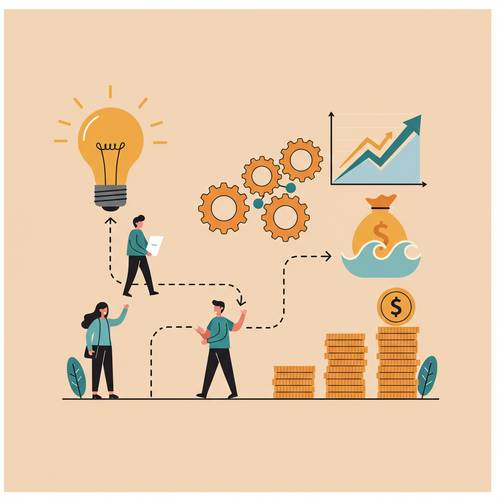
This article explores the essential steps for launching a successful SaaS, guiding you from the initial spark of an idea through to establishing a robust stream of recurring revenue. We will cover critical stages, including validating your concept, building your product, strategizing your market entry, and ensuring customer retention. Understanding these pillars is crucial for any entrepreneur looking to make their mark in the competitive SaaS landscape.
The Foundation: Idea Validation and Market Fit
Every successful SaaS starts with a genuine problem and a well-defined solution. You cannot build a product in isolation. Instead, you must deeply understand your potential users and the market landscape. This initial groundwork is vital for saving time and resources in the long run.
Identifying a Problem Worth Solving
The first step is to identify a significant pain point or inefficiency. Your SaaS solution should offer clear value by solving this problem effectively. Think about common frustrations in your daily life or within specific industries. A product that alleviates real user struggle naturally gains traction.
Consider problems that are widespread and frequently encountered. A niche problem might limit your market, while a broad one could be too competitive. Focus on problems where existing solutions are inadequate or non-existent.
Understanding Your Target Audience
Once you have a problem, you need to understand who experiences it most acutely. Your target audience defines your entire product development and marketing strategy. Create detailed buyer personas, outlining their demographics, behaviors, motivations, and specific needs.
Engage directly with potential users through interviews, surveys, and focus groups. Ask open-ended questions to uncover their challenges and aspirations. This direct feedback is invaluable for shaping your product features and messaging. Knowing your audience deeply helps you build a product they will truly use and love.
Competitive Analysis and Differentiation
Even if your idea is novel, you will likely face some form of competition. This could be direct competitors offering similar software, or indirect ones providing manual workarounds. A thorough competitive analysis helps you understand the market. Look at what existing solutions offer, their pricing, strengths, and weaknesses.
Your goal is to find your unique selling proposition (USP). How will your SaaS be different or better? Perhaps it is more user-friendly, offers a unique feature, or targets a specific sub-niche. This differentiation is critical for standing out and attracting customers. A clear differentiator gives users a compelling reason to choose your product over others. For more on market analysis, you can refer to resources like the Harvard Business Review.
Building Your SaaS: Product Development and MVP
With a validated idea and a clear understanding of your market, the next stage is to build your product. This phase focuses on efficient development, user feedback, and iterative improvement. The goal is to get a functional product into users’ hands as quickly as possible.
Agile Development Principles
Adopt an agile development methodology. This approach breaks down development into small, manageable cycles, often called sprints. Agile allows for flexibility and continuous improvement based on feedback. It emphasizes collaboration and rapid iteration.
Teams work in short bursts, delivering working software increments. This contrasts with traditional waterfall methods, where all planning is done upfront. Agile helps you adapt to changing market demands and user needs efficiently. It ensures you are always building the right product.
Crafting Your Minimum Viable Product (MVP)
Your first release should be a Minimum Viable Product (MVP). An MVP is a version of your product with just enough features to satisfy early customers and provide feedback for future product development. It is not meant to be perfect or feature-rich. Its primary purpose is to test your core assumptions and gather real-world insights.
Focus on the absolute essential features that solve the primary problem you identified. Avoid adding “nice-to-have” features at this stage. Launching an MVP quickly allows you to validate your product with real users without significant investment.
User Feedback and Iteration
After launching your MVP, the work is far from over. Actively solicit user feedback. Implement mechanisms like in-app surveys, feedback forms, and direct communication channels. Pay close attention to bug reports and feature requests.
Use this feedback to iterate and improve your product. Prioritize features and fixes based on user needs and business goals. This continuous cycle of feedback and iteration is fundamental to building a SaaS that truly resonates with its users. It also helps in building a strong, loyal customer base.
Go-to-Market Strategy: Pricing, Marketing, and Sales
Once your product is ready, you need a solid plan to bring it to your target audience. This involves defining your pricing, reaching potential customers, and converting them into paying subscribers. A well-executed go-to-market strategy is critical for initial growth.
Developing a Sustainable Pricing Model
Pricing your SaaS is a delicate balance. You need to cover costs, generate profit, and offer perceived value to customers. Common SaaS pricing models include per-user, tiered, feature-based, or usage-based pricing. Research what competitors charge and consider your value proposition.
Experiment with different pricing tiers to cater to various customer segments. Consider offering a free trial or a freemium model to attract users. Clearly communicate the value at each price point. Your pricing strategy directly impacts your revenue and perceived market position.
Effective Marketing and Lead Generation
Attracting potential customers requires a multi-faceted marketing approach. Start by defining your ideal customer profile (ICP). This ensures your marketing efforts are highly targeted. Content marketing, SEO, social media, paid advertising, and email marketing are all powerful tools.
Invest in strategies that bring qualified leads into your sales funnel. For instance, creating valuable blog content related to your niche can attract organic traffic. Use clear calls to action (CTAs) to guide visitors towards signing up for a trial or demo. Remember, effective marketing is about educating and engaging.
Building a Sales Funnel
A clear sales funnel guides potential customers from initial awareness to becoming paying subscribers. This typically involves several stages: awareness, interest, consideration, intent, evaluation, and purchase. Optimize each stage to minimize drop-offs.
For instance, your website might convert visitors into trial users (interest/consideration). Your onboarding process then nurtures these trial users towards conversion (intent/evaluation). Finally, a clear subscription process completes the purchase. A smooth and intuitive funnel increases conversion rates significantly.
Scaling and Sustaining: Achieving Recurring Revenue
The true power of SaaS lies in its recurring revenue model. However, achieving and sustaining this requires a strong focus on customer retention and continuous value delivery. Your growth depends heavily on keeping your existing customers happy and engaged.
Customer Onboarding and Retention
The journey does not end after a customer signs up. Excellent customer onboarding is crucial for retention. Guide new users through your product, highlighting key features and benefits. Make it easy for them to achieve their first “aha!” moment.
Focus on reducing churn, which is the rate at which customers cancel their subscriptions. Proactive customer support, regular product updates, and personalized communication help improve retention. A loyal customer base is a stable source of recurring revenue.
Leveraging Customer Success
Customer success goes beyond traditional customer support. It is a proactive approach to ensure customers achieve their desired outcomes using your product. Dedicated customer success managers can build strong relationships, provide strategic guidance, and identify opportunities for upselling or cross-selling.
Happy, successful customers are your best advocates. They provide valuable testimonials and referrals, which are powerful drivers of new business. Investing in customer success directly contributes to long-term recurring revenue.
Expanding Your Product and Market Reach
As your SaaS matures, consider opportunities for expansion. This could involve developing new features, integrating with other platforms, or targeting new market segments. Always base these decisions on market research and user feedback.
Explore partnerships or collaborations to reach a wider audience. Consider international expansion if your product has global appeal. Strategic growth ensures your SaaS remains competitive and continues to attract new subscribers, further solidifying your recurring revenue streams. For insights on scaling, platforms like Forbes Advisor often publish relevant articles.
Conclusion
Launching a successful SaaS is a challenging yet incredibly rewarding endeavor. It demands a blend of innovative thinking, meticulous planning, and relentless execution. From validating your initial idea to building a robust product, and from strategizing your market entry to focusing on customer retention, each step plays a vital role.
By prioritizing problem-solving, understanding your audience, developing iteratively, and building strong customer relationships, you pave the way for sustainable growth and a thriving recurring revenue model. Embrace the journey, continuously learn from your users, and adapt to the ever-evolving market. With dedication and the right strategy, your SaaS idea can indeed transform into a highly successful venture, delivering consistent value to both your users and your business. The future of software is bright, and with the right approach, you can be a significant part of it.