Introduction
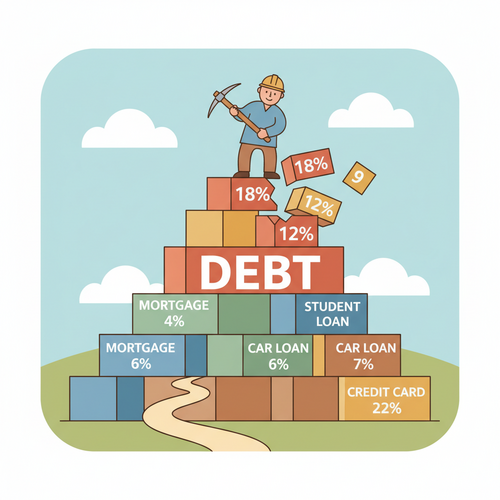
Navigating the world of personal finance can often feel like climbing a mountain, especially when faced with multiple debts. From credit cards to student loans and personal loans, the cumulative burden can be overwhelming. Many individuals seek effective strategies to regain control and accelerate their journey to financial freedom. Understanding the right approach is crucial not only for managing payments but also for significantly reducing the total amount spent on interest over time.
This article delves into the Debt Avalanche Method, a powerful and mathematically sound strategy designed to help you pay off your loans faster and save a substantial amount on interest. We will explore what this method entails, how to implement it step-by-step, its compelling benefits, and whether it aligns with your personal financial situation. By the end, you will have a clear understanding of how to leverage this technique to conquer your debts more efficiently.
Understanding the Debt Avalanche Method
The Debt Avalanche Method is a debt repayment strategy that prioritizes paying off debts with the highest interest rates first, regardless of their balance. This approach is rooted in mathematical optimization, aiming to minimize the total interest paid over the life of your debts. It focuses on the financial cost of each loan, ensuring that you tackle the most expensive debts first.
Here is how the core concept works: Imagine you have several debts. Instead of focusing on the smallest balance, you identify the loan that charges you the most in interest each month. By directing any extra funds towards this high-interest debt, you reduce its principal balance more quickly. This, in turn, lessens the interest accumulated on that specific loan, leading to greater savings.
This method stands in contrast to the Debt Snowball Method, which focuses on paying off the smallest balances first to build psychological momentum. While both methods have their merits, the Debt Avalanche Method is generally recommended for those who prioritize saving money and are disciplined enough to stick with a long-term plan. It is a strategic approach that yields significant financial benefits by systematically attacking the most costly components of your debt portfolio.
Step-by-Step Implementation of the Debt Avalanche Method
Successfully applying the Debt Avalanche Method requires a clear understanding of your current financial landscape and a disciplined approach. Here is a detailed guide to help you implement this strategy effectively:
1. List All Your Debts
The first crucial step is to gather all the necessary information about your outstanding debts. Create a comprehensive list that includes:
- The name of the creditor (e.g., Bank A, Credit Card Company B).
- The current outstanding balance for each loan.
- The annual interest rate (APR) for each debt.
- The minimum monthly payment required for each debt.
For example, your list might look something like this: Credit Card A (Balance: $5,000, APR: 24%, Minimum Payment: $100), Student Loan B (Balance: $20,000, APR: 6%, Minimum Payment: $200), Personal Loan C (Balance: $8,000, APR: 12%, Minimum Payment: $150).
2. Order Your Debts by Interest Rate
Once you have all your debt information, arrange them from the highest annual interest rate to the lowest. This ordering is the cornerstone of the Debt Avalanche Method. The balance of the loan does not matter at this stage; only the interest rate is your guide.
- In our example: Credit Card A (24% APR) would be first, followed by Personal Loan C (12% APR), and then Student Loan B (6% APR).
This visual prioritization helps you identify the “target” debt that will receive your extra payments first. Understanding which debt costs you the most ensures you make the most financially impactful decision.
3. Make Minimum Payments on All but the Highest Interest Debt
For all debts except the one at the very top of your prioritized list, continue to make only the minimum required payment each month. It is vital to continue making these minimum payments to avoid late fees and negative impacts on your credit score. Consistency here prevents new problems from arising.
4. Allocate Extra Funds to the Highest Interest Debt
This is where the power of the Debt Avalanche Method truly comes into play. Identify any extra money you can allocate towards debt repayment beyond your minimum payments. This could come from a bonus, a side hustle, cutting discretionary spending, or simply finding efficiencies in your budget. Take every single extra dollar and apply it directly to the principal balance of the debt with the highest interest rate.
For instance, if Credit Card A has a 24% APR and you find an extra $200 in your budget, you would pay the minimum on Student Loan B and Personal Loan C, and then pay $100 (minimum) + $200 (extra) = $300 towards Credit Card A. This aggressive payment significantly reduces the principal faster, thereby reducing the interest charged on subsequent billing cycles.
5. Roll Over Payments Once a Debt is Paid Off
When you successfully pay off your first, highest-interest debt, do not reallocate those funds elsewhere. Instead, take the money you were paying towards that now-eliminated debt (its minimum payment plus any extra funds you were sending) and add it to the minimum payment of the next debt on your prioritized list. This is the “avalanche” effect.
Using our example: once Credit Card A is paid off, you were paying $300 towards it. Now, you would take that $300 and add it to the minimum payment of Personal Loan C (the next highest interest debt). So, Personal Loan C, which had a minimum payment of $150, now receives $150 + $300 = $450 each month. This snowballing of payments creates a powerful momentum, allowing you to attack subsequent debts with increasing force, leading to even faster repayment and greater interest savings.
This systematic approach, by consistently applying extra funds to the highest-interest debt and rolling over payments, ensures you are always tackling the most expensive component of your debt first, leading to maximum financial benefit over time. For further reading on debt management strategies, consider resources like the Consumer Financial Protection Bureau (CFPB) at consumerfinance.gov.
Benefits of the Debt Avalanche Method
The Debt Avalanche Method offers several compelling advantages for individuals looking to get out of debt more efficiently and save money. Its systematic nature provides both immediate financial gains and long-term stability.
Maximizing Interest Savings
This is arguably the most significant benefit of the Debt Avalanche Method. By targeting debts with the highest interest rates first, you reduce the total amount of interest paid over the life of your loans. Each dollar you put towards a high-interest principal directly reduces the base on which future interest is calculated. Over time, this can translate into thousands of dollars in savings, which can then be redirected towards investments, savings, or other financial goals. It is a smart financial move that optimizes your resources.
Faster Debt Freedom
Paying off the most expensive debts first not only saves you money but also accelerates your overall debt repayment timeline. As you eliminate high-interest debts, the amount of money you free up to attack the next debt on your list increases substantially. This accelerated pace means you can become debt-free much sooner than if you were to pay only minimums or use a less optimized strategy. Imagine the freedom and reduced stress that comes with eliminating those monthly financial obligations.
Building Financial Discipline
While the initial stages might feel slow without the immediate “win” of paying off a small debt, successfully sticking to the Debt Avalanche Method builds incredible financial discipline. It requires a commitment to budgeting, tracking expenses, and consistently directing extra funds towards your financial goals. This discipline translates into better financial habits overall, helping you manage your money more effectively even after your debts are gone. It fosters a mindset of strategic financial planning.
Long-Term Financial Health
By saving on interest and achieving debt freedom faster, you significantly improve your long-term financial health. The money saved on interest can be used to build an emergency fund, contribute to retirement accounts, or invest in your future. This shift from debt repayment to wealth accumulation is a critical step towards achieving financial independence and security. It sets a strong foundation for future growth and resilience. Learning about effective personal finance strategies is a key aspect of managing money wisely, as highlighted by institutions like the Financial Planning Association (FPA) at financialplanningassociation.org.
Is the Debt Avalanche Method Right for You?
While the Debt Avalanche Method is mathematically superior for saving money on interest, its suitability depends on individual circumstances and psychological preferences. It is important to assess if this strategy aligns with your personal financial behavior and goals.
When It’s Most Effective
The Debt Avalanche Method shines brightest for individuals who have significant high-interest debts, such as credit card balances or high-APR personal loans. If a large portion of your monthly payments is going towards interest rather than principal, this method will provide the most significant financial relief. It is particularly effective for those who are highly analytical and motivated by seeing the numbers work in their favor, rather than needing quick, small wins for motivation.
Psychological Aspect vs. Debt Snowball
One common alternative to the Debt Avalanche is the Debt Snowball Method, which involves paying off the smallest debt balances first, regardless of interest rate. The Snowball Method offers quicker psychological wins, as you eliminate debts more frequently, which can be highly motivating for some individuals. The Avalanche Method, conversely, might take longer to see the first debt completely disappear, especially if your highest-interest debt also has a large balance. Therefore, consider your personality: are you driven by immediate accomplishments, or can you maintain discipline for a larger, later financial reward?
If you find it difficult to stay motivated without seeing rapid progress, the Debt Snowball might be a better starting point, even if it costs slightly more in interest. However, for those with strong financial discipline, the Avalanche Method is the clear winner for maximizing savings.
Importance of an Emergency Fund
Before aggressively pursuing any debt repayment strategy, it is paramount to have an established emergency fund. This fund, typically three to six months’ worth of essential living expenses, acts as a financial safety net. Without it, an unexpected expense (like a car repair or medical bill) could force you back into debt, undermining all your hard work. Consider building a basic emergency fund first, even a small one, before committing all extra funds to debt avalanche payments.
Budgeting as a Foundation
Regardless of the debt repayment method you choose, a solid budget is your foundational tool. A budget helps you understand where your money is going, identify areas for cost-cutting, and pinpoint exactly how much extra money you can consistently allocate to debt. Without a clear budget, even the best repayment strategy can falter. Start by tracking your income and expenses rigorously for a month or two to gain a clear picture of your financial flow. This discipline is not just about paying off debt, but about building lasting financial health.
Conclusion
The Debt Avalanche Method stands as a powerful and highly effective strategy for anyone serious about paying off their loans faster and significantly reducing the amount of interest they pay. By systematically targeting the debts with the highest interest rates first, this method provides a mathematically optimized path to financial freedom. It demands discipline and a keen eye on your financial landscape, but the rewards – thousands saved in interest and an accelerated journey to being debt-free – are substantial.
Taking control of your debts is a crucial step towards building a robust financial future. Whether you are battling credit card debt, student loans, or personal loans, understanding and applying a strategic repayment method like the Debt Avalanche can make a profound difference. Start by listing your debts, prioritize them by interest rate, commit to consistent extra payments, and watch as the “avalanche” effect helps you conquer your financial obligations. Embrace this method, and empower yourself on the path to lasting financial security and peace of mind.
For more insights into managing your finances and understanding different types of debt, resources from reputable financial education organizations such as Investopedia can provide valuable information.