Executive Summary
- Central bank monetary policy profoundly influences economic activity and financial market dynamics.
- Understanding the intricate transmission mechanisms is critical for anticipating market shifts and managing liabilities.
- Proactive variable debt hedging strategies mitigate interest rate risk for sophisticated market participants.
<
Monetary Policy Tools and Their Immediate Market Repercussions
Central banks deploy an array of sophisticated tools. These instruments directly influence the cost and availability of money. The policy rate is often the primary lever. Changes propagate through the financial system.
Quantitative easing and tightening operations also exert significant influence. They alter the monetary base and long-term interest rates. Reserve requirements, while less frequently adjusted, impact bank liquidity. Each action carries distinct immediate market repercussions.
The Policy Rate: A Primary Conductor of Monetary Intent
Adjustments to the official policy rate are keenly observed. This rate sets the benchmark for interbank lending. Commercial banks then adjust their prime rates. This directly impacts the borrowing costs for consumers and corporations.
Higher policy rates discourage borrowing and investment. Lower rates stimulate economic activity. The effectiveness depends on market expectations. Forward guidance plays a crucial role in shaping these expectations.
Dissecting the Core Monetary Transmission Channels
Monetary policy impacts the economy through several distinct channels. These mechanisms often operate simultaneously. Their combined effect determines the overall policy efficacy. Understanding each channel is paramount for financial forecasting.
The Interest Rate Channel: Direct Impact on Borrowing Costs
This is arguably the most straightforward channel. Policy rate changes directly influence market interest rates. Higher rates increase the cost of capital. This reduces investment and consumption demand.
Conversely, lower rates make borrowing cheaper. This stimulates economic expansion. The sensitivity of spending to interest rate changes varies. This depends on economic conditions and corporate debt profiles.
The Credit Channel: Availability and Terms of Financing
Monetary policy also affects credit supply. Tighter policy can reduce bank lending capacity. Banks face higher funding costs or stricter capital requirements. This curtails credit availability.
The balance sheet channel operates here. Higher rates impair corporate balance sheets. This reduces their ability to secure new loans. Small and medium-sized enterprises (SMEs) are often more vulnerable to credit crunch conditions.
The Asset Price Channel: Wealth Effects and Investment Decisions
Monetary policy influences asset valuations. Lower interest rates increase the present value of future cash flows. This boosts equity and real estate prices. The resulting wealth effect can stimulate consumption.
Higher asset prices also improve collateral values. This enhances borrowing capacity for households and firms. Conversely, tighter policy can deflate asset bubbles. This potentially leads to a contraction in economic activity.
The Exchange Rate Channel: International Competitiveness
Policy rate differentials impact currency valuations. Higher domestic rates attract foreign capital. This strengthens the domestic currency. A stronger currency makes imports cheaper and exports more expensive.
This impacts net exports and aggregate demand. The exchange rate channel is particularly relevant for open economies. Its influence varies with trade openness and capital mobility.
The Expectations Channel: Forward-Looking Market Behavior
Monetary policy actions significantly shape market expectations. Forward guidance on future policy rates is a powerful tool. Credible communication influences long-term interest rates. This affects current investment and consumption decisions. Market participants price in anticipated future policy moves. This preemptive adjustment can either amplify or dampen policy effectiveness.
The Direct Nexus: Monetary Policy and Variable Rate Debt Exposures
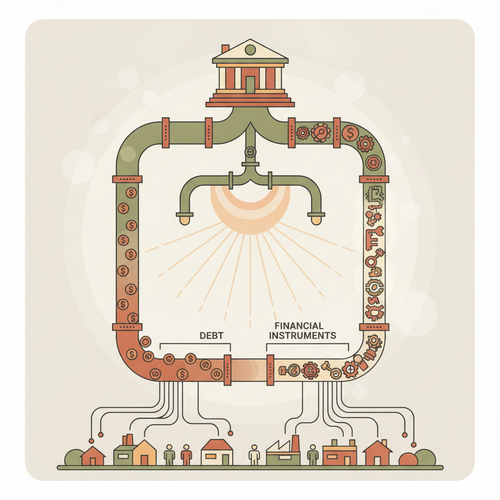
Changes in central bank policy rates directly recalibrate variable rate debt. Corporate and individual liabilities linked to benchmarks like LIBOR or SOFR are immediately affected. This introduces significant interest rate risk.
Firms with substantial floating-rate debt face heightened volatility in debt service costs. This impacts profitability and cash flow projections. Understanding this nexus is crucial for robust financial planning.
Analyzing Floating-Rate Loan Structures
Many commercial loans are structured with variable rates. These often reference interbank offer rates plus a spread. As central banks adjust policy, these underlying reference rates fluctuate. This leads to unpredictable debt payment obligations.
Even minor rate shifts can create considerable financial strain. This is particularly true for highly leveraged entities. Strategic oversight of these exposures is a continuous imperative.
Advanced Hedging Strategies for Mitigating Variable Debt Risk
Effective management of variable rate debt necessitates robust hedging. Financial derivatives offer sophisticated tools for this purpose. These strategies aim to stabilize debt service costs. They provide certainty in an uncertain interest rate environment.
Interest Rate Swaps: Transforming Floating to Fixed Exposure
Interest rate swaps (IRS) are cornerstone hedging instruments. They allow parties to exchange fixed-rate payments for floating-rate payments. This effectively converts variable debt into fixed-rate obligations.
The swap’s notional principal matches the debt amount. Swaps mitigate the risk of rising interest rates. They provide predictable cash flows for budgeting purposes.
- Payer Swaps: Pay fixed, receive floating (hedges floating-rate liabilities).
- Receiver Swaps: Pay floating, receive fixed (hedges floating-rate assets).
- Basis Swaps: Exchange one floating rate index for another.
Interest Rate Caps and Collars: Defined Risk Profiles
Interest rate caps limit exposure to rising rates. They pay out when the reference rate exceeds a specified strike rate. Caps provide upside protection without fixing the rate entirely.
Interest rate collars combine a cap and a floor. They offer a narrower band of interest rate exposure. This strategy reduces premium costs compared to a standalone cap. However, it also limits the benefit from falling rates.
Swaptions and Forward Rate Agreements: Anticipatory Hedging
Swaptions grant the holder the right, but not the obligation, to enter into a swap. They offer flexibility for future hedging needs. Swaptions are useful when future rate direction is unclear.
Forward Rate Agreements (FRAs) lock in an interest rate for a future period. They effectively hedge against future rate movements. FRAs are typically used for shorter-term exposures. They provide certainty over a specific forward period.
Establishing a Robust Debt Hedging Framework: Implementation and Oversight
Implementing a comprehensive debt hedging framework requires careful planning. It involves policy definition, instrument selection, and continuous monitoring. A robust framework safeguards financial stability.
Policy Definition and Risk Tolerance
Clearly defined hedging policies are essential. These policies outline acceptable instruments and maximum hedge ratios. They align hedging activities with the organization’s overall risk tolerance. Regular review ensures continued relevance.
Counterparty Risk and Operational Considerations
Hedging involves financial counterparties. Assessing counterparty creditworthiness is critical. Diversifying counterparty exposure mitigates risk. Operational aspects include trade execution, documentation, and settlement processes.
Compliance with ISDA agreements is standard practice. Understanding monetary policy is key to informing hedging decisions.
Accounting Standards and Hedge Effectiveness Testing
Hedging activities must comply with relevant accounting standards. IFRS 9 or ASC 815 govern hedge accounting. Proper documentation is necessary to qualify for hedge accounting treatment.
Regular hedge effectiveness testing is mandatory. This ensures the derivative offsets changes in the hedged item’s fair value or cash flows. Ineffective hedges can lead to income statement volatility.
Navigating Cyclical Monetary Policy: Strategic Imperatives for Debt Managers
Monetary policy operates in cycles, from easing to tightening phases. Debt managers must anticipate these shifts. Proactive adjustments to hedging strategies are crucial for optimizing debt costs.
Scenario Planning and Stress Testing
Conducting robust scenario analysis is vital. This involves modeling different interest rate paths. Stress testing identifies vulnerabilities under extreme rate movements. It informs contingency planning for adverse market conditions.
Dynamic Portfolio Rebalancing
Hedging portfolios are not static. They require dynamic rebalancing. As market conditions evolve, so too must hedging positions. This involves adjusting notional amounts or selecting new instruments. Continuous optimization minimizes hedging costs while maintaining adequate protection.
Conclusion
Central bank monetary transmission mechanisms are fundamental drivers of financial markets. Their impact on variable debt structures necessitates sophisticated risk management. Proactive hedging strategies are not merely an option; they are a strategic imperative for financial resilience.
Understanding each channel and deploying tailored derivatives provides critical protection. Is your current debt management framework robust enough to navigate future interest rate volatility?