Introduction
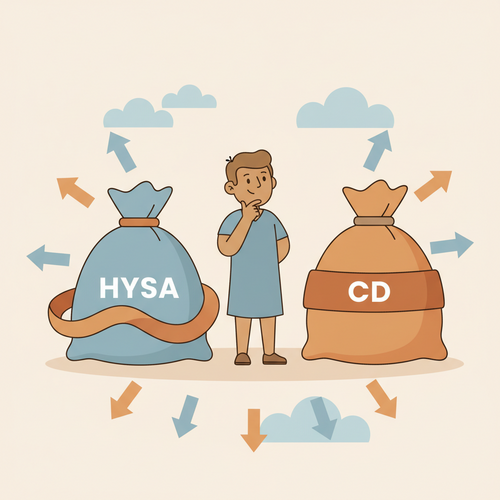
The current financial landscape presents unique opportunities for savers. Interest rates have climbed significantly. This shift makes it crucial to re-evaluate where you keep your cash. Simply leaving money in a traditional checking account might mean missing out on substantial earnings. This article will explore two powerful tools for cash management. We will compare High-Yield Savings Accounts (HYSAs) and Certificates of Deposit (CDs).
Both options offer attractive returns compared to standard bank accounts. However, they serve different purposes. Understanding their nuances is key to making informed decisions. Our goal is to help you navigate this high-rate environment. We aim to equip you with the knowledge to maximize your returns effectively and safely.
Understanding High-Yield Savings Accounts (HYSAs)
High-Yield Savings Accounts have gained immense popularity. They offer significantly higher interest rates than typical savings accounts. Often, these accounts are available through online banks. These institutions have lower overhead costs. This allows them to pass on greater savings to their customers.
What are HYSAs?
An HYSA is essentially a savings account. Its primary distinction is the high Annual Percentage Yield (APY) it offers. Unlike checking accounts, HYSAs are designed for saving, not daily transactions. They typically do not come with debit cards or check-writing privileges. Funds are readily accessible, but there might be transaction limits. Federal Reserve Regulation D previously set a limit on certain withdrawals. While this regulation has been suspended, banks may still impose their own limits.
Benefits of HYSAs
The advantages of HYSAs are compelling, especially in a rising rate environment.
- Liquidity and Accessibility: You can typically withdraw your money whenever you need it. This makes HYSAs ideal for emergency funds. You maintain quick access to your cash without penalties.
- Variable Interest Rates: HYSA rates are not fixed. They often track the federal funds rate. When market rates rise, your HYSA rate will likely increase too. This means your money earns more as rates climb.
- FDIC Insurance: Most HYSAs are offered by FDIC-insured banks. This protects your deposits up to $250,000 per depositor, per institution. Your money is safe even if the bank fails. You can learn more about FDIC insurance at the official FDIC website: www.fdic.gov.
- Easy Setup: Opening an HYSA is generally straightforward. Many online banks offer a seamless application process. You can often link your existing checking account for easy transfers.
Drawbacks of HYSAs
Despite their benefits, HYSAs have certain limitations to consider.
- Variable Rates Can Decrease: Just as rates can rise, they can also fall. If the federal funds rate drops, your HYSA’s APY will likely decrease. This can reduce your overall earnings over time.
- Transaction Limits: While funds are accessible, some banks still enforce limits. For example, you might be limited to six “convenient” withdrawals or transfers per month. Exceeding these limits can incur fees.
- No Fixed Guarantee: The interest rate is not locked in. This means future earnings are uncertain. For those seeking predictability, this can be a disadvantage.
Exploring Certificates of Deposit (CDs)
Certificates of Deposit (CDs) represent a different approach to saving. They offer a fixed interest rate for a specific period. This makes them a predictable option for stable returns.
What are CDs?
A CD is a type of savings account with a fixed maturity date. You deposit a sum of money for a set term. Common terms range from three months to five years. In return, the bank pays you a fixed interest rate. You agree not to withdraw the money before the maturity date. Breaking this agreement usually incurs a penalty. CDs are generally considered a low-risk investment. They are suitable for funds you won’t need immediately.
Benefits of CDs
CDs offer unique advantages, especially when interest rates are high.
- Guaranteed Fixed Return: The most significant benefit is the fixed interest rate. This rate remains constant for the entire term of the CD. You know exactly how much interest you will earn. This predictability is valuable for financial planning.
- FDIC Insurance: Like HYSAs, CDs from insured banks are protected by the FDIC. This provides a safety net for your principal up to $250,000. Your investment is secure.
- Potentially Higher Rates for Longer Terms: Banks often offer higher APYs for longer CD terms. This compensates for tying up your money for an extended period. In a high-rate environment, locking in a good rate can be very attractive.
- Discipline in Saving: The early withdrawal penalty encourages you to keep your funds invested. This can be beneficial for long-term savings goals.
Drawbacks of CDs
While secure, CDs come with specific downsides.
- Lack of Liquidity: This is the primary drawback. Your money is locked up for the CD’s term. Accessing funds early means incurring a penalty. This penalty is typically a forfeiture of a portion of the earned interest.
- Fixed Rates Can Become Less Competitive: If market interest rates rise significantly after you open a CD, your fixed rate might fall behind. You could miss out on earning higher returns elsewhere.
- Inflation Risk: For longer-term CDs, inflation can erode the purchasing power of your returns. If inflation outpaces your fixed interest rate, your real return might be negative.
- Minimum Deposit Requirements: Some CDs require a higher minimum deposit. This might be a barrier for some savers.
Navigating the High-Rate Era: When to Choose Which
Deciding between an HYSA and a CD depends on your personal financial situation. Your liquidity needs and investment horizon are key factors. The current high-rate environment makes this decision even more impactful.
When HYSAs Shine
HYSAs are excellent for certain financial needs.
- Emergency Funds: Your emergency fund must be liquid. You need immediate access to these funds without penalties. An HYSA provides this flexibility while still earning a competitive rate.
- Short-Term Savings Goals: If you are saving for a down payment in the next year or two, an HYSA is often better. The variable rate can adjust to market changes. You avoid the illiquidity of a CD.
- When Flexibility is Paramount: If your financial plans might change suddenly, an HYSA offers peace of mind. You can move your money without penalty.
- Uncertain Rate Environment: If you expect interest rates to continue rising, an HYSA allows your earnings to grow with the market.
When CDs Are Optimal
CDs are a strong choice for specific scenarios.
- Longer-Term Savings Goals: For money you will not need for several years, a CD can lock in a high rate. This includes saving for retirement or a child’s education far in the future.
- When Locking in a High Rate is Advantageous: If current interest rates are at a peak, a CD allows you to secure that high rate. This protects your earnings if rates subsequently fall.
- Seeking Predictable Returns: If you value knowing your exact return, CDs offer this certainty. There are no surprises regarding your interest earnings.
- For a Portion of Your Portfolio: CDs can be a stable component of a diversified savings strategy. They offer a fixed-income component that balances other investments.
Considerations for Both
Regardless of your choice, several broader financial considerations apply.
- Inflation: Always consider inflation’s impact. High inflation can diminish the real value of your earnings. This is particularly true for longer-term fixed-rate instruments.
- Tax Implications of Interest Income: Interest earned from both HYSAs and CDs is taxable income. It is important to factor this into your net returns. Consult a tax professional for personalized advice.
- Comparing APYs (Annual Percentage Yield): Always compare APYs, not just simple interest rates. APY accounts for compounding. This provides a more accurate picture of your actual earnings.
- Bank Reputation: Choose reputable and FDIC-insured institutions. Research reviews and customer service.
Strategies for Maximizing Returns
In a high-rate environment, smart strategies can significantly boost your savings. It’s not just about choosing one account type. It’s about using them strategically.
CD Laddering
CD laddering is a popular and effective strategy. It helps balance liquidity with higher, fixed interest rates.
- Explanation: Instead of putting all your money into one CD for a long term, you divide it. You invest in several CDs with staggered maturity dates. For example, if you have $15,000, you might put $5,000 into a 1-year CD, $5,000 into a 3-year CD, and $5,000 into a 5-year CD.
- Benefits: As each shorter-term CD matures, you have access to a portion of your funds. You can then reinvest this money into a new, longer-term CD (e.g., a new 5-year CD if rates are favorable). This ensures you always have some money coming due. It also allows you to benefit from higher rates on longer terms. You avoid locking up all your capital for an extended period. This strategy mitigates the risk of interest rate fluctuations. It ensures regular access to funds.
- Example: Imagine rates are high. You set up a ladder with 1-year, 2-year, and 3-year CDs. When the 1-year CD matures, you roll it into a new 3-year CD. This creates a continuous cycle. You always have a CD maturing annually. This provides liquidity while earning competitive rates.
Monitoring Market Rates
Staying informed about interest rate trends is crucial. Financial markets are dynamic.
- Importance of Staying Informed: Economic news and central bank decisions impact rates. Subscribe to financial news outlets. Monitor reputable sources for interest rate forecasts. Changes can present new opportunities. You can check market trends from reliable sources like The Wall Street Journal: www.wsj.com/market-data/bonds.
- How to Respond to Rate Changes: If rates are rising, an HYSA offers automatic benefits. For CDs, you might consider shorter terms to reinvest at potentially higher rates later. If rates are expected to fall, locking in a high CD rate becomes more appealing. Adjust your strategy accordingly.
Diversification of Savings
A balanced approach often yields the best results.
- Using Both HYSAs and CDs: Consider using an HYSA for your emergency fund and short-term goals. Then, use CDs for longer-term, less accessible savings. This maximizes flexibility where needed. It also secures higher fixed rates for a portion of your wealth.
- Aligning Different Portions of Savings with Different Goals: Categorize your savings. Money for next month’s bills goes into checking. Your emergency fund goes into an HYSA. Funds for a house down payment in five years might go into a CD ladder. This strategic allocation optimizes each dollar.
- Regular Review: Your financial situation changes. Market conditions evolve. Review your savings strategy at least annually. Adjust your allocations between HYSAs and CDs as needed.
Conclusion
Choosing between a High-Yield Savings Account and a Certificate of Deposit involves careful thought. Both are excellent vehicles for maximizing returns. They are particularly effective in a high-rate environment. However, their strengths lie in different areas. HYSAs offer unparalleled liquidity and variable rates. This makes them ideal for accessible funds and adapting to rising rates. CDs provide predictable, fixed returns for a set term. They are perfect for securing high rates on money you won’t need immediately.
Your financial goals and comfort with liquidity are paramount. Consider your emergency fund needs. Think about your short-term and long-term saving objectives. A blended approach, possibly incorporating CD laddering, often provides the most robust strategy. By understanding the distinct features of each, you can make informed decisions. This will ultimately help you maximize your savings and confidently navigate the financial landscape. Continuous education and adapting your strategy are key to sustained financial success. This ensures your money works as hard as possible for you.