Introduction
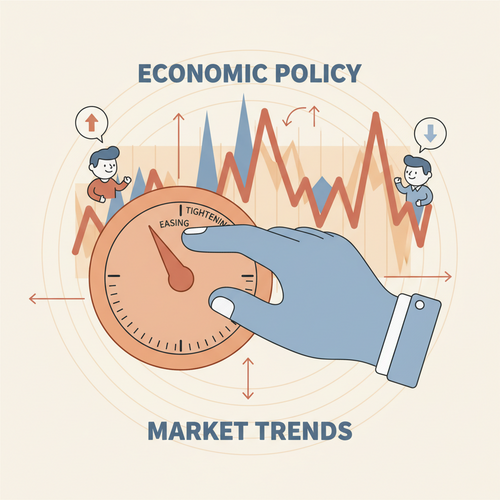
The Federal Reserve (the Fed) plays a pivotal role in the financial landscape of the United States. Its decisions on interest rates resonate throughout the entire economy. Understanding how these choices influence the stock market is crucial for every investor. This article will explore the intricate relationship between the Fed’s monetary policy and stock market performance. We will delve into how interest rate adjustments can impact everything from corporate earnings to investor sentiment. Gaining this knowledge will help you make more informed investment decisions.
Understanding the Federal Reserve’s Role
The Fed acts as the central bank of the U.S. It is an independent government agency. Its primary goals, often called its “dual mandate,” are to achieve maximum employment and maintain stable prices. Stable prices essentially mean controlling inflation. The Federal Open Market Committee (FOMC) sets the target federal funds rate. This rate is central to the Fed’s influence.
What is the Federal Reserve?
Established in 1913, the Fed oversees the nation’s monetary policy. It also supervises banks and provides financial services. Its structure is unique, combining government oversight with private sector involvement. This setup helps ensure its independence. The Fed’s actions aim to foster economic conditions. These conditions support both job growth and price stability. It achieves this through various tools.
Key Monetary Policy Tools
The Federal Funds Rate is perhaps the most important tool. This is the target rate for overnight borrowing between banks. When the Fed raises this rate, borrowing across the financial system generally becomes more expensive. Conversely, when it lowers the rate, borrowing becomes cheaper.
Other tools include Quantitative Easing (QE) and Quantitative Tightening (QT). QE involves the Fed buying large quantities of government bonds and other securities. This injects money into the economy and lowers long-term interest rates. QT is the reverse, reducing the Fed’s balance sheet and withdrawing liquidity.
The Discount Rate is the interest rate at which commercial banks can borrow directly from the Fed. While less frequently used than the federal funds rate, it signals the Fed’s stance.
How Interest Rate Changes Ripple Through the Economy
Interest rate decisions do not just stay within the banking system. They create a powerful ripple effect. This effect touches nearly every aspect of economic activity. From large corporations to individual households, everyone feels the impact.
Impact on Borrowing Costs
When the Fed raises its target rate, commercial banks often follow suit. They increase their prime lending rates. This means that loans for businesses become more expensive. Corporate bonds and commercial paper also see higher rates.
For consumers, higher rates translate to increased costs for mortgages, auto loans, and credit card debt. This can significantly reduce discretionary income. Conversely, lower rates make borrowing cheaper. This encourages both businesses and consumers to take on new debt. It stimulates investment and spending.
Impact on Corporate Earnings
Higher borrowing costs directly impact a company’s bottom line. Businesses might pay more interest on their existing variable-rate debt. New projects requiring financing become less attractive due to higher costs. This can slow down expansion plans.
Reduced consumer spending, caused by higher rates, also hits corporate revenues. When consumers have less money to spend, companies sell fewer goods and services. Lower rates work in the opposite direction. Cheaper borrowing can boost profit margins. Increased consumer spending drives up sales. This leads to healthier earnings reports for many companies.
Impact on Consumer Spending and Confidence
Interest rates directly influence consumer behavior. When rates rise, saving money in bank accounts or certificates of deposit (CDs) becomes more appealing. People earn more interest on their savings. However, the cost of borrowing for major purchases also increases. This often leads consumers to postpone or cancel plans for new homes, cars, or other large items.
Lower rates have the opposite effect. Saving offers less return, so consumers are more inclined to spend or invest. Mortgage rates fall, making homeownership more accessible. Credit card debt becomes cheaper. This environment typically fosters greater consumer confidence. It fuels economic activity and demand.
Direct Effects on the Stock Market
The stock market is a forward-looking mechanism. It constantly tries to anticipate future economic conditions. Therefore, changes in interest rates or the expectation of such changes can have immediate and profound effects on stock prices.
Valuation of Stocks
One of the most significant impacts is on how stocks are valued. Analysts often use Discounted Cash Flow (DCF) models to estimate a company’s intrinsic value. This model projects future cash flows and discounts them back to their present value. The discount rate used in these models is heavily influenced by prevailing interest rates.
When interest rates rise, the discount rate increases. This makes future earnings worth less today. Consequently, stock valuations can decline. The reverse is also true. Lower interest rates lead to lower discount rates, making future earnings more valuable. This can justify higher stock prices.
Sector-Specific Impacts
Not all sectors react equally to interest rate changes. Growth stocks, typically in technology or emerging industries, often rely heavily on future earnings potential. They also often fund expansion through borrowing. When rates rise, their borrowing costs increase, and their distant future earnings are discounted more heavily. This makes them particularly sensitive to rate hikes.
Value stocks or dividend-paying stocks might be more resilient. Their earnings are often more stable, and their dividends can offer a reliable income stream. Financial stocks, such as banks, can sometimes benefit from rising rates. Higher rates can increase their net interest margins. This means they earn more on loans than they pay on deposits.
On the other hand, utilities and real estate investment trusts (REITs) are often seen as bond proxies. They may become less attractive as bond yields rise.
Investment Alternatives: Bonds and Savings
Interest rates directly influence the attractiveness of alternative investments. When the Fed raises rates, bond yields typically increase. This makes fixed-income securities, like government bonds and corporate bonds, more appealing. For some investors, the stable, guaranteed returns of higher-yielding bonds become a safer alternative to the potentially volatile stock market.
Similarly, higher rates mean better returns on savings accounts, money market funds, and certificates of deposit (CDs). This can draw money out of stocks, especially from risk-averse investors. Conversely, when rates are low, bonds and savings offer minimal returns. This pushes investors towards stocks in search of higher yields and capital appreciation. For a deeper understanding of bond market dynamics, the U.S. Department of the Treasury provides extensive resources on government securities: TreasuryDirect.
Investor Sentiment and Market Psychology
Beyond the fundamental economic and valuation effects, interest rate decisions also profoundly impact investor psychology. Market sentiment often drives short-term movements.
Uncertainty and Volatility
The period leading up to a Federal Reserve meeting can be fraught with uncertainty. Investors try to predict the Fed’s next move. This anticipation can create significant market volatility. Any deviation from market expectations, whether a rate hike or cut, can lead to sharp price swings.
Sudden policy shifts, or even unexpected language from Fed officials, can cause market participants to reassess their investment strategies. This often results in increased trading volume and rapid price changes across various asset classes.
“Don’t Fight the Fed”
This is a well-known adage on Wall Street. It suggests that going against the Federal Reserve’s policy direction is generally unwise. When the Fed is aggressively raising rates to combat inflation, it signals a period of tighter financial conditions. This environment is usually less favorable for equities.
Conversely, when the Fed signals or implements rate cuts, it indicates a desire to stimulate the economy. Such periods are often associated with bullish stock market performance. Investors tend to align their strategies with the Fed’s prevailing direction. They believe that fighting its immense power is a losing battle. Understanding current market sentiment is vital for short-term trading, but long-term investors should always prioritize fundamental analysis.
Strategies for Investors Amidst Rate Changes
Navigating the stock market during periods of changing interest rates requires careful consideration. A proactive approach can help protect your portfolio and even uncover new opportunities.
Diversification
Diversification is a cornerstone of sound investment strategy. It involves spreading your investments across various asset classes. This includes stocks, bonds, real estate, and commodities. It also means diversifying within asset classes, for example, across different sectors and geographies in equities.
When interest rates are rising, some sectors might underperform while others thrive. A well-diversified portfolio helps mitigate risk. It ensures that no single sector or asset class has an outsized negative impact on your overall returns. This strategy helps smooth out returns over time.
Long-Term Perspective
Market fluctuations due to Fed decisions are often short-term events. For most investors, maintaining a long-term perspective is crucial. Focusing on a company’s fundamental value and its long-term growth prospects rather than reacting to every Fed announcement can lead to better outcomes.
Historically, the stock market has demonstrated resilience over the long run. Short-term volatility, while unsettling, is a normal part of investing. Sticking to your investment plan and avoiding panic selling during periods of uncertainty is key.
Consider Inflation-Protected Securities
In an environment of rising rates, especially if inflation is a concern, Treasury Inflation-Protected Securities (TIPS) can be an attractive option. The principal value of TIPS adjusts with the Consumer Price Index (CPI). This protects investors from the eroding effects of inflation.
While they are bonds, their inflation-protection feature makes them unique. They can be a valuable addition to a portfolio designed to withstand inflationary pressures. This makes them a useful tool when the Fed is battling rising prices.
Re-evaluate Portfolio Allocation
As the interest rate environment shifts, it is wise to periodically re-evaluate your portfolio allocation. If rates are rising significantly, you might consider adjusting your allocation between stocks and bonds. Higher bond yields can make them more attractive relative to stocks.
Conversely, if rates are falling, you might lean more towards equities. This is because stocks typically offer higher potential returns in a low-interest-rate environment. Regularly reviewing your asset allocation ensures it remains aligned with your risk tolerance and financial goals. For more insights on current economic data that influences Fed decisions, refer to reputable sources like the Bureau of Economic Analysis.
Conclusion
The Federal Reserve’s interest rate decisions are a cornerstone of financial markets. They significantly influence the stock market through various channels. These include borrowing costs, corporate earnings, stock valuations, and investor sentiment. Understanding this intricate relationship is not just for economists or market analysts. It is essential for every investor aiming to navigate the complexities of financial markets successfully.
While the Fed’s actions can introduce volatility, informed investors can adapt. Strategies like diversification, maintaining a long-term perspective, and adjusting portfolio allocation are vital. By staying informed and making calculated decisions, you can better position your investments. This approach helps you ride the waves of monetary policy. Remember, continuous learning and a disciplined approach are your best assets in the dynamic world of finance.