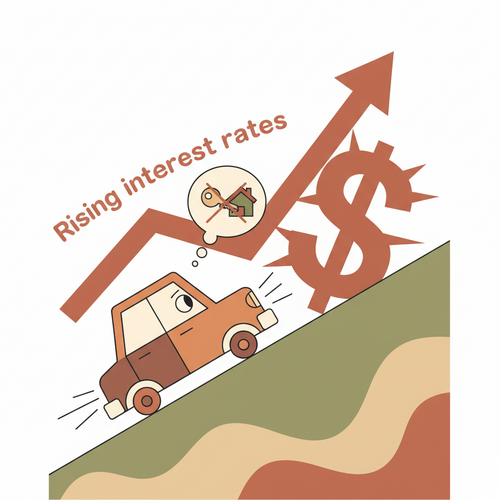
Buying a car can feel like a huge step, and in today’s economy, it’s becoming even more complex. You might be hearing a lot about “rising interest rates” and wondering what that actually means for your wallet.
This article will break down exactly how higher interest rates affect how much car you can afford, and more importantly, what you can do about it. Understanding these changes empowers you to make smarter choices.
- 💰 Rising interest rates mean higher monthly car payments. This directly impacts your budget and cash flow.
- 💸 You’ll pay more in total interest over the entire life of your loan. This increases the overall cost of your vehicle significantly.
- 💪 Improve your credit score and save for a bigger down payment to combat these rising costs. These are your best defense strategies.
Understanding Interest Rates and Auto Loans
An interest rate is essentially the cost of borrowing money. When you take out an auto loan, a lender provides you with funds to purchase a vehicle.
They then charge you a percentage of the borrowed amount as interest, which is their fee for lending you the money. This rate directly affects your loan’s total cost.
Think of it like renting money for a period. The interest rate determines how much that “rent” will be. Higher rates make that “rent” more expensive.
The interest rate is added to your principal loan amount, increasing your overall financial commitment to the vehicle. This is a critical point many first-time buyers miss.
Pro Tip: Always differentiate between the car’s sticker price and its total cost after financing. The interest rate can drastically change the final amount you actually pay for the vehicle over its lifetime.
The Direct Impact on Your Monthly Payment
The most immediate and noticeable effect of rising interest rates is on your monthly car payment. As the rate climbs, so does the amount of interest you owe each month.
This means a larger portion of your payment goes towards interest rather than reducing the principal balance. Consequently, your payment becomes higher, even for the same car.
In my experience, many people get fixated on the sticker price of a car. However, the interest rate often dictates the true affordability for most buyers.
Even a seemingly small increase in the interest rate can significantly bump up your payment, potentially making that car you wanted suddenly feel out of reach or forcing you into a longer loan term. This impacts your budget directly.
- 📈 Your monthly car payment will likely go up. This directly impacts your budget, leaving less money for other expenses.
- 💰 The total cost of owning your car increases over time. You end up paying more for the same vehicle over the loan’s duration.
- 📉 Your overall buying power for a new vehicle decreases. You might need to settle for a less expensive car than you initially planned.
- ⏰ Longer loan terms might become necessary to keep payments low. However, this means paying even more interest over time.
Your Credit Score: A Major Player
Your personal credit score plays an enormous role in the interest rate you’re offered. Lenders use it as a primary tool to assess your creditworthiness and risk.
A higher credit score signals less risk to lenders, making them more willing to offer you a lower, more favorable interest rate. This can be your strongest defense against rising market rates.
Working on your credit health before applying for a loan is always a smart move. Pay bills on time, reduce existing debt, and avoid opening new lines of credit just before applying.
A strong credit score can help you secure a lower rate, partially insulating you from broader market rate hikes. This is one area where you have direct control over your costs.
Warning: Checking your credit score multiple times in a short period can sometimes lower it slightly. However, rate shopping for auto loans within a 14-45 day window typically counts as a single inquiry, so compare offers within that timeframe without fear.
Loan Term Length: Friend or Foe?
The length of your loan, often called its “term,” also significantly impacts affordability. A longer loan term might offer lower monthly payments, which can seem very appealing on the surface.
This immediate relief, however, comes at a cost: you’ll pay significantly more interest over the life of the loan. The longer the money is borrowed, the more interest accumulates, increasing your total expense.
Many first-time buyers extend their loan terms just to hit a specific monthly payment target. In doing so, they often end up paying thousands more in total interest unnecessarily.
Be careful: extending the loan might seem like an easy fix for affordability, but it often costs you more money in the long run. Always consider the total cost, not just the monthly payment, to avoid future regret and unnecessary debt.
| Loan Feature | Scenario 1 (5% APR) | Scenario 2 (7% APR) | Scenario 3 (9% APR) |
|---|---|---|---|
| Loan Amount | $30,000 | $30,000 | $30,000 |
| Loan Term | 60 Months | 60 Months | 60 Months |
| Monthly Payment | $566.14 | $594.00 | $622.75 |
| Total Interest Paid | $3,968.40 | $5,640.00 | $7,365.00 |
| Total Cost of Loan | $33,968.40 | $35,640.00 | $37,365.00 |
Navigating a High-Rate Environment: Strategies for You
In my experience, the biggest mistake beginners make is waiting until the last minute to think about financing. You don’t have to feel helpless when rates are high; proactive steps make a huge difference.
Start by actively working to improve your credit score and saving for a larger down payment – these are your most powerful levers in this environment. Every dollar saved for a down payment is a dollar you don’t borrow and won’t pay interest on, ever.
Consider delaying your car purchase if possible, giving you more time to save and improve your financial standing. Sometimes patience pays off immensely when market conditions are unfavorable and you can wait for better rates or more savings.
Research different car models that fit within a tighter budget, prioritizing reliability, fuel efficiency, and lower upfront costs. This can effectively offset higher financing costs from rising interest rates, ensuring you get a vehicle that truly fits your budget.
Pro Tip: Always negotiate the car’s purchase price separately from the loan. Get the best price on the vehicle first, then focus on securing the best financing. Mixing them can lead to confusion and less favorable terms overall.
The Role of Down Payments
A larger down payment directly reduces the amount of money you need to borrow from a lender. This has a profound and positive ripple effect on your loan’s affordability.
The less you borrow, the less interest you pay overall, making your car significantly more affordable in the long run. This is basic math working powerfully in your favor, saving you money from day one.
Aim for at least a 20% down payment on a new car, and 10% on a used car, if possible. This not only lowers your loan amount but also helps avoid being “upside down” on your loan, where you owe more than the car is currently worth.
A significant down payment can dramatically lower your monthly payment and reduce the total interest you’ll accrue over the life of the loan. It’s truly a powerful financial lever you control to minimize costs.
Shopping Around for the Best Rate
In my experience, taking the first loan offer, especially from a dealership, is a common and costly mistake. Dealerships often partner with specific lenders who may not always offer you the most competitive rates available.
Always compare offers from multiple sources: your personal bank, credit unions, and various online lenders. A few minutes of comparison shopping can genuinely save you hundreds, even thousands, over your loan term, making it well worth the effort.
Credit unions, in particular, often offer very competitive rates because they are member-owned and not-for-profit organizations, which allows them to pass savings onto their members. They can be a great place to start your search for favorable loan terms.
Comparing offers is crucial, even for a difference of a few basis points (e.g., 0.25% or 0.50%). These small percentages accumulate into real money over a 5-7 year loan term, so every little bit counts towards your savings.
- ✅ Check your credit report for errors and actively work to boost your score. A higher score means better rates and more favorable loan terms.
- 💰 Save aggressively for a substantial down payment. This reduces the amount you need to borrow and thus the interest paid.
- 🤝 Negotiate not just the loan terms, but also the car’s purchase price itself. Every dollar saved here means less money to finance, reducing your overall debt.
- 🏦 Get pre-approval and compare quotes from at least three different lenders before committing to any offer. This ensures you find the most competitive rate.
- ⏱️ Consider a shorter loan term if your budget allows, even if it means slightly higher monthly payments, to save significantly on total interest paid and own your car faster.
Refinancing: A Future Option?
Even if you secure an auto loan now with a higher rate due to current market conditions, that doesn’t mean your rate is set in stone forever. Economic conditions and interest rates can fluctuate over time.
Keep an eye on economic trends; if general interest rates drop significantly in the future, you might be able to refinance your auto loan for a lower interest rate, thereby reducing your monthly payment and saving you money over the remaining loan term. This could be a very smart move later on to optimize your costs.
Refinancing essentially means taking out a new loan to pay off your old one, ideally at a better rate and with more favorable terms, like a shorter term or lower monthly payment. It’s a strategy many people use to adjust to changing market conditions.
However, be aware of any refinancing fees or penalties associated with your original loan or the new one. Always weigh the potential savings against any upfront costs before making a decision. This requires careful calculation and thoroughly reading the fine print of both loans.
Conclusion
Rising interest rates undoubtedly present a significant challenge when buying a car, directly impacting auto loan affordability. They lead to higher monthly payments and a greater total cost for your vehicle.
However, you are not powerless in this environment; smart planning and informed decisions can significantly mitigate these effects. Taking control of your credit, saving diligently for a down payment, and meticulously shopping around for the best rates are your most powerful tools to navigate this landscape successfully.
Being proactive and thoroughly understanding how these financial levers work will empower you to make the best car buying decision for your unique situation, even when market rates are on the rise. Your financial future depends on these informed choices and actions.
What steps will you take today to improve your auto loan affordability?