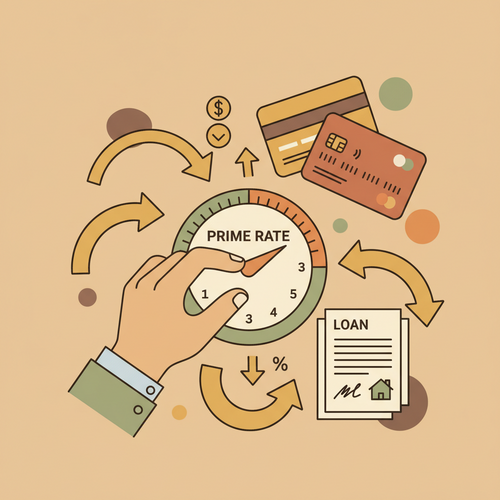
Understanding how the Prime Rate impacts your variable rate loans and credit cards is crucial for sound financial management. Indeed, this benchmark interest rate directly influences the cost of borrowing for millions of consumers. Therefore, knowing its movements can help you make smarter financial decisions. This article will demystify the prime rate and explain its significant role in your personal finances. Furthermore, we will explore practical strategies for managing debt tied to this important economic indicator. By the end, you will possess a clearer understanding of how these financial gears turn, empowering you with valuable knowledge.
What is the Prime Rate?
The prime rate represents the interest rate commercial banks charge their most creditworthy corporate customers. Specifically, it is a foundational rate in the financial system. Generally, banks use the prime rate as a base for setting many other interest rates. Consequently, it acts as a key indicator of the overall cost of borrowing. Historically, changes in the prime rate directly reflect shifts in monetary policy. For instance, when the Federal Reserve adjusts the federal funds rate, the prime rate almost immediately follows suit. This swift reaction highlights its sensitivity to broader economic signals. Furthermore, the prime rate serves as a reference point for a wide array of lending products, making its understanding universally important for borrowers.
The Federal Reserve’s Influence
The Federal Reserve, often called the “Fed,” plays a central role in determining the prime rate. Indeed, the Fed does not directly set the prime rate itself. Instead, it sets the target range for the federal funds rate. This rate is what banks charge each other for overnight lending. Furthermore, adjustments to the federal funds rate target influence banks’ borrowing costs. Consequently, banks then adjust their prime rate in response. Thus, the Fed’s decisions on interest rates ripple through the entire economy. Specifically, a hike in the federal funds rate typically leads to a corresponding increase in the prime rate within days, sometimes even hours. Conversely, a cut in the federal funds rate results in a similar decrease in the prime rate. This mechanism ensures that the Fed’s monetary policy decisions are effectively transmitted throughout the financial system, influencing everything from large corporate loans to individual consumer credit.
Understanding Variable Rate Loans
Variable rate loans, unlike fixed-rate loans, have interest rates that can change over time. Therefore, the amount of interest you pay can fluctuate throughout the life of the loan. This characteristic makes them sensitive to market conditions. Specifically, many variable rate loans are explicitly tied to an index. Often, this index is the prime rate. Consequently, when the prime rate moves, the interest rate on your loan also moves. This direct correlation means your monthly payments can rise or fall. For instance, if the prime rate increases, your payment will likely increase, and vice versa. Understanding this inherent volatility is paramount for anyone considering or holding variable rate debt.
Common Variable Rate Loan Types
- Adjustable-Rate Mortgages (ARMs): These mortgages typically offer a lower initial interest rate. However, after an introductory period, the rate adjusts periodically. Usually, these adjustments are linked to an index like the Prime Rate or LIBOR (though LIBOR is phasing out). Therefore, your monthly mortgage payment can change significantly over the loan’s term.
- Home Equity Lines of Credit (HELOCs): A HELOC functions similarly to a credit card. It allows you to borrow against the equity in your home up to a certain limit. Typically, HELOCs feature variable interest rates. Therefore, these rates are almost always tied directly to the prime rate. This means your payments can fluctuate monthly based on prime rate shifts.
- Personal Loans: Some personal loans also come with variable interest rates. Thus, their rates can change based on market indices. It is important to review loan terms carefully, as the variable nature might introduce payment unpredictability.
- Student Loans: Certain private student loans might have variable rates. Consequently, their interest charges can fluctuate, potentially increasing your overall repayment burden. Federal student loans, however, usually carry fixed rates, offering more stability.
Credit Cards and the Prime Rate
Most credit cards feature variable Annual Percentage Rates (APRs). Consequently, the interest rate you pay on your credit card balance is not fixed. Instead, it adjusts periodically based on an underlying index. For instance, this index is almost always the prime rate. The APR on a credit card is usually expressed as the prime rate plus a margin. Therefore, as the prime rate changes, so does the interest rate applied to your outstanding balance. This means carrying a balance can become more expensive during periods of rising rates.
How it Works for Credit Cards
Imagine your credit card has an APR of Prime + 10%. If the prime rate is 5%, your APR is 15%. However, if the Federal Reserve raises rates, and the prime rate increases to 6%, your new APR becomes 16%. Therefore, the cost of carrying a balance on your credit card increases. Conversely, a decrease in the prime rate would lower your APR. This direct relationship highlights why monitoring the prime rate is essential for credit card holders. Furthermore, understanding this link can help you manage your credit card debt more effectively. By reducing your balance when rates are low, you can minimize the impact of future rate hikes. Bloomberg offers excellent financial news updates, helping you stay informed on these crucial economic indicators.
The Direct Link: Prime Rate and Your Payments
The connection between the prime rate and your variable rate loans is straightforward. When the prime rate goes up, your interest rate also increases. Consequently, your monthly payments on variable rate debt will rise. For instance, a higher interest rate on a HELOC means more of your payment goes towards interest, reducing the amount applied to your principal. Conversely, if the prime rate falls, your interest rate decreases. This typically leads to lower monthly payments. Therefore, your disposable income might increase. Indeed, these fluctuations can significantly impact your budget, demanding careful financial planning and awareness.
Rising Rates: What to Expect
When the Federal Reserve implements a series of rate hikes, the prime rate responds quickly. Specifically, lenders will adjust the interest rates on your variable loans according to the terms of your agreement. This means a larger portion of your payment will cover interest, potentially slowing down your debt repayment progress. For example, homeowners with ARMs or HELOCs might see their monthly housing costs increase, straining their household budget. Likewise, individuals with significant credit card balances will face higher interest charges, making it harder to pay down debt. Therefore, budgeting becomes even more critical during periods of rising rates. Prudent financial planning is always advisable to buffer against these changes. The Wall Street Journal provides in-depth economic analysis that can help predict these trends.
Falling Rates: Potential Benefits
Conversely, a decrease in the prime rate can provide significant financial relief. If the Fed lowers the federal funds rate, the prime rate will likely fall, making borrowing cheaper across the board. Consequently, your variable rate loans and credit cards will become cheaper to carry, as the interest charged on your outstanding balances decreases. For instance, your HELOC payment could decrease, freeing up cash for other investments or savings goals. Similarly, the interest accrual on your credit card balance would lessen, allowing you to pay down the principal more efficiently. Therefore, falling rates offer an excellent opportunity to pay down debt faster or refinance into more favorable terms. Indeed, these periods are often welcomed by borrowers seeking to improve their financial standing.
Strategies for Managing Variable Rate Debt
Proactive management of variable rate debt is essential. Given the potential for interest rate fluctuations, having a plan is crucial. Therefore, several strategies can help you mitigate risk and maintain financial stability. Furthermore, these tactics can empower you to take control of your financial health, regardless of market shifts. Developing a robust financial strategy is a key component of long-term success, helping you adapt to changing economic landscapes. Reuters offers current economic news, which is vital for informed decision-making.
1. Pay More Than the Minimum
Always try to pay more than the minimum required payment, especially on credit cards and other high-interest variable loans. For instance, paying an extra amount each month can significantly reduce your principal balance more quickly than simply making minimum payments. Consequently, you pay less interest over the long run, saving a substantial amount of money. This strategy is particularly effective when rates are rising, as it reduces the principal amount on which higher interest is charged. Indeed, even small extra payments make a difference, accelerating your path to becoming debt-free.
2. Consider Refinancing to a Fixed Rate
If interest rates are low or you anticipate future rate hikes, consider refinancing. Specifically, you might refinance a variable rate loan, such as an adjustable-rate mortgage or a personal loan, into a fixed-rate loan. This move locks in your interest rate for the entire term of the loan. Therefore, your monthly payments become predictable and immune to future rate increases. Furthermore, it provides invaluable protection against unforeseen market volatility, offering peace of mind. For instance, refinancing a variable ARM into a fixed-rate mortgage can stabilize your housing costs, providing a more secure financial foundation.
3. Debt Consolidation
Debt consolidation can be a powerful tool for managing multiple variable rate debts, particularly if you have several credit cards with varying high APRs. For example, you might take out a single fixed-rate personal loan with a lower interest rate to pay off several high-interest credit cards. This approach simplifies your payments, reducing them to one predictable monthly bill. Furthermore, it can potentially lower your overall interest rate, saving you money on interest charges. Consequently, you have one predictable monthly payment and a clearer path to debt repayment. This method often helps reduce stress and improve financial clarity by streamlining your obligations.
4. Build an Emergency Fund
An emergency fund provides a critical financial cushion against unexpected life events. Indeed, having readily available cash is vital for financial security. It can help cover unforeseen expenses, such as medical bills, car repairs, or job loss, without relying on credit cards or taking out new loans. Therefore, you avoid accumulating more high-interest debt when financial pressures arise. Aim for three to six months of living expenses saved in an easily accessible account. This fund acts as a robust buffer against financial shocks, and furthermore, it prevents you from falling deeper into debt, especially when interest rates are high.
5. Monitor Economic Indicators
Staying informed about economic news and trends is highly beneficial for proactive financial management. Specifically, pay close attention to Federal Reserve announcements regarding interest rate decisions and monetary policy. These meetings often signal potential shifts in interest rates, giving you an early warning. Consequently, you can anticipate changes to your variable loan payments and adjust your budget accordingly. Understanding inflation trends, employment data, and other key economic indicators is also useful for predicting market movements. Therefore, you can make more informed financial decisions, such as when to refinance or aggressively pay down debt. Indeed, knowledge is power in personal finance, enabling you to navigate the financial landscape with greater confidence. The New York Times provides general news coverage that often includes economic insights.
Conclusion
The prime rate is a fundamental benchmark that significantly impacts your financial life. Specifically, it dictates the cost of borrowing for variable rate loans and credit cards, making its movements directly relevant to your monthly budget. Understanding its connection to the Federal Reserve and how it influences your payments is crucial for informed financial decision-making. By staying informed about economic trends and employing strategic debt management tactics, such as paying more than the minimum, considering refinancing, and building an emergency fund, you can navigate fluctuating interest rates effectively. Therefore, take control of your financial future by being proactive and disciplined in your approach to variable rate debt. Managing your variable rate debt wisely can lead to greater financial stability and peace of mind, ultimately contributing to your long-term financial success. The Guardian also offers global financial news and analysis to further enhance your economic awareness.