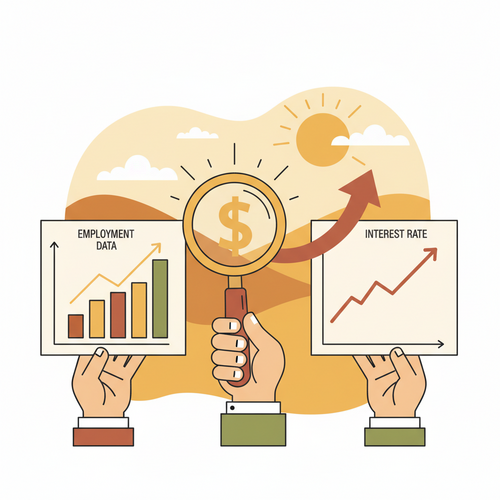
You’ve probably heard about the Federal Reserve (often called “the Fed”) raising or lowering interest rates. These decisions seem to ripple through the entire economy. But have you ever wondered what drives these critical choices?
Often, the answer lies in how many people are working and how healthy the job market is. It’s a key piece of the puzzle.
Understanding the Fed’s Role
The Federal Reserve acts like the central bank of the United States. Think of them as the economy’s guardian, with a huge responsibility.
Their primary goals are twofold: keeping prices stable (meaning low inflation) and maximizing employment. They use interest rates as their most powerful tool to achieve these aims.
Quick Summary:
- 📊 Strong job markets often lead to higher spending and inflation.
- 🚨 The Fed raises interest rates to cool down an overheating economy.
- 💰 Higher rates impact everything from loan costs to savings returns.
When the economy is running hot, and prices start to climb too quickly, the Fed might step in. They adjust interest rates to either speed things up or slow them down, like a monetary accelerator and brake pedal.
Their decisions influence everything from mortgage rates to the return on your savings account. That’s why understanding their thinking is so important for your finances.
What is “Employment Data”?
Every month, you’ll hear financial news outlets buzzing about the latest employment reports. These aren’t just dry statistics; they are snapshots of the nation’s economic health.
Key reports include the Non-Farm Payrolls, which shows how many jobs were added or lost, and the Unemployment Rate, telling us what percentage of the workforce is looking for a job but can’t find one. These figures are closely watched by economists and investors alike.
In my experience, a surprisingly strong jobs report can send financial markets into a frenzy, as traders try to predict the Fed’s next move. It truly is a big deal!
- 📈 Non-Farm Payrolls: New jobs created or lost.
- 📉 Unemployment Rate: Percentage of people out of work.
- 💰 Wage Growth: How much paychecks are increasing.
Other important metrics include labor force participation and average hourly earnings. These all paint a picture of how robust the job market truly is. A tight labor market, where workers are scarce, often means employers must pay more to attract talent.
Why a Strong Job Market Matters for Inflation
When lots of people are working, and unemployment is low, it generally means people have more money in their pockets. More money often translates directly into more spending.
Imagine everyone feeling secure in their jobs and buying new cars, taking vacations, or renovating their homes. This increased demand for goods and services can push prices higher across the board.
This situation is precisely what economists call “demand-pull inflation.” Too much money chasing too few goods can quickly make everything more expensive. It’s a classic economic phenomenon.
Pro Tip: A tight job market can also mean businesses face higher labor costs due to wage increases. These costs are often passed on to consumers in the form of higher prices, contributing to inflation.
When wages climb significantly, it can create a “wage-price spiral” where higher wages lead to higher prices, which then lead to demands for even higher wages. The Fed watches this cycle very carefully.
The Fed’s Response: Interest Rate Hikes
If inflation starts to get out of control, meaning your money buys less and less each day, the Fed steps in. Their goal is to “cool down” the overheating economy without causing a recession.
They do this primarily by raising the federal funds rate, which is the benchmark interest rate. This makes borrowing money more expensive for banks, which then passes those costs onto you.
Higher interest rates mean everything from credit card debt to business loans becomes pricier. This discourages spending and encourages saving, slowing down the economy and ideally, inflation.
- 💸 Loans become more expensive.
- 💳 Credit card interest rates climb.
- 🏡 New mortgage payments increase significantly.
- 🚗 Car loans cost more over time.
The idea is to reduce overall demand by making it more costly to finance purchases. When demand lessens, businesses might lower prices or at least slow their increases. It’s a delicate balancing act to achieve “price stability.”
The Direct Link: Employment → Inflation → Rates
Let’s connect the dots clearly. Imagine a period where the economy is booming, and job growth is consistently strong. Businesses are hiring rapidly, and there are very few people looking for work.
This strong employment picture often leads to rising wages as companies compete for talent. People feel secure, have more income, and spend freely. This surge in spending drives up demand, which then fuels inflation.
When the Fed observes persistently strong employment data alongside rising inflation, they often feel compelled to act. They see the economy as running too hot and needing to be cooled down.
Their decision to raise interest rates is a direct response to this economic overheating. They are trying to prevent inflation from becoming a long-term problem that erodes your purchasing power.
In my personal finance journey, I’ve observed that a surprisingly positive jobs report often precedes hawkish statements from Fed officials, hinting at future rate hikes. It’s almost a predictable sequence.
How Interest Hikes Impact YOU
It’s easy to think these are just “big bank” decisions, but federal interest rate hikes profoundly affect your wallet. Consider your borrowing costs.
If you have a variable-rate mortgage or credit card debt, your monthly payments can increase. This means more of your budget goes towards interest, leaving less for other expenses.
On the flip side, if you’re a saver, higher interest rates can be a good thing. Savings accounts, Certificates of Deposit (CDs), and money market accounts may offer better returns. Your cash can earn more while sitting in the bank.
| Aspect of Your Finances | Impact of Rising Interest Rates (Generally) |
|---|---|
| Savings Accounts & CDs | Higher interest earned on your deposits. |
| Mortgages (Variable) | Increased monthly payments. Fixed rates are unaffected. |
| Credit Card Debt | Higher minimum payments and overall cost of debt. |
| Car Loans & Personal Loans | New loans become more expensive; existing fixed-rate loans are stable. |
| Investments (Bonds) | New bonds offer higher yields; value of existing lower-yield bonds may fall. |
| Stock Market | Can see volatility as higher rates can slow corporate growth. |
For businesses, higher borrowing costs can mean less investment in expansion or new projects, potentially slowing job creation in the future. It’s a delicate balance the Fed constantly manages.
The Balancing Act: Too Hot or Too Cold?
The Fed’s job is incredibly complex. They don’t want to raise rates so aggressively that they push the economy into a recession, leading to widespread job losses. That would defeat their employment mandate.
Conversely, they can’t let inflation run wild, as that erodes everyone’s purchasing power. They are constantly trying to find that “sweet spot” where the economy is growing steadily with stable prices.
This is why every piece of economic data, especially employment figures, is dissected so thoroughly. It provides clues about whether the economy needs more stimulus or more restraint.
Warning: Predicting the Fed’s exact moves is incredibly difficult, even for seasoned professionals. Avoid making drastic financial decisions based purely on speculation.
They aim for a “soft landing” – bringing inflation down without causing a significant economic downturn. It requires careful observation and swift, yet measured, action.
When the Fed Pauses or Cuts Rates
The relationship works in reverse too. If employment data starts to look weak, with significant job losses and rising unemployment, the Fed might shift its strategy dramatically.
In such a scenario, they might pause their rate hikes or even begin to cut interest rates. The goal then becomes stimulating the economy to prevent a deeper slowdown.
Lower rates make borrowing cheaper, encouraging businesses to invest and consumers to spend. This stimulus is designed to create jobs and get the economy moving again. It’s a direct effort to support employment and prevent a recession.
It’s crucial to remember that the Fed’s decisions are always forward-looking, based on their best estimates of where the economy is headed. They are playing a long game, trying to ensure sustainable growth.
Keeping an Eye on the Economic Signs
Understanding these fundamental connections between employment and interest rates empowers you. You can better interpret economic news and anticipate potential shifts in your financial landscape.
When you hear about strong job growth, you can mentally prepare for the possibility of continued (or new) Fed actions. Staying informed is truly your best defense in managing your personal finances effectively.
I always advise beginners to subscribe to a reputable financial news source like Bloomberg or The Wall Street Journal. Learning to read beyond the headlines will make a huge difference.
Paying attention to reports from official sources like the Federal Reserve itself, or economic data from the Bureau of Economic Analysis, can also provide invaluable insights. And for global context, Reuters is excellent.
Conclusion
The link between robust employment data and federal interest rate hikes is one of the most fundamental relationships in modern economics. A strong job market, while generally positive, can lead to increased demand and inflation.
The Federal Reserve, in its mission to maintain price stability, often responds to this inflation by raising interest rates. These hikes then impact everything from your mortgage payments to the returns on your savings.
By understanding this cycle, you gain a powerful insight into how economic forces shape your personal finances. It helps you make more informed decisions about saving, borrowing, and investing.
How will you use employment reports to anticipate future economic shifts and protect your financial well-being?