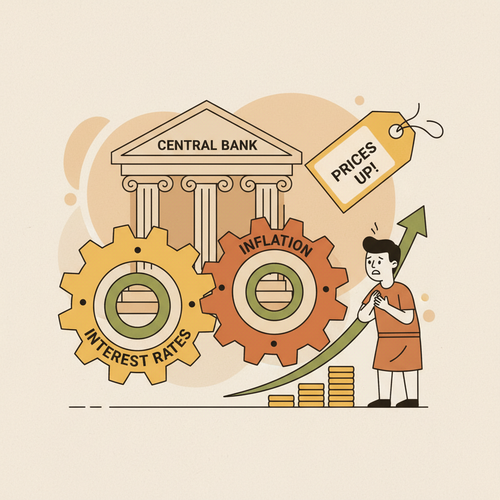
Ever feel like your money isn’t going as far as it used to? Or maybe you’re wondering why mortgage rates keep changing? You’re not alone, and it all boils down to two critical economic players: inflation and interest rates.
Understanding their relationship isn’t just for economists; it’s vital for your personal finances. This guide will break down these complex ideas into easy-to-digest chunks, helping you make smarter decisions with your money and navigate the financial world.
Quick Summary: Inflation & Interest Rates
- Inflation means your money buys less over time. Prices go up for goods and services.
- Interest rates are the cost of borrowing money or the reward for saving it.
- These two forces are deeply connected and constantly influence each other, impacting your wallet daily and shaping the broader economy.
You might have heard terms like “the Fed raising rates” or “inflation concerns” on the news. These aren’t just abstract economic concepts; they directly impact your household budget, your savings, and your ability to borrow.
Let’s demystify these powerful economic forces and reveal how their constant interaction affects your financial decisions, helping you to stay ahead in your personal finance journey.
What Exactly is Inflation?
Simply put, inflation is the rate at which the general level of prices for goods and services is rising, and consequently, the purchasing power of currency is falling. Think about your weekly grocery bill or the cost of filling up your car with gas.
If that bill keeps getting higher for the same items or service, you’re experiencing inflation. It’s a natural part of any growing economy, but too much too fast can quickly erode your savings and make everyday life more expensive.
For example, if a gallon of milk cost $3 last year and now costs $3.50, that’s a clear sign of inflation in action. Your dollar buys less milk today than it did before, meaning your money has lost some of its value.
Many factors can cause inflation, from increased consumer demand for products (demand-pull) to higher production costs for businesses (cost-push). Understanding these drivers helps explain why prices fluctuate.
In my experience, many people focus only on the sticker price, but the real cost is what your money can actually buy. High inflation makes it harder to save for future goals like a down payment on a house or retirement.
The goal of central banks is often to keep inflation at a low, stable level – typically around 2% per year. This allows for economic growth without the damaging effects of runaway price increases.
- 📈 Demand-Pull Inflation: Happens when consumer demand outweighs the supply of goods.
- 💰 Cost-Push Inflation: Occurs when the cost to produce goods (like raw materials or labor) increases, and businesses pass these costs onto you.
- 🌍 Built-In Inflation: A psychological aspect where people expect prices to rise, demanding higher wages and a self-fulfilling cycle.
And What About Interest Rates?
Interest rates are essentially the “price” of money. When you borrow money – say, for a car loan, a mortgage, or even using a credit card – the interest rate is the extra amount you pay to the lender for the privilege of using their funds.
Conversely, if you put money into a savings account or purchase a bond, the interest rate is what the bank or borrower pays you for letting them use your funds. It’s their way of rewarding you for your deposit.
Central banks, like the U.S. Federal Reserve, play a huge role in setting benchmark interest rates, such as the federal funds rate. These rates then influence everything from bank loans to credit card rates and mortgage rates across the entire economy.
A higher central bank interest rate means it costs more for banks to borrow from each other, which in turn leads to higher rates for you, the consumer. This can slow down economic activity as borrowing becomes less attractive.
A lower interest rate, however, makes borrowing cheaper and more appealing, encouraging individuals and businesses to spend and invest more. This can stimulate economic growth and job creation, but also potentially fuel inflation.
It’s crucial to realize that interest rates are not just static numbers; they are powerful policy tools used to guide the economy. Their movement can drastically affect your financial planning and budgeting.
Pro Tip: The Federal Funds Rate
The federal funds rate is a key overnight interest rate set by the U.S. central bank. Its changes ripple through the entire financial system, impacting all other rates you see, from mortgages to savings accounts. Keep an eye on its announcements!
The Core Relationship: Why They Move Together
Here’s the crucial connection: central banks often use interest rates as a primary tool to control inflation. When inflation is soaring and seems out of control, they tend to raise interest rates to cool down the economy.
Why does this work? Higher interest rates make borrowing more expensive for businesses looking to expand and for consumers wanting to take out loans for big purchases like homes or cars. This reduced borrowing leads to less spending, which in turn reduces overall demand for goods and services.
Key Action: Central Bank’s Lever
Think of interest rates as the central bank’s main lever to either speed up or slow down the economic engine. It’s their primary method to manage price stability.
When demand falls, businesses have less incentive to raise prices, and eventually, prices stabilize or even fall. This is the central bank’s way of trying to bring inflation back down to its target level.
On the flip side, if inflation is too low or the economy is sluggish and possibly heading into a recession, central banks might lower interest rates. This makes borrowing cheaper, encouraging people and businesses to spend and invest more.
In my experience, the biggest mistake beginners make is thinking these are isolated economic concepts. They are, in fact, two sides of the same economic coin, constantly interacting and influencing each other in a complex dance.
Consider it a delicate balancing act for policymakers. The central bank tries to find the “sweet spot” where the economy grows steadily, creating jobs, but without prices spiraling out of control due to excessive inflation. It’s a very challenging and ongoing process.
How Inflation Impacts Interest Rates (and Vice-Versa)
Let’s dive deeper into this dance. When inflation is high and persistent, lenders demand higher interest rates to compensate for the eroding value of the money they’ll be repaid in the future. They want a “real” return on their money.
Otherwise, if lenders provide loans at low nominal rates during periods of high inflation, the money they get back later will be worth significantly less in terms of purchasing power. This means their profit shrinks, or they might even lose money in real terms after accounting for inflation.
Conversely, if central banks successfully curb inflation by significantly raising rates, you might eventually see a stabilization or even a decrease in interest rates down the line as inflationary pressures ease. It’s a cycle of cause and effect.
Understanding this dynamic helps you predict potential shifts in your financial landscape. Being prepared means you can adapt your savings and borrowing strategies more effectively, potentially saving you a lot of money over time.
| Economic Scenario | Central Bank Action (Typical) | Impact on Borrowing Costs | Impact on Savings Yields |
|---|---|---|---|
| High Inflation | Raise Benchmark Interest Rates | More Expensive (Mortgages, Loans) | Potentially Higher (Savings Accounts, CDs) |
| Low Inflation/Recession Threat | Lower Benchmark Interest Rates | Less Expensive (Stimulates Lending) | Potentially Lower (Less Return on Deposits) |
Your Money: Real-World Effects You Need to Know
So, how does all this affect your everyday life and your personal finances? Let’s start with your savings. When inflation is high, your cash sitting in a low-interest savings account loses purchasing power at an accelerated rate.
Even if your account earns 1% interest, but inflation is 5%, your “real” return (after accounting for inflation) is actually -4%. This means your money is effectively worth less in the future, even with the small amount of interest you’re earning.
For those with loans, rising interest rates can be a real headache. If you have a variable-rate mortgage, a home equity line of credit (HELOC), or significant credit card debt, your monthly payments could increase significantly as interest rates go up.
This is why understanding the economic outlook is crucial before taking on certain types of debt. Fixed-rate loans offer much more predictability during periods of fluctuating interest rates, giving you peace of mind with stable payments.
And what about your investments? Different assets react differently to inflation and interest rate changes. Some investments, like certain commodities or real estate, might perform well during inflationary periods as their value tends to rise with prices.
Conversely, fixed-income investments like bonds can struggle when interest rates rise, as newer bonds offer higher yields, making older, lower-yield bonds less attractive. Diversification becomes even more important when economic conditions are uncertain.
Financial Impact Checklist
Consider how changes in rates affect your: savings accounts, loan payments, investment portfolio, and overall purchasing power. Each piece of your financial puzzle is connected.
- 🏦 Savings Accounts: Your real returns can turn negative with high inflation, eroding your wealth.
- 💳 Credit Cards: Variable rates mean higher payments if central banks raise their benchmark rates.
- 🏡 Mortgages: Adjustable-rate mortgages (ARMs) see payments fluctuate, potentially increasing your housing costs.
- 📈 Investments: Certain sectors (e.g., energy) may thrive, while others (e.g., long-term bonds) may falter.
Navigating the Economic Climate: Tips for You
Don’t just observe; participate actively in managing your finances. One key strategy is to prioritize paying down high-interest, variable-rate debt when central banks are signaling or enacting rate hikes. This saves you money in the long run by reducing interest payments.
Also, consider locking in fixed rates if you plan to borrow for a long term, like a mortgage, especially when rates are historically low. This offers crucial stability and predictability against future interest rate increases.
For your savings, explore options that offer higher returns, but always understand the risks involved. High-yield savings accounts, Certificates of Deposit (CDs), or even Treasury bills might offer better protection against inflation than a standard checking or basic savings account.
Most importantly, stay informed. Follow reliable financial news sources to understand what central banks are doing and why. Knowledge is your best defense and your most powerful tool against economic uncertainty and making poor financial decisions.
In my experience, consistent monitoring and small, proactive adjustments to your financial plan are far more effective than trying to react to sudden shifts. It’s about building resilience.
Being proactive about understanding these relationships empowers you to make smarter choices for your financial future. It helps you protect your wealth, grow your assets, and plan for a more secure financial future for yourself and your family.
Warning: Don’t Panic!
Economic cycles are a normal and recurring part of healthy markets. The key is not to panic, but to understand the underlying forces at play and adjust your financial strategy calmly, thoughtfully, and based on solid information. Avoid impulsive decisions.
Conclusion
The intricate dance between inflation and interest rates significantly shapes our economic world and, more directly, your financial well-being. They are powerful, dynamic forces that demand your attention as an active participant in your financial life.
By grasping how these two fundamental economic elements interact, you gain a much clearer picture of why your money behaves the way it does. You can then make more informed, strategic decisions about saving, borrowing, and investing.
Staying educated, proactive, and adapting your financial strategies are your best tools for successfully navigating these economic currents and securing your financial future.
What steps will you take today to better understand your financial future and apply these insights to your own money management? We encourage you to explore more trusted resources on finance and economics.
Read more on Bloomberg | Learn about the Federal Reserve | Explore Investopedia | Get insights from The Wall Street Journal | Understand global economics with the IMF